IADR Abstract Archives
Detection of the effect of different beverages on tooth enamel surface using SEM and EDS; A pilot study
Objectives: To calculate the difference in the calcium phosphate ratio before and after exposure of different non-alcoholic beverages on tooth enamel surface using EDXRF mapping.
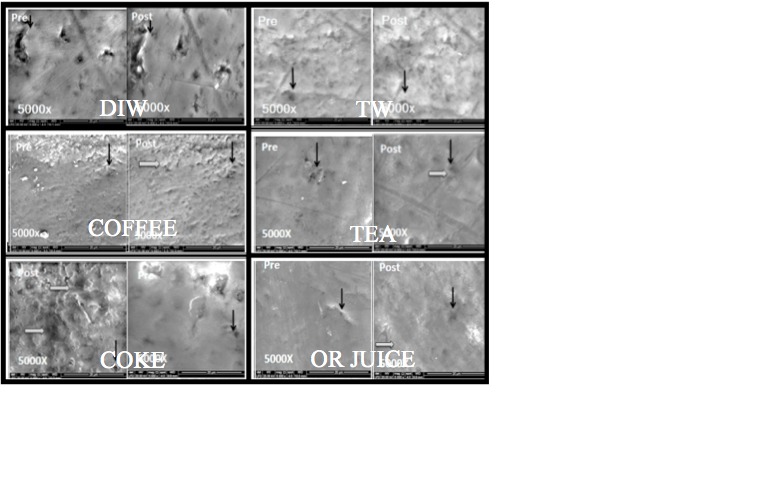
Methods: Twenty-eight single-rooted unpolished teeth were collected from the University Malaya Medical Centre and were subdivided into seven groups. The electron micrographs and EDS readings of different elements were taken before and after the exposure to the seven different beverages (deionized distilled water, tap water, coffee, tea, orange juice, coca cola and vinegar). The teeth were exposed to the beverages using the modified-NAM model. The teeth were again seen under SEM for EDS and electron micrographs. Statistical analysis was done.
Results: With the p value of 0.10, calcium phosphate ratio was not significant for deionized distilled water, tap water and coffee. The loss of phosphate content was significant in all 4 other beverages except deionized distilled water, tea and orange juice.
Conclusions: The Coca-Cola followed by Orange juice and vinegar was seen to be most destructive for the tooth calcium level while vinegar followed by coffee dissolved the most of the phosphate level. The calcium phosphate level showed a significant loss of calcium content from the tooth surface when these beverages were exposed in an oral simulation system, the modified NAM model.
Methods: Twenty-eight single-rooted unpolished teeth were collected from the University Malaya Medical Centre and were subdivided into seven groups. The electron micrographs and EDS readings of different elements were taken before and after the exposure to the seven different beverages (deionized distilled water, tap water, coffee, tea, orange juice, coca cola and vinegar). The teeth were exposed to the beverages using the modified-NAM model. The teeth were again seen under SEM for EDS and electron micrographs. Statistical analysis was done.
Results: With the p value of 0.10, calcium phosphate ratio was not significant for deionized distilled water, tap water and coffee. The loss of phosphate content was significant in all 4 other beverages except deionized distilled water, tea and orange juice.
Conclusions: The Coca-Cola followed by Orange juice and vinegar was seen to be most destructive for the tooth calcium level while vinegar followed by coffee dissolved the most of the phosphate level. The calcium phosphate level showed a significant loss of calcium content from the tooth surface when these beverages were exposed in an oral simulation system, the modified NAM model.
IMAGES
2356870_File000000.jpg
2356870_File000000.jpg