IADR Abstract Archives
COMPARATIVE EVALUATION OF HILOTHERAPY EFFECIENCY AFTER SURGICAL REMOVAL OF IMPACTED LOWER THIRD MOLAR (CLINICAL STUDY)
Objectives: The impacted lower third molar surgery is one of the commonest surgical procedures distressing the patients and attended by complication sequelae. Swelling, pain and limitation of mouth opening are included in postoperative morbidity of surgical removal of third molar, and have great evidence to occur. The present work aims to assess the efficiency of the Hilotherapy in comparison to the conventional cool compresses as cryotherapeutic modalities on postoperative complications after impacted lower third molar surgery.
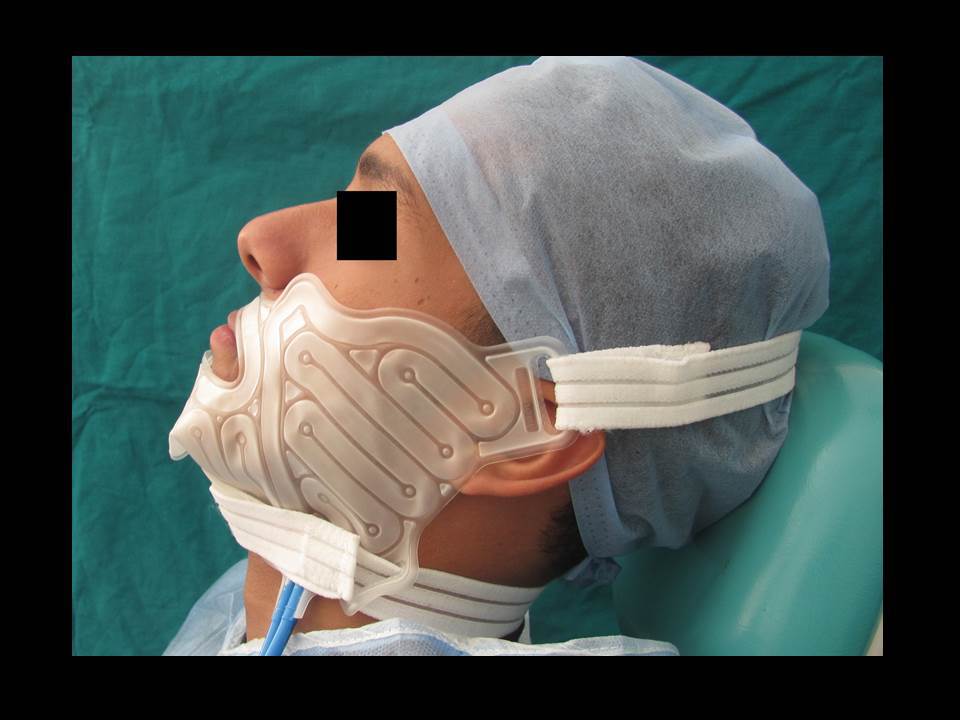
Methods: A controlled randomized clinical trial conducted on 16 patients Class I (ASA) in the Oral and Maxillofacial Surgery Department.The age was ranged between 18 and 30 years old of either gender. Participants were randomly assigned into : Group I (Control): treated by conventional Ice cooling during 24 hours postoperatively according to the instructions given to the group members as Ice Pack was applied for 30 min at 2 hours intervals for the first 24 hours after surgery. Group II (Test): treated by water-circulating external cooling device called Hilotherm® Clinic (Hilotherm GmbH,Germany) which refers to the Hilotherapy modality and applied immediately after the surgery with temperature 15°C for a 45-minute period. Clinical evaluation criteria was performed on Swelling , Pain and Mouth opening limitation .
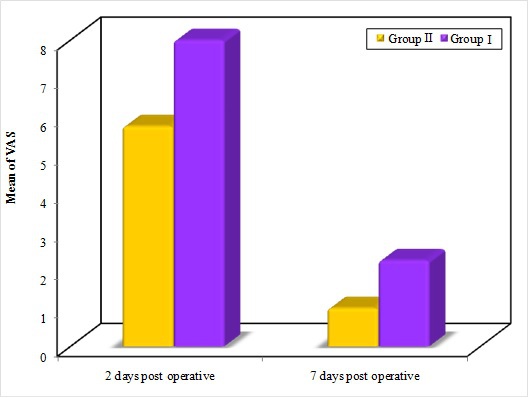
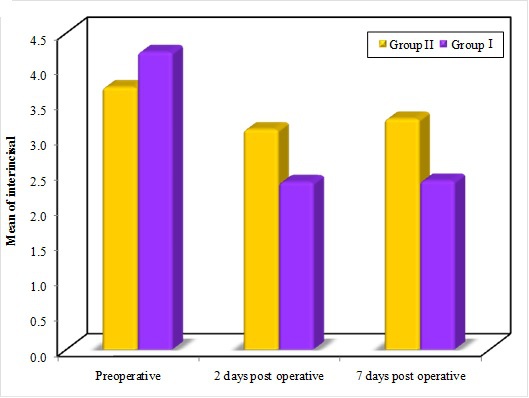
Results: Swelling was measured in two methods via Ultrsonography Imaging and Linear Distance by Silk, in fixed points which have been previously determined. On the second day after surgery, statistically significant down regulation of swelling achieved with the Hilotherm cooling device compared with conventional cooling therapy by both means of measuring. Postoperative pain was calculated using a visual analog scale from subjective analysis ranging from 0 to 10. At the second postoperative day, a significant down regulated pain score was assessed by Hilotherapy compared with conventional cooling. The mouth opening was significantly greater in the Hilotherapy group than in the conventional cooling group.
Conclusions: Use of the Hilotherm cooling device reduces postoperative swelling, pain and duration of post operative complications compared with conventional cooling. Postoperative mouth opening and cooling method satisfaction were increased in the Hilotherm group compared with cold packs.
Methods: A controlled randomized clinical trial conducted on 16 patients Class I (ASA) in the Oral and Maxillofacial Surgery Department.The age was ranged between 18 and 30 years old of either gender. Participants were randomly assigned into : Group I (Control): treated by conventional Ice cooling during 24 hours postoperatively according to the instructions given to the group members as Ice Pack was applied for 30 min at 2 hours intervals for the first 24 hours after surgery. Group II (Test): treated by water-circulating external cooling device called Hilotherm® Clinic (Hilotherm GmbH,Germany) which refers to the Hilotherapy modality and applied immediately after the surgery with temperature 15°C for a 45-minute period. Clinical evaluation criteria was performed on Swelling , Pain and Mouth opening limitation .
Results: Swelling was measured in two methods via Ultrsonography Imaging and Linear Distance by Silk, in fixed points which have been previously determined. On the second day after surgery, statistically significant down regulation of swelling achieved with the Hilotherm cooling device compared with conventional cooling therapy by both means of measuring. Postoperative pain was calculated using a visual analog scale from subjective analysis ranging from 0 to 10. At the second postoperative day, a significant down regulated pain score was assessed by Hilotherapy compared with conventional cooling. The mouth opening was significantly greater in the Hilotherapy group than in the conventional cooling group.
Conclusions: Use of the Hilotherm cooling device reduces postoperative swelling, pain and duration of post operative complications compared with conventional cooling. Postoperative mouth opening and cooling method satisfaction were increased in the Hilotherm group compared with cold packs.
IMAGES
2612720_File000000.jpg
2612720_File000001.jpg
2612720_File000002.jpg
2612720_File000000.jpg
2612720_File000001.jpg
2612720_File000002.jpg