IADR Abstract Archives
Comparison of Shaping Ability and Failure Incidence of WaveOne files and One Shape files.
Objectives: The aim of this study was to compare and evaluate the efficacy of different single file techniques in terms of shaping ability of the canal according to canal centering and the failure incidence of the instruments.
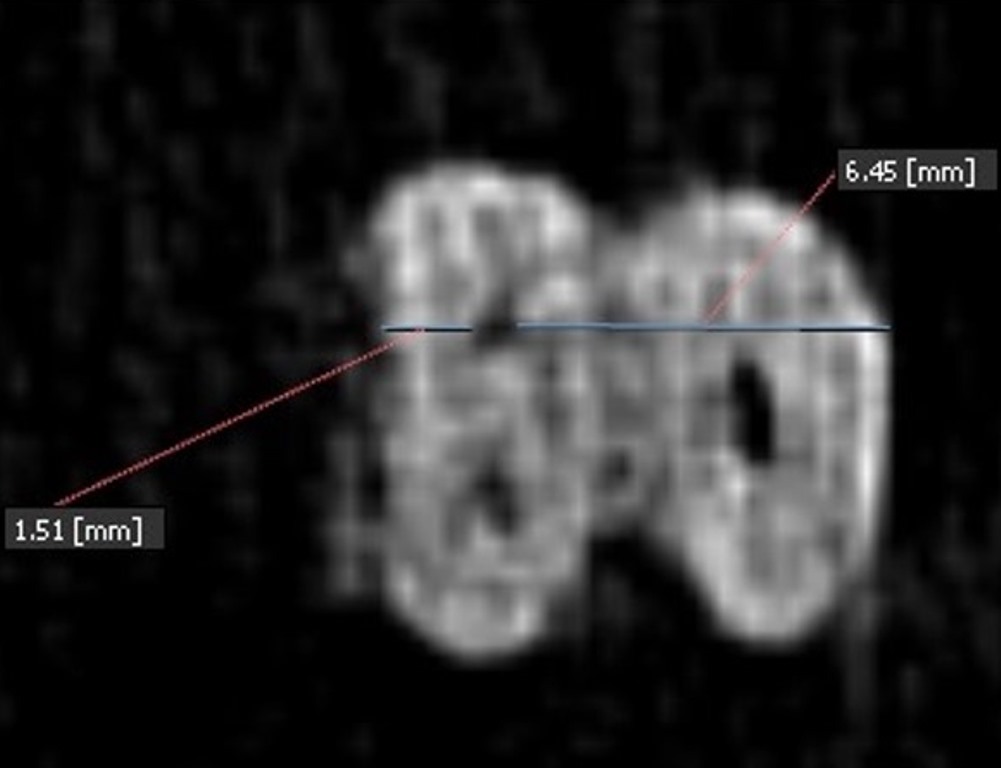
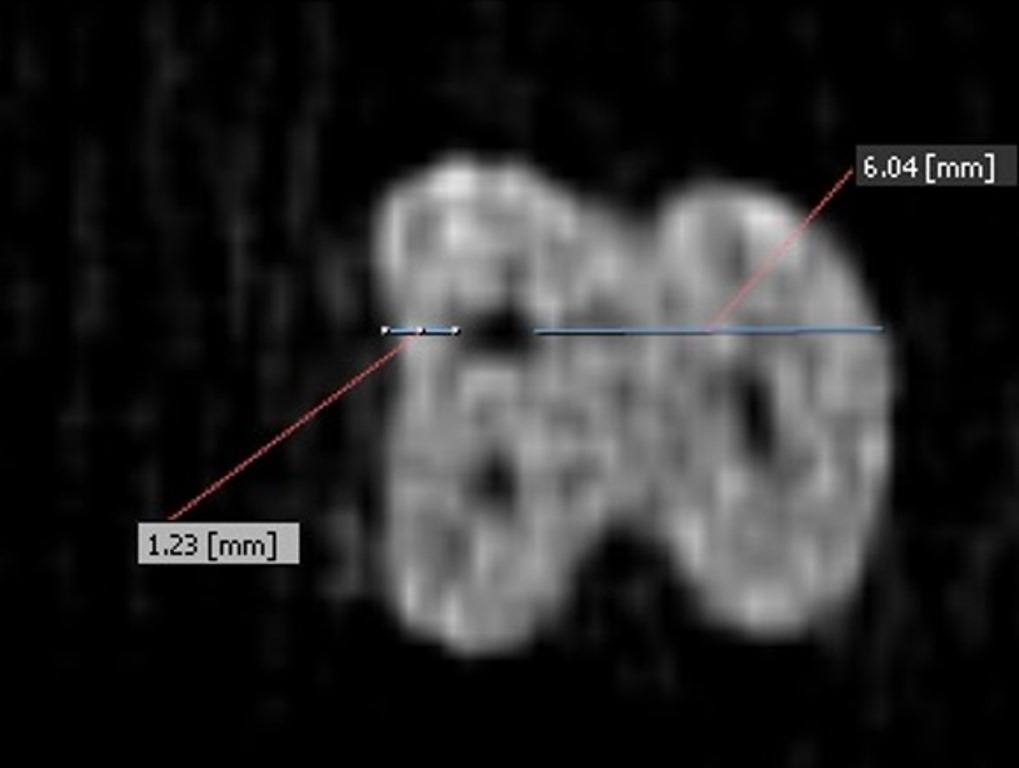
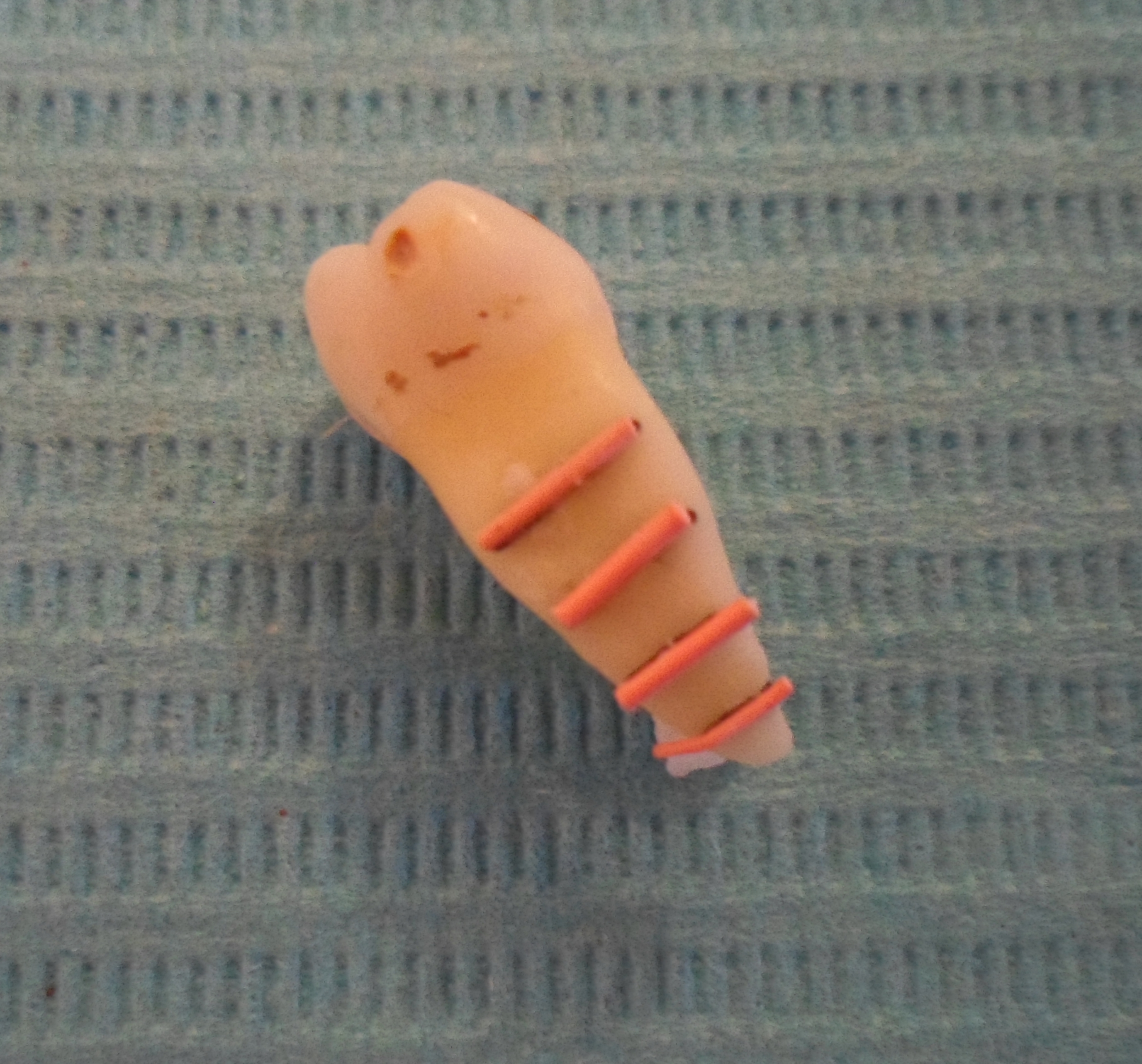
Methods: The study was divided into two parts. Forty mesiobuccal canals of human mandibular molars were utilized in part I of the study and divided in two groups 20 mesiobuccal canals each. Group A prepared with WaveOne files and group B prepared with One Shape files. Gutta percha pieces were attached to the mesial surface of the mesial roots at 3mm intervals from the apex guided by a digital caliber, these gutta percha pieces serve as a reference for standardization. The teeth were fixed in position inside two blocks of acrylic resin during the whole study for each group and then the teeth were scanned using Cone Beam Computed Tomography before and after preparation. Fusion of the pre-instrumentation and post-instrumentation records was achieved using special software that allows manual and then automatic registration of the pre and post-instrumentation records. Part II of the study was divided into group A and group B as in part I where the instruments were used to prepare the mesiobuccal canals of mandibular molars until instrument fracture and the number of canals prepared until fracture was recorded. The time that was taken by each file to reach the full working length of the canal was recorded. The data was tabulated and statistically analysed.
Results: The results showed that in part I of the study there was no significant difference between the two groups regarding canal centering where in part II of the study there was a significant difference between the two groups regarding the fracture incidence with group A showing higher number of canals prepared till fracture.However, group B was significantly faster in reaching the full working length of the mesiobuccal canals than group A.
Conclusions: From the results of the current work, it could be concluded that:
- Reciprocating motion utilized by WaveOne files is promising in providing a well centered preparation, with less risk of instrument fracture and preservation of the canal curvature.
- However it may require more time to reach the full working length than the One Shape files utilizing rotation motion.
Methods: The study was divided into two parts. Forty mesiobuccal canals of human mandibular molars were utilized in part I of the study and divided in two groups 20 mesiobuccal canals each. Group A prepared with WaveOne files and group B prepared with One Shape files. Gutta percha pieces were attached to the mesial surface of the mesial roots at 3mm intervals from the apex guided by a digital caliber, these gutta percha pieces serve as a reference for standardization. The teeth were fixed in position inside two blocks of acrylic resin during the whole study for each group and then the teeth were scanned using Cone Beam Computed Tomography before and after preparation. Fusion of the pre-instrumentation and post-instrumentation records was achieved using special software that allows manual and then automatic registration of the pre and post-instrumentation records. Part II of the study was divided into group A and group B as in part I where the instruments were used to prepare the mesiobuccal canals of mandibular molars until instrument fracture and the number of canals prepared until fracture was recorded. The time that was taken by each file to reach the full working length of the canal was recorded. The data was tabulated and statistically analysed.
Results: The results showed that in part I of the study there was no significant difference between the two groups regarding canal centering where in part II of the study there was a significant difference between the two groups regarding the fracture incidence with group A showing higher number of canals prepared till fracture.However, group B was significantly faster in reaching the full working length of the mesiobuccal canals than group A.
Conclusions: From the results of the current work, it could be concluded that:
- Reciprocating motion utilized by WaveOne files is promising in providing a well centered preparation, with less risk of instrument fracture and preservation of the canal curvature.
- However it may require more time to reach the full working length than the One Shape files utilizing rotation motion.
IMAGES
2308339_File000000.jpg
2308339_File000001.jpg
2308339_File000002.jpg
2308339_File000000.jpg
2308339_File000001.jpg
2308339_File000002.jpg