IADR Abstract Archives
Determination of Hydrogen-Ion Concentration Microenvironments within Biofilm by Two-Photon Excitation Fluorescence Lifetime Imaging Microscopy (2PE-FLIM)
Objectives: Dental caries is caused by organic acids produced by bacterial biofilm on the tooth surface. These acids are produced when this biofilm (plaque) comes in contact with fermentable carbohydrates. Acid production lowers the pH, promotes mineralisation loss and encourages the growth of aciduric, acidogenic microorganisms. An important feature of biofilm is the formation of multi-dimensional physicochemical gradients. Currently employed methods for the determination of pH in biofilms are not without drawbacks. Therefore, novel methods are required in order to visualise these microgradients and determine their effect upon the microbial ecology. Here, we discuss a method for the measurement of multi-dimensional pH in a natural state, independent of probe concentration or excitation intensity.
Methods: The pH-sensitive benzo[c]xanthene dye, seminaphthorhodafluor-4F 5-(and-6)-carboxylic acid (SNARF-4F), was selected due to its low pKa allowing measurements in the optimum range. The two-photon excitation (2PE) wavelength was determined by total photon counts, scanning between 760 and 900 nm. The dye was calibrated in buffers and utilised for fluorescence lifetime measurements of both planktonic bacteria and biofilm. Images were collected using BH SCPM software and the fluorescence lifetimes analysed by time-correlated single photon counting using BH SPCImage software.
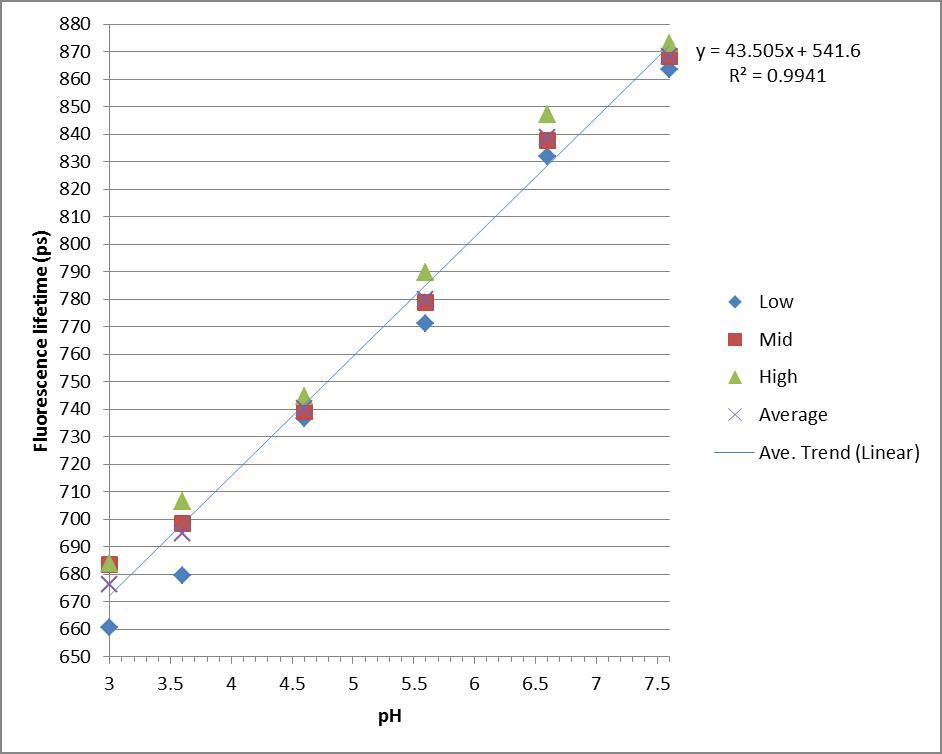
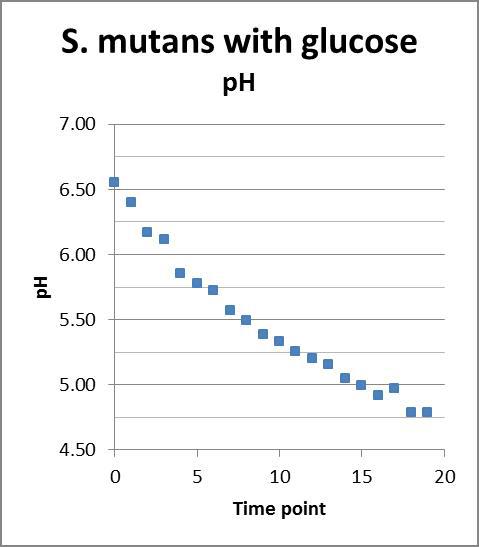
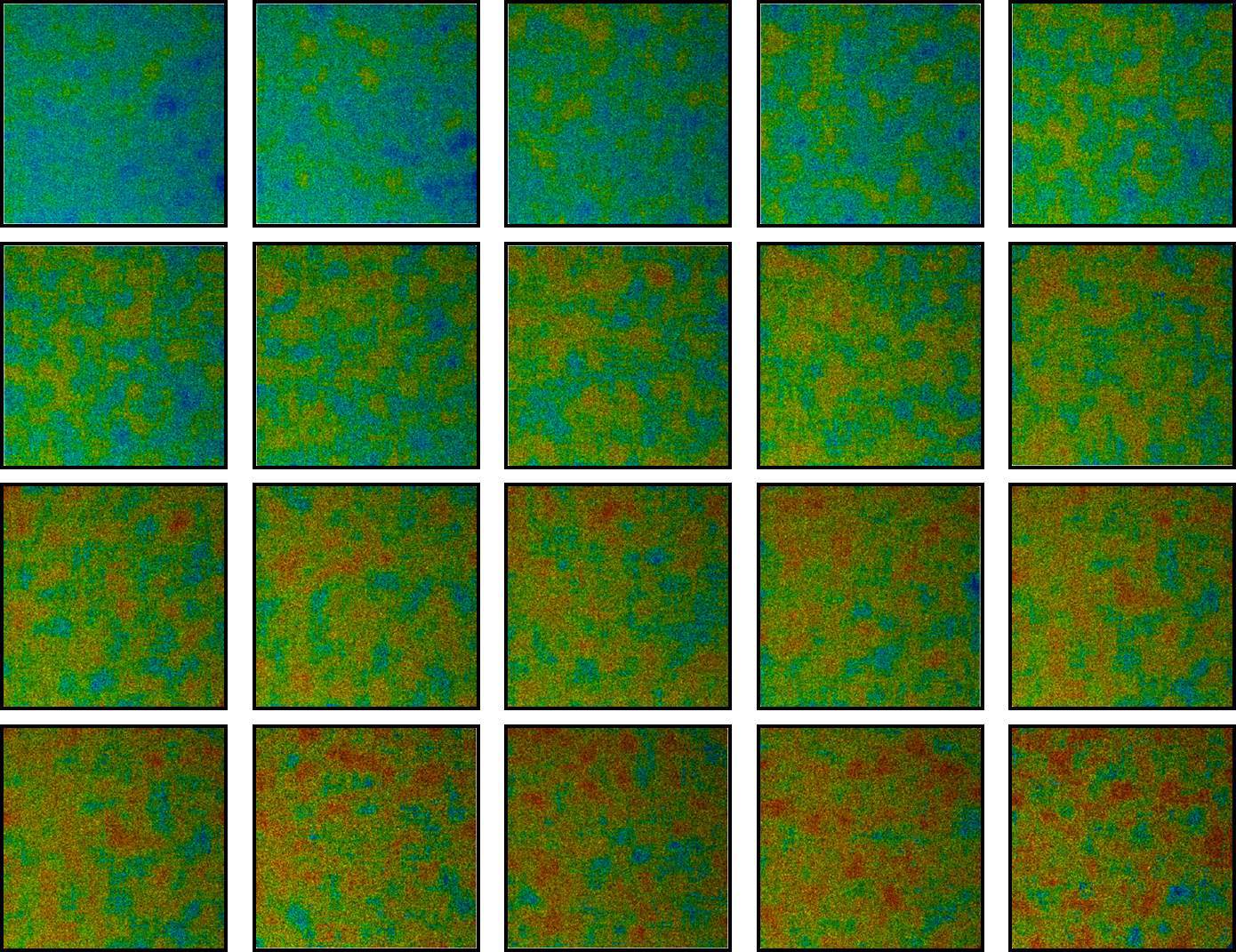
Results: An optimum λex of 2PE of SNARF-4F was determined to be 840 nm. Calibration between pH 3.0 and 7.6 exhibited a linear relationship between lifetime and pH. This allows the calculation of pH from the fluorescence lifetime. Bacterial suspensions supplied with glucose demonstrate a decrease in fluorescence lifetime over time. The images obtained demonstrate a lifetime/pH change with significant visible heterogeneity.
Conclusions: Here, we describe the use of a pH indicator, SNARF-4F, and 2PE-FLIM for the determination of extracellular pH. By obtaining fluorescence lifetime of the fluorophore in buffers we were able to visualise a linear relationship between fluorescence lifetime and pH. Although the use of fluorescence emission intensity is limited by the pKa, we have demonstrated that fluorescecne lifetime imaging is reliable and reproducible for determination to below pH 4 making this a useful method for acidic environments, such as dental biofilm.
Methods: The pH-sensitive benzo[c]xanthene dye, seminaphthorhodafluor-4F 5-(and-6)-carboxylic acid (SNARF-4F), was selected due to its low pKa allowing measurements in the optimum range. The two-photon excitation (2PE) wavelength was determined by total photon counts, scanning between 760 and 900 nm. The dye was calibrated in buffers and utilised for fluorescence lifetime measurements of both planktonic bacteria and biofilm. Images were collected using BH SCPM software and the fluorescence lifetimes analysed by time-correlated single photon counting using BH SPCImage software.
Results: An optimum λex of 2PE of SNARF-4F was determined to be 840 nm. Calibration between pH 3.0 and 7.6 exhibited a linear relationship between lifetime and pH. This allows the calculation of pH from the fluorescence lifetime. Bacterial suspensions supplied with glucose demonstrate a decrease in fluorescence lifetime over time. The images obtained demonstrate a lifetime/pH change with significant visible heterogeneity.
Conclusions: Here, we describe the use of a pH indicator, SNARF-4F, and 2PE-FLIM for the determination of extracellular pH. By obtaining fluorescence lifetime of the fluorophore in buffers we were able to visualise a linear relationship between fluorescence lifetime and pH. Although the use of fluorescence emission intensity is limited by the pKa, we have demonstrated that fluorescecne lifetime imaging is reliable and reproducible for determination to below pH 4 making this a useful method for acidic environments, such as dental biofilm.
IMAGES
2307691_File000001.jpg
2307691_File000000.jpg
2307691_File000002.jpg
2307691_File000001.jpg
2307691_File000000.jpg
2307691_File000002.jpg