IADR Abstract Archives
Microorganisms Reduction in Dentistry Boxes Using Sanitizing Methods
Objectives: Evaluate through an in vitro study the use of 3 sanitizing methods for the reduction of microorganisms present in the material boxes of dentistry students of sixth and eighth semester in the University of the Valley of Mexico campus Hermosillo.
Methods: A survey was conducted, for students in the sixth and eighth semester of Dentistry at the University of the Valley of México campus Hermosillo who are attending patients in the clinic of the institution, to know the care, handling and cleaning that they give to their box of dental material.
Sixteen boxes of dental material were randomly selected, of which 8 belonged to sixth and 8 to eighth semester.
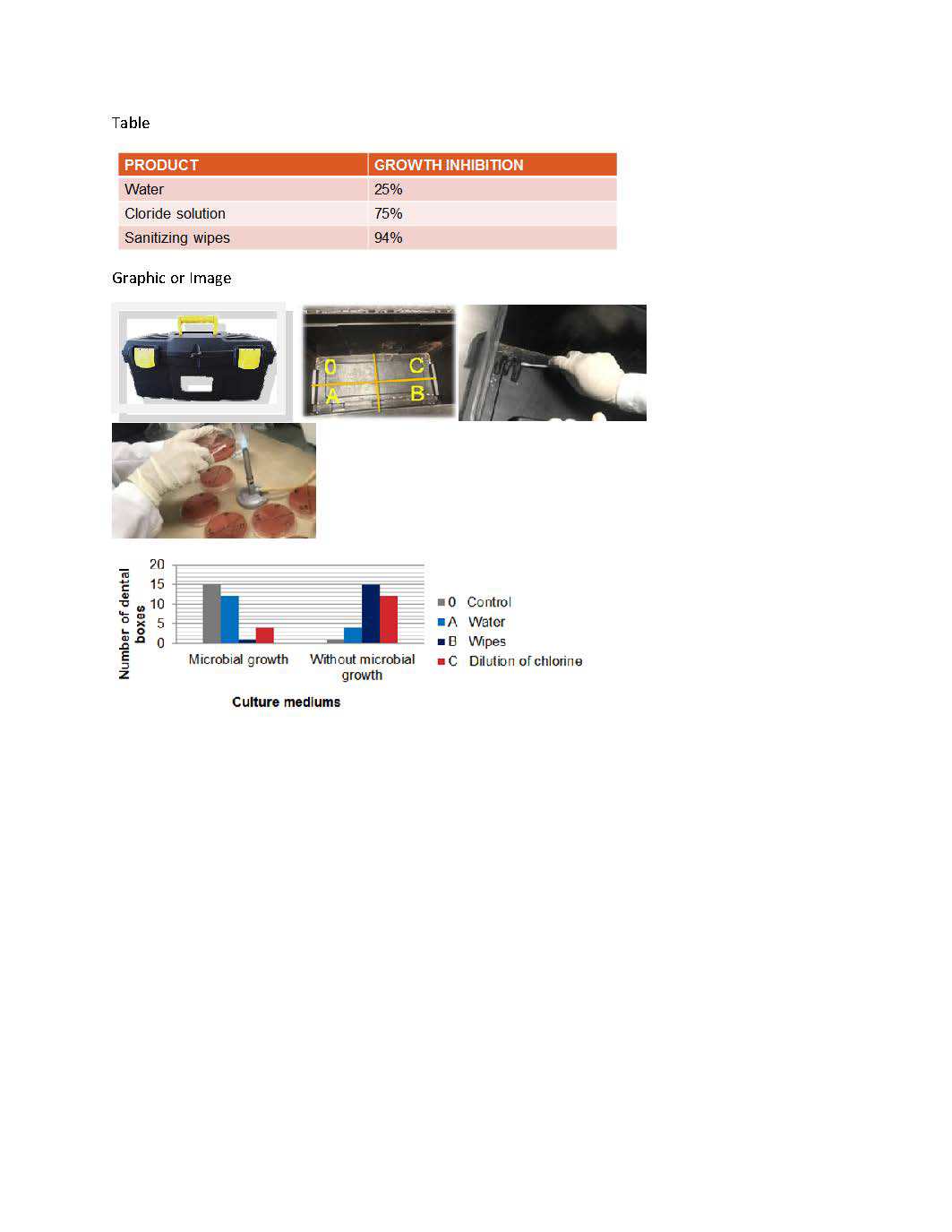
The bottom of each box was divided in quadrants where different sanitization methods were used to evaluate by in vitro study the reduction of microorganisms present in these boxes. The sanitization methods used were: water, dilution of chlorine and alcohol disinfectant wipes (trademark SuperSani-Cloth)
Samples were taken with sterile swabs once these methods were applied, the samples were planted in a blood agar medium and were incubated for 48 hours at 27 °C. (80.6 °F)
Results: It was observed growth of microorganisms. When using the disinfectant wipes, a microbial inhibition was achieved up to 94% of the boxes used, while the chlorine dilution achieved a 75% inhibition and 25% with water.
Conclusions: The use of a suitable sanitization method is able to inhibit the microbial growth present in most of the material boxes of dentistry students. Never the less, there were some boxes where it couldn’t be inhibited the microbial growth. Therefore, it is important to advocate efforts at the correct cleaning of box tools that carry the materials to be used with the patients.
Methods: A survey was conducted, for students in the sixth and eighth semester of Dentistry at the University of the Valley of México campus Hermosillo who are attending patients in the clinic of the institution, to know the care, handling and cleaning that they give to their box of dental material.
Sixteen boxes of dental material were randomly selected, of which 8 belonged to sixth and 8 to eighth semester.
The bottom of each box was divided in quadrants where different sanitization methods were used to evaluate by in vitro study the reduction of microorganisms present in these boxes. The sanitization methods used were: water, dilution of chlorine and alcohol disinfectant wipes (trademark SuperSani-Cloth)
Samples were taken with sterile swabs once these methods were applied, the samples were planted in a blood agar medium and were incubated for 48 hours at 27 °C. (80.6 °F)
Results: It was observed growth of microorganisms. When using the disinfectant wipes, a microbial inhibition was achieved up to 94% of the boxes used, while the chlorine dilution achieved a 75% inhibition and 25% with water.
Conclusions: The use of a suitable sanitization method is able to inhibit the microbial growth present in most of the material boxes of dentistry students. Never the less, there were some boxes where it couldn’t be inhibited the microbial growth. Therefore, it is important to advocate efforts at the correct cleaning of box tools that carry the materials to be used with the patients.
IMAGES
2900179_File000000.jpg
2900179_File000000.jpg