IADR Abstract Archives
Development and Characterization of Biocompatible Cellulose Acetate Membranes With Calcium-Phosphate
Objectives:
The aim of this study was to develop and characterize physical-chemical properties of membranes of cellulose acetate to be used in Guided Tissue Regeneration (GTR).
Methods: Two different membranes were prepared: cellulose acetate (CA) and cellulose acetate +Calcium glycerophosphate (CA Ca-GP). For comparative effect, two biological absorbable membranes commonly used in GTR were selected (GenDerm and BioGide Perio). The characterization was made considering the degree of substitution (DS) of cellulose acetate, kinetic of degradation of the membranes by spectrophotometry UV/Vis, qualitative analysis of the morphology of the surfaces and their fractures by scanning electron microscopy (SEM), crystallinity index through the X-ray diffraction, wettability through the contact angle, the barrier properties and thermo-mechanical properties.
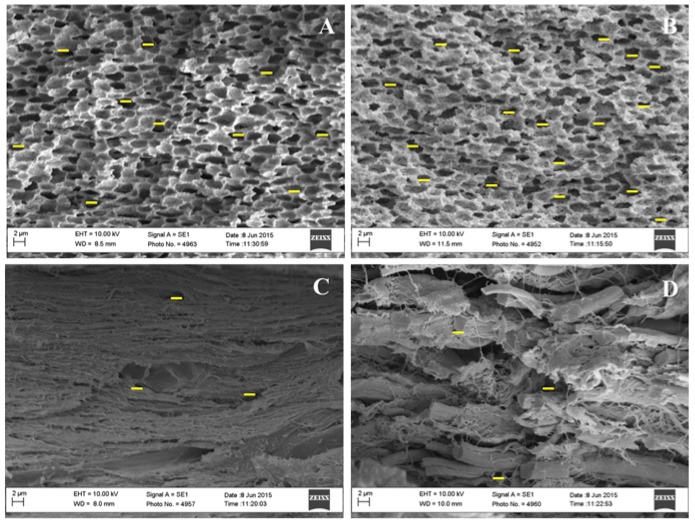
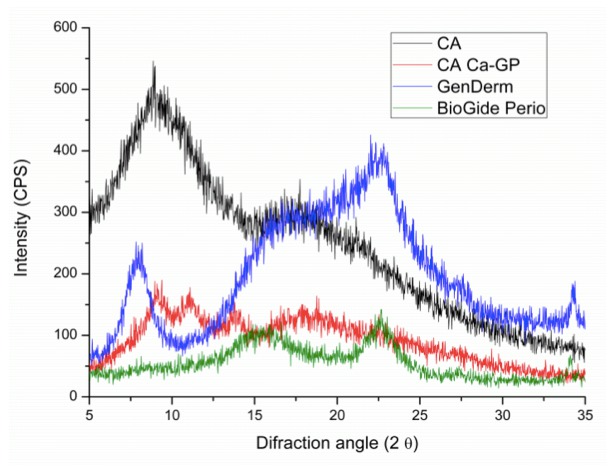
Results: This study demonstrated Ca-GP and CA present characteristics that may favor the GTR. It can be clearly noticed in the SEM that there is a greater homogeneity in the news membranes in terms of porosity and larger pores in the membrane incorporated by Ca-GP, when compared with commercial membranes. Analysis of the X-ray diffraction data confirmed the decrease of the crystallinity after the sample was additived with Ca-GP. The contact angle does not change significantly when the Ca-GP is incorporated into the membrane. The estimated degradation time of the membrane was 100 days.
Conclusions: The membranes developed in this experiment indicated favorable properties for application in GTR. Although these experiments were performed in vitro, these conditions simulate the conditions of the human body. The addition of CaGP in CA makes the membrane more resistant to tearing. The membranes evaluated in this study showed longer degradation time than the degradation time of the commercial membranes. Overall, the CA-CaGP presented good mechanical properties, biocompatibility, and biodegradation. In the future, adjustments to the formula of this composite may be used to optimize its functionality and increase its product utility.
The aim of this study was to develop and characterize physical-chemical properties of membranes of cellulose acetate to be used in Guided Tissue Regeneration (GTR).
Methods: Two different membranes were prepared: cellulose acetate (CA) and cellulose acetate +Calcium glycerophosphate (CA Ca-GP). For comparative effect, two biological absorbable membranes commonly used in GTR were selected (GenDerm and BioGide Perio). The characterization was made considering the degree of substitution (DS) of cellulose acetate, kinetic of degradation of the membranes by spectrophotometry UV/Vis, qualitative analysis of the morphology of the surfaces and their fractures by scanning electron microscopy (SEM), crystallinity index through the X-ray diffraction, wettability through the contact angle, the barrier properties and thermo-mechanical properties.
Results: This study demonstrated Ca-GP and CA present characteristics that may favor the GTR. It can be clearly noticed in the SEM that there is a greater homogeneity in the news membranes in terms of porosity and larger pores in the membrane incorporated by Ca-GP, when compared with commercial membranes. Analysis of the X-ray diffraction data confirmed the decrease of the crystallinity after the sample was additived with Ca-GP. The contact angle does not change significantly when the Ca-GP is incorporated into the membrane. The estimated degradation time of the membrane was 100 days.
Conclusions: The membranes developed in this experiment indicated favorable properties for application in GTR. Although these experiments were performed in vitro, these conditions simulate the conditions of the human body. The addition of CaGP in CA makes the membrane more resistant to tearing. The membranes evaluated in this study showed longer degradation time than the degradation time of the commercial membranes. Overall, the CA-CaGP presented good mechanical properties, biocompatibility, and biodegradation. In the future, adjustments to the formula of this composite may be used to optimize its functionality and increase its product utility.
IMAGES
2865471_File000000.jpg
2865471_File000001.jpg
2865471_File000000.jpg
2865471_File000001.jpg