IADR Abstract Archives
Impact of Electronic Cigarettes on Oral Microbiome
Objectives: Electronic cigarettes (E-cigs) are now marketed as a supposed healthier alternative to standard cigarettes. While cigarettes are made with raw tobacco, e-cigs contain concentrated nicotine, posing potential novel threats to oral health. E-cigs have been shown to cause oxidative/carbonyl stress in oral cells leading to significant DNA damage and suppressed antioxidant defenses. Smoking cigarettes has potential to alter the oral microbiome, causing increase in opportunistic pathogens that can lead to periodontitis. However, the effects of e-cig vapor on the oral microbiome remain unclear. This study aimed to compare oral microbial community composition of e-cigarette smokers to regular cigarette smokers and healthy controls (non-smokers) and to evaluate if e-cigs are truly a healthier alternative to cigarettes.
Methods: Thirty patients, smokers and nonsmokers (n=10 per 3 cohorts), with mild to severe periodontal disease participated in the study and their oral health information was recorded. The total microbial genomic DNA from the saliva of the patients was purified and analyzed for microbial composition by PCR-DGGE (denaturing gradient gel electrophoresis) using 16S rRNA gene universal primers. The bacterial diversity between the cohorts was analyzed by software based on G+C % content of the fingerprints.
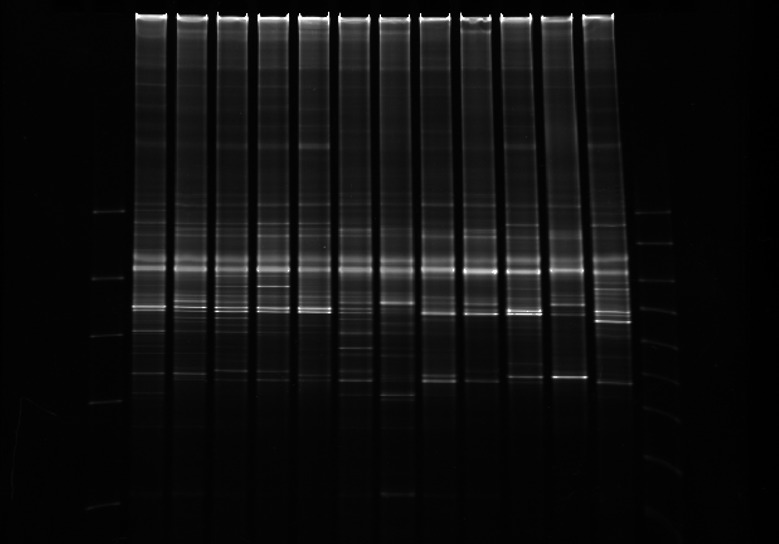
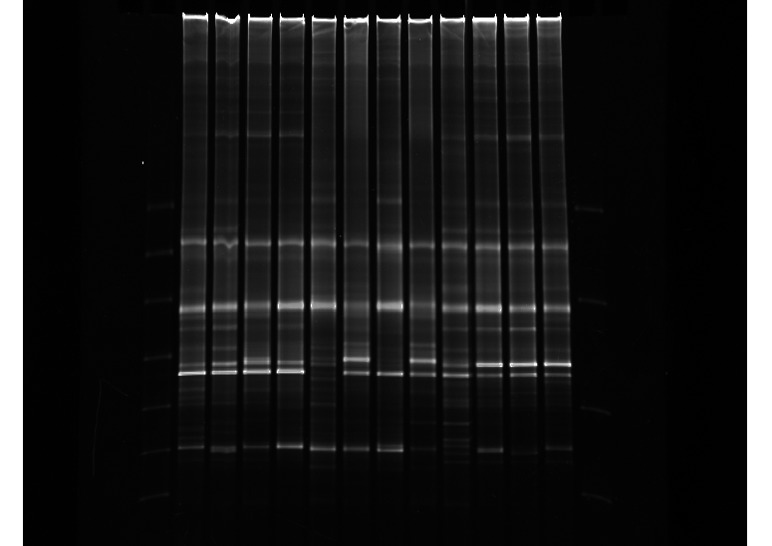
Results: The DGGE profiles were distinct for each of the three cohorts, indicating differences in community structure and composition between healthy controls and smokers. The number of bands was significantly higher in nonsmokers (p≤0.01) as compared to cigarette and e-cigarette smoker cohorts.
Conclusions: These differences signify lower species diversity in smokers. Further, the bacterial dysbiosis in the three cohorts will be evaluated by 16S high throughput sequencing to identify microbial pathogens impacting oral health in e-cig smokers.
Methods: Thirty patients, smokers and nonsmokers (n=10 per 3 cohorts), with mild to severe periodontal disease participated in the study and their oral health information was recorded. The total microbial genomic DNA from the saliva of the patients was purified and analyzed for microbial composition by PCR-DGGE (denaturing gradient gel electrophoresis) using 16S rRNA gene universal primers. The bacterial diversity between the cohorts was analyzed by software based on G+C % content of the fingerprints.
Results: The DGGE profiles were distinct for each of the three cohorts, indicating differences in community structure and composition between healthy controls and smokers. The number of bands was significantly higher in nonsmokers (p≤0.01) as compared to cigarette and e-cigarette smoker cohorts.
Conclusions: These differences signify lower species diversity in smokers. Further, the bacterial dysbiosis in the three cohorts will be evaluated by 16S high throughput sequencing to identify microbial pathogens impacting oral health in e-cig smokers.
IMAGES
2860012_File000002.jpg
2860012_File000003.jpg
2860012_File000002.jpg
2860012_File000003.jpg