IADR Abstract Archives
Effects of Etching on Sub-micron Features of eMax CAD
Objectives: The aim of this study was to use atomic force microscopy (AFM), x-ray diffraction (XRD) and scanning electron microscopy (SEM) to characterize the effects of acid etching on the sub-micron features of eMax CAD.
Methods: Samples of eMax CAD were cut and fired in accordance to Ivoclar’s recommended protocol, polished and were etched with 5% HF acid for 20 s, 60 s and 90 s respectively and observed under SEM and non-contact surface profilometry (Proscan 2000). Another batch of samples were etched with 7% phosphoric acid for 5, 10, 15, 30 and 60 minutes to preferentially remove the matrix phase of eMax CAD. The processed samples were subject to atomic force microscopy (AFM) to characterize the microscopic structure. X-ray diffraction (XRD) was used to determine changes in material composition following etching.
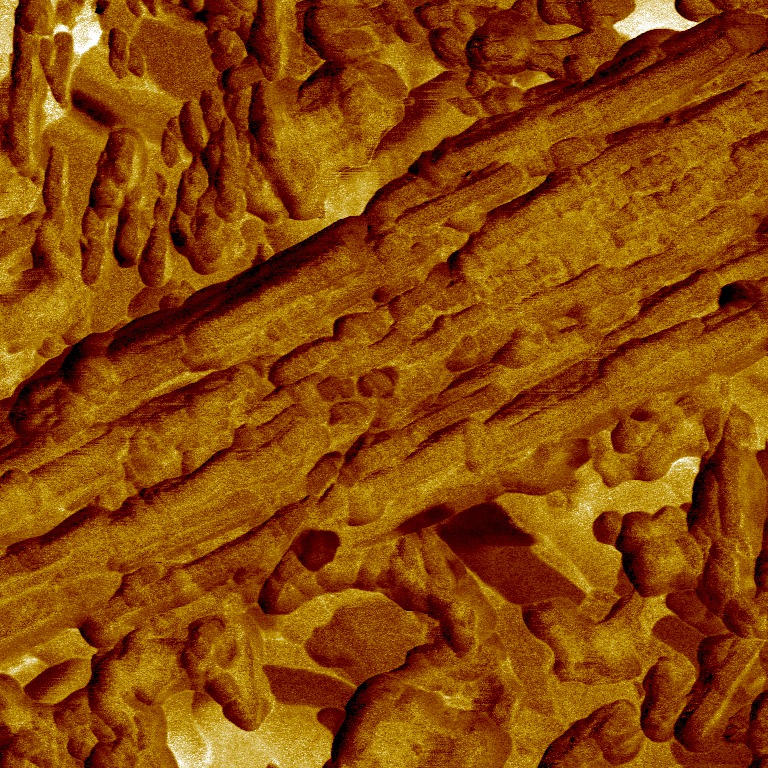
Results: Difference in HF etching durations did not have a significant effect on surface roughness values Ra or Rq, but had a significant effect on surface loss (p=0.0006). Under AFM, there are distinctly different phases within fired eMax CAD at the sub-micron level. High-modulus grain-like structure of about 120 nm surrounded by low-modulus matrix-like phase between grains. The observation suggests segregation during the lithium disilicate nucleation process. Extended period of etching results in gradual removal of the low-modulus phase however, preliminary XRD results showed minimal changes in samples after extended etching. SEM results were able to provide further visualization of the material microstructure and changes.
Conclusions: HF etching durations did not have a significant effect on surface roughness values, but had a significant effect on surface loss. Under AFM, high-modulus grain-like structure of about 120 nm surrounded by low-modulus matrix-like phase. The grain-like structure as observed under AFM deserves further investigation to allow further understanding in the microstructure evolution of eMax CAD during the lithium disilicate nucleation process.
Methods: Samples of eMax CAD were cut and fired in accordance to Ivoclar’s recommended protocol, polished and were etched with 5% HF acid for 20 s, 60 s and 90 s respectively and observed under SEM and non-contact surface profilometry (Proscan 2000). Another batch of samples were etched with 7% phosphoric acid for 5, 10, 15, 30 and 60 minutes to preferentially remove the matrix phase of eMax CAD. The processed samples were subject to atomic force microscopy (AFM) to characterize the microscopic structure. X-ray diffraction (XRD) was used to determine changes in material composition following etching.
Results: Difference in HF etching durations did not have a significant effect on surface roughness values Ra or Rq, but had a significant effect on surface loss (p=0.0006). Under AFM, there are distinctly different phases within fired eMax CAD at the sub-micron level. High-modulus grain-like structure of about 120 nm surrounded by low-modulus matrix-like phase between grains. The observation suggests segregation during the lithium disilicate nucleation process. Extended period of etching results in gradual removal of the low-modulus phase however, preliminary XRD results showed minimal changes in samples after extended etching. SEM results were able to provide further visualization of the material microstructure and changes.
Conclusions: HF etching durations did not have a significant effect on surface roughness values, but had a significant effect on surface loss. Under AFM, high-modulus grain-like structure of about 120 nm surrounded by low-modulus matrix-like phase. The grain-like structure as observed under AFM deserves further investigation to allow further understanding in the microstructure evolution of eMax CAD during the lithium disilicate nucleation process.
IMAGES
2859929_File000000.jpg
2859929_File000000.jpg