IADR Abstract Archives
Prevention of Inflammatory Bone Loss Via Induction of M2 Macrophages
Objectives: To assess the effect of local induction of M2 macrophages in modulating the immune response and preventing alveolar bone loss in murine periodontitis models.
Methods: We first encapsulated the M2 macrophages inducing C-C motif chemokine ligand 2 (CCL2) in poly lactic-co-glycolic acid (PLGA) microparticles (MPs) using double emulsion technique and determined the release profile of CCL2. Next, we assessed the ability of CCL2 to induce the polarization of mouse derived macrophages toward the M2 phenotype and to inhibit the expression of TNF-alpha by RAW 264.7 cells treated with P. gingivalis lipopolysaccharide. Finally, we locally delivered the CCL2 MPs into the gingival tissues of mice where experimental periodontitis was induced and assessed alveolar bone loss, osteoclasts number and the expression of inflammatory and the M1 and M2 macrophages markers.
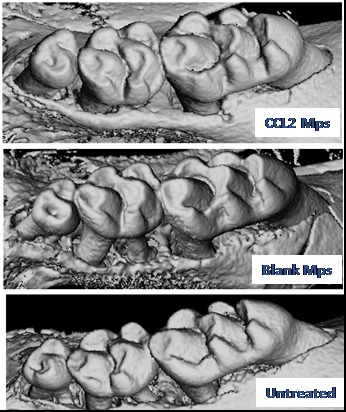
Results: We successfully fabricated recombinant mouse CCL2 releasing PLGA MPs that continued to sustainably release CCL2 for up to 70 days. Moreover, we demonstrated that mouse macrophages treated with CCL2 enhanced their expression of the M2 macrophages surface marker CD206. Additionally, CCL2 was able to reduce TNF-alpha expression in LPS treated RAW cells. Using mouse experimental periodontitis models, we showed that local delivery of CCL2 MPs resulted in significant inhibition of alveolar bone resorption that was positively correlated with a reduction in the number of osteoclasts. Immunostaining for the M1 and M2 macrophages surface markers revealed that CCL2 MPs injection skewed the M1/M2 ratio in the periodontium toward an M2-polarized profile. Finally, our qPCR results showed significant increase in IL1ra mRNA expression and decrease in RANKL mRNA expression in mice maxillae where CCL2 MPs were injected.
Conclusions: We conclude that local delivery of CCL2 skewed resident macrophages towards the anti-inflammatory M2 phenotype and inhibited alveolar bone loss in mouse periodontitis models. This approach could serve as a promising immunomodulatory strategy for treatment of periodontitis.
Methods: We first encapsulated the M2 macrophages inducing C-C motif chemokine ligand 2 (CCL2) in poly lactic-co-glycolic acid (PLGA) microparticles (MPs) using double emulsion technique and determined the release profile of CCL2. Next, we assessed the ability of CCL2 to induce the polarization of mouse derived macrophages toward the M2 phenotype and to inhibit the expression of TNF-alpha by RAW 264.7 cells treated with P. gingivalis lipopolysaccharide. Finally, we locally delivered the CCL2 MPs into the gingival tissues of mice where experimental periodontitis was induced and assessed alveolar bone loss, osteoclasts number and the expression of inflammatory and the M1 and M2 macrophages markers.
Results: We successfully fabricated recombinant mouse CCL2 releasing PLGA MPs that continued to sustainably release CCL2 for up to 70 days. Moreover, we demonstrated that mouse macrophages treated with CCL2 enhanced their expression of the M2 macrophages surface marker CD206. Additionally, CCL2 was able to reduce TNF-alpha expression in LPS treated RAW cells. Using mouse experimental periodontitis models, we showed that local delivery of CCL2 MPs resulted in significant inhibition of alveolar bone resorption that was positively correlated with a reduction in the number of osteoclasts. Immunostaining for the M1 and M2 macrophages surface markers revealed that CCL2 MPs injection skewed the M1/M2 ratio in the periodontium toward an M2-polarized profile. Finally, our qPCR results showed significant increase in IL1ra mRNA expression and decrease in RANKL mRNA expression in mice maxillae where CCL2 MPs were injected.
Conclusions: We conclude that local delivery of CCL2 skewed resident macrophages towards the anti-inflammatory M2 phenotype and inhibited alveolar bone loss in mouse periodontitis models. This approach could serve as a promising immunomodulatory strategy for treatment of periodontitis.
IMAGES
2857267_File000000.jpg
2857267_File000000.jpg