IADR Abstract Archives
Flexural Analysis of Flowable Restoratives Over 12 Month PBS Storage
Objectives: Evaluate flexure strength and modulus of flowable restoratives stored in phosphate buffered solution (PBS).
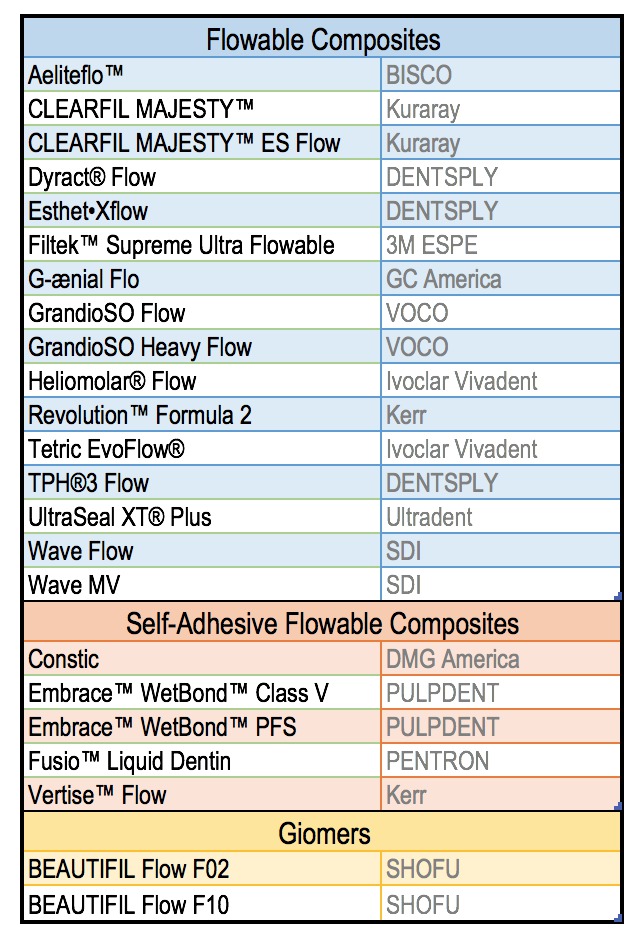
Methods: 23 flowable restoratives (conventional/self-adhesive flowable composites and giomers) were selected for evaluation. 3 Point Bend Specimens were created for each material using a standard 2mm x 2mm x 15mm mold; polymerized with a high powered LED curing light (step cured along the length of specimens). 72 Specimens were made of each material and randomly divided into 6 storage test times (n=12); 24 hours, 1 week, 1 month and 3 month, 6 month and 12 month storage times. Specimens were placed into PBS solution immediately following fabrication and stored at physiological conditions (37C/98% RH) until the prescribed testing time. 3-point bending was accomplished on each specimen using a universal testing machine (MTS; 0.5mm/min) and a standard 3-point bending apparatus. Flexural Strength (MPa) and Flexural Modulus (GPa) data was collected. Data analyzed using Kruskal-Wallis with Dunn’s post hoc test (p=0.05).
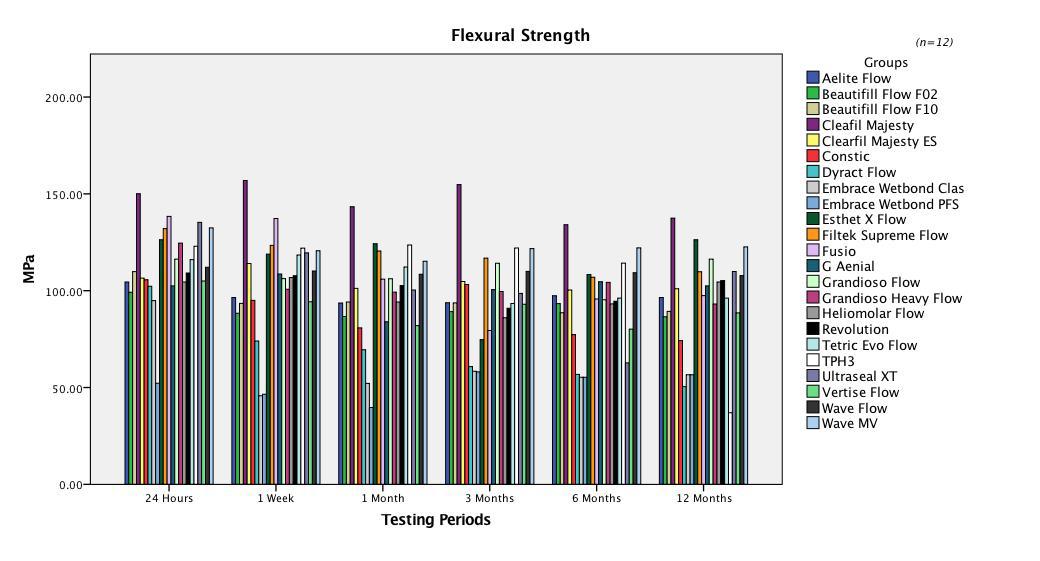
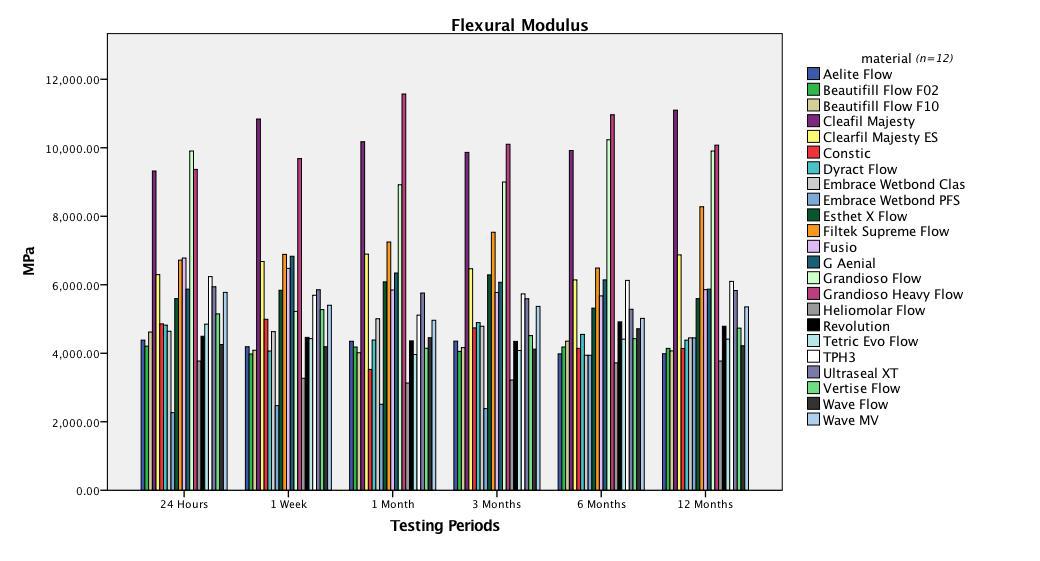
Results: (illustrated in graph)
Discussion: There are concerns regarding inherit increased hydrophilicity of self-adhesives and the effects this might have upon material properties in long term service in an aqueous environment. The results illustrate significant differences in flexure strength among the self-adhesive/more hydrophilic flowable composites tested in this study. Other available studies on self-adhesive flowables, suggest concerns for inferior physical properties and bonding of self-adhesive flowables in comparison to traditional adhesively bonded flowables.
Conclusions: Conclusions: Flowable materials tend to have inherit weakness (reduced wear resistance, greater shrinkage, more water sorption). Self-adhesives restoratives tend to have increased hydrophilicity. Significant differences were noted between materials in this study. Additional studies would aid clinicians in determining if particular self-adhesive flowables have a place in dentistry.
Methods: 23 flowable restoratives (conventional/self-adhesive flowable composites and giomers) were selected for evaluation. 3 Point Bend Specimens were created for each material using a standard 2mm x 2mm x 15mm mold; polymerized with a high powered LED curing light (step cured along the length of specimens). 72 Specimens were made of each material and randomly divided into 6 storage test times (n=12); 24 hours, 1 week, 1 month and 3 month, 6 month and 12 month storage times. Specimens were placed into PBS solution immediately following fabrication and stored at physiological conditions (37C/98% RH) until the prescribed testing time. 3-point bending was accomplished on each specimen using a universal testing machine (MTS; 0.5mm/min) and a standard 3-point bending apparatus. Flexural Strength (MPa) and Flexural Modulus (GPa) data was collected. Data analyzed using Kruskal-Wallis with Dunn’s post hoc test (p=0.05).
Results: (illustrated in graph)
Discussion: There are concerns regarding inherit increased hydrophilicity of self-adhesives and the effects this might have upon material properties in long term service in an aqueous environment. The results illustrate significant differences in flexure strength among the self-adhesive/more hydrophilic flowable composites tested in this study. Other available studies on self-adhesive flowables, suggest concerns for inferior physical properties and bonding of self-adhesive flowables in comparison to traditional adhesively bonded flowables.
Conclusions: Conclusions: Flowable materials tend to have inherit weakness (reduced wear resistance, greater shrinkage, more water sorption). Self-adhesives restoratives tend to have increased hydrophilicity. Significant differences were noted between materials in this study. Additional studies would aid clinicians in determining if particular self-adhesive flowables have a place in dentistry.
IMAGES
2856319_File000000.jpg
2856319_File000001.jpg
2856319_File000002.jpg
2856319_File000000.jpg
2856319_File000001.jpg
2856319_File000002.jpg