IADR Abstract Archives
Morphometric Analyses Can Identify Significant Areas of Variation in the Human Mandible
Objectives: The objective of this project is to assess and identify regions of significant variation in shape of the human mandible by utilizing reliable methods of 3D morphometric analysis. The long-term goal of this project is to characterize genetic determinants of craniofacial phenotype. Three specific aims are proposed: 1) define the parameters for each skeletal growth patterns, 2) recruit orthodontic patients with specific skeletal morphology, and 3) utilize reliable morphometric analyses to identify differences among the three groups, and 4) define heritable quantitative traits of mandibular shape.
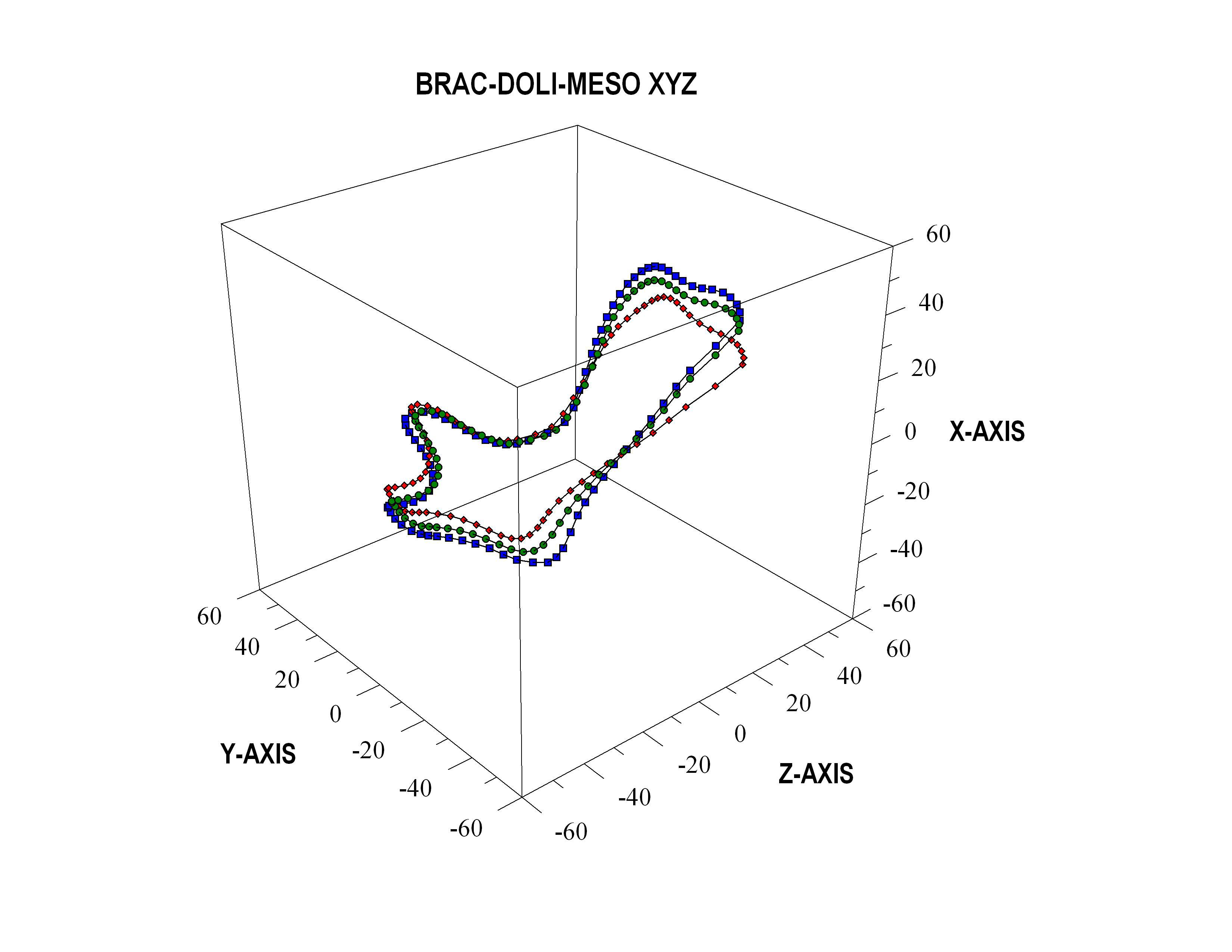
Methods: Non-growing non-syndromic patients from the Orthodontic Clinic at the UCLA School of Dentistry were recruited, 15 for each of the three skeletal growth patterns – brachycephalic, mesocephalic, and dolichocephalic, based on initial CBCT and cephalometric analyses. Segmented hemimandibles were digitized with specific landmarks for both Procrustes superimposition and elliptical fourier function (EFF) analyses. Principal component analysis (PCA)-based ANOVA was performed to examine the main patterns of variation in the data and identify significant components for future gene expression analysis.
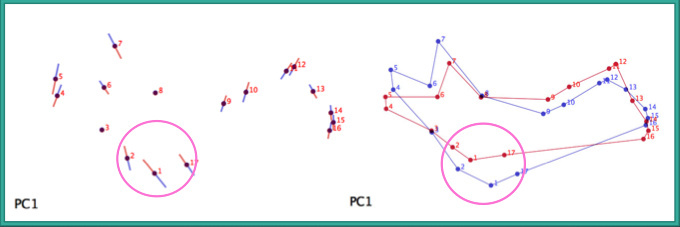
Results: PCA demonstrated that the three groups cluster apart from each other along PC1, which indicates significant variation at gonial angle (p<0.01). Brachy individuals have more acute angles, and doli individuals have more obtuse angles, with meso cases in between. Discriminant function analysis separated the three groups with >95% accuracy. The EFF analysis further substantiated the statistically significant variation among the three groups.
Conclusions: The industry standard morphometric analysis of Procrustes superimposition is able to quantify significant variation among specific morphologic groups, however, the more advanced method of EFF analysis shows further localized areas of differences between defined groups due to its more precise representation and quantification of the shape of interest.
Methods: Non-growing non-syndromic patients from the Orthodontic Clinic at the UCLA School of Dentistry were recruited, 15 for each of the three skeletal growth patterns – brachycephalic, mesocephalic, and dolichocephalic, based on initial CBCT and cephalometric analyses. Segmented hemimandibles were digitized with specific landmarks for both Procrustes superimposition and elliptical fourier function (EFF) analyses. Principal component analysis (PCA)-based ANOVA was performed to examine the main patterns of variation in the data and identify significant components for future gene expression analysis.
Results: PCA demonstrated that the three groups cluster apart from each other along PC1, which indicates significant variation at gonial angle (p<0.01). Brachy individuals have more acute angles, and doli individuals have more obtuse angles, with meso cases in between. Discriminant function analysis separated the three groups with >95% accuracy. The EFF analysis further substantiated the statistically significant variation among the three groups.
Conclusions: The industry standard morphometric analysis of Procrustes superimposition is able to quantify significant variation among specific morphologic groups, however, the more advanced method of EFF analysis shows further localized areas of differences between defined groups due to its more precise representation and quantification of the shape of interest.
IMAGES
2389654_File000000.jpg
2389654_File000001.jpg
2389654_File000000.jpg
2389654_File000001.jpg