IADR Abstract Archives
Sealant Incorporating MPC: Antibiofilm Effects and Mechanical Properties
Objectives: Biofilm formation begins with bacterial attachment to teeth and dental resins, aided by salivary proteins. To prevent this, protein-repellent agents like 2-methacryloyloxyethyl phosphorylcholine (MPC) have been developed, known for resisting protein adhesion due to its zwitterionic nature. MPC has been integrated into dental materials, but research on its impact in sealants remains limited. This study aimed to evaluate the effects of incorporating MPC into sealants on protein adsorption, S. mutans biofilm formation, and mechanical properties.
Methods: Sealant discs were prepared by incorporating MPC powder into the sealant at concentrations of 3%, 5%, 10%, and 15% by weight. To evaluate salivary protein adsorption, the specimens were immersed in filtered saliva for 2 hours and analyzed using a micro-BCA protein assay kit. For biofilm formation assessment, the specimens were immersed in a 1 × 10⁸ CFU/mL S. mutans suspension containing sucrose for 24 hours, and the total CFU count was determined. Surface microhardness of each specimen was also measured. Additionally, for the 10% MPC group, biofilm formation was observed using scanning electron microscopy (SEM), and the degree of conversion was tested and compared to the control.
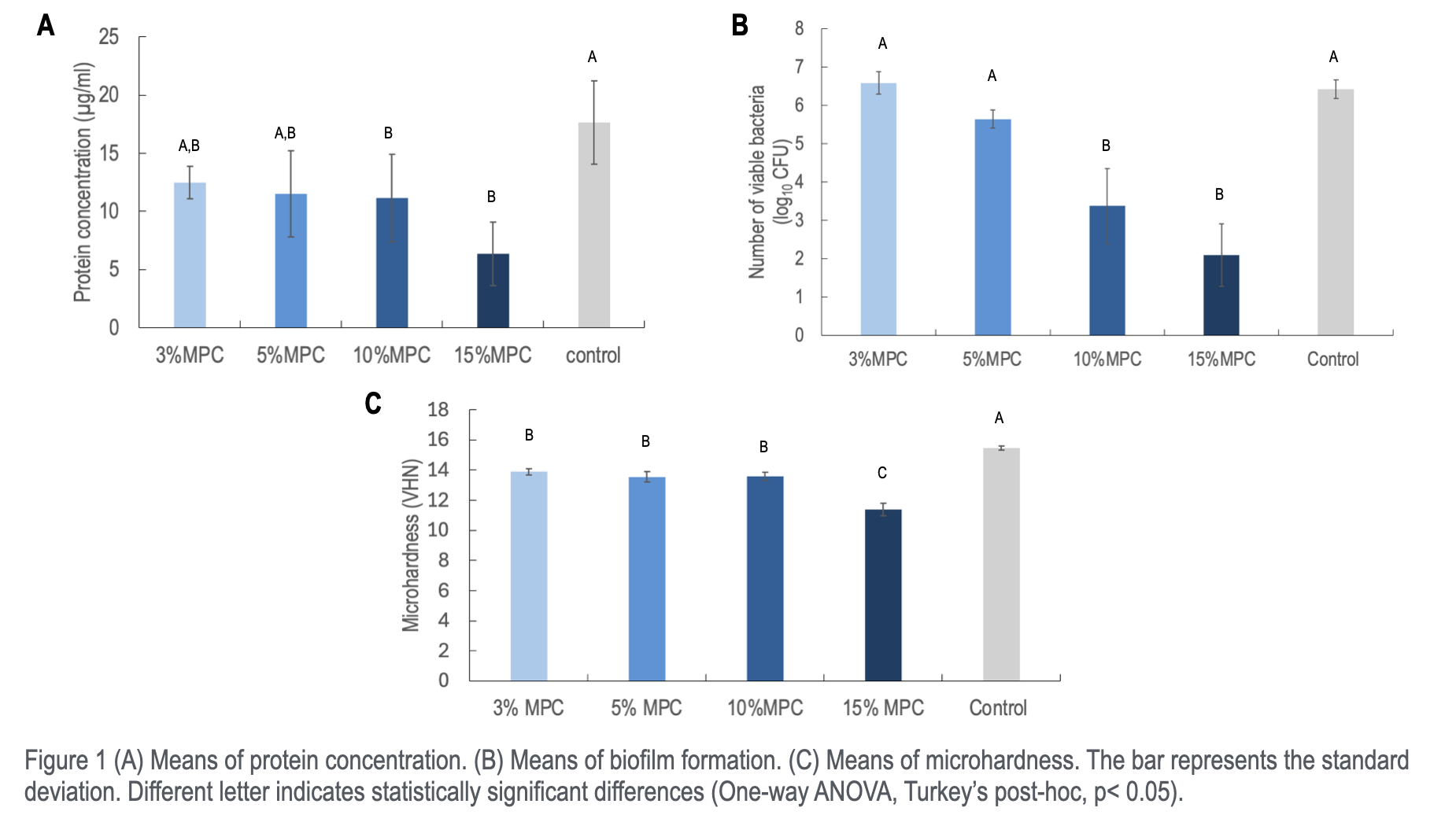
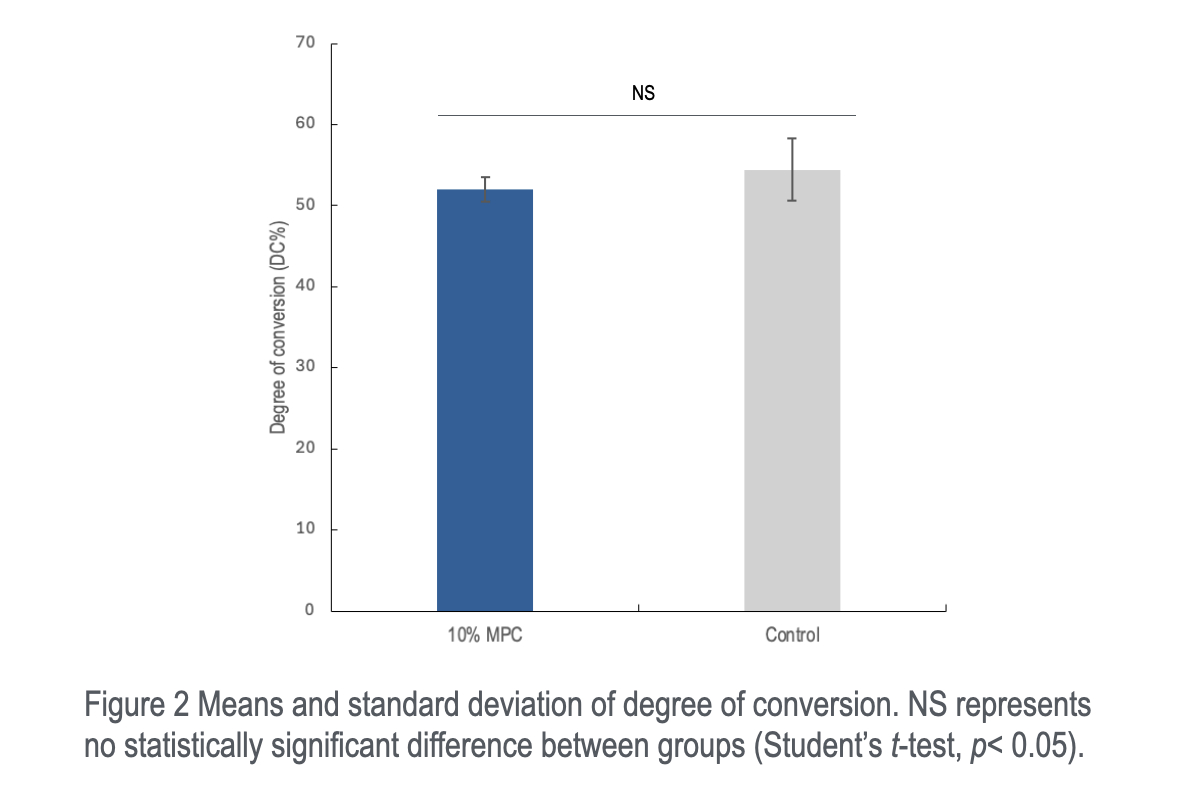
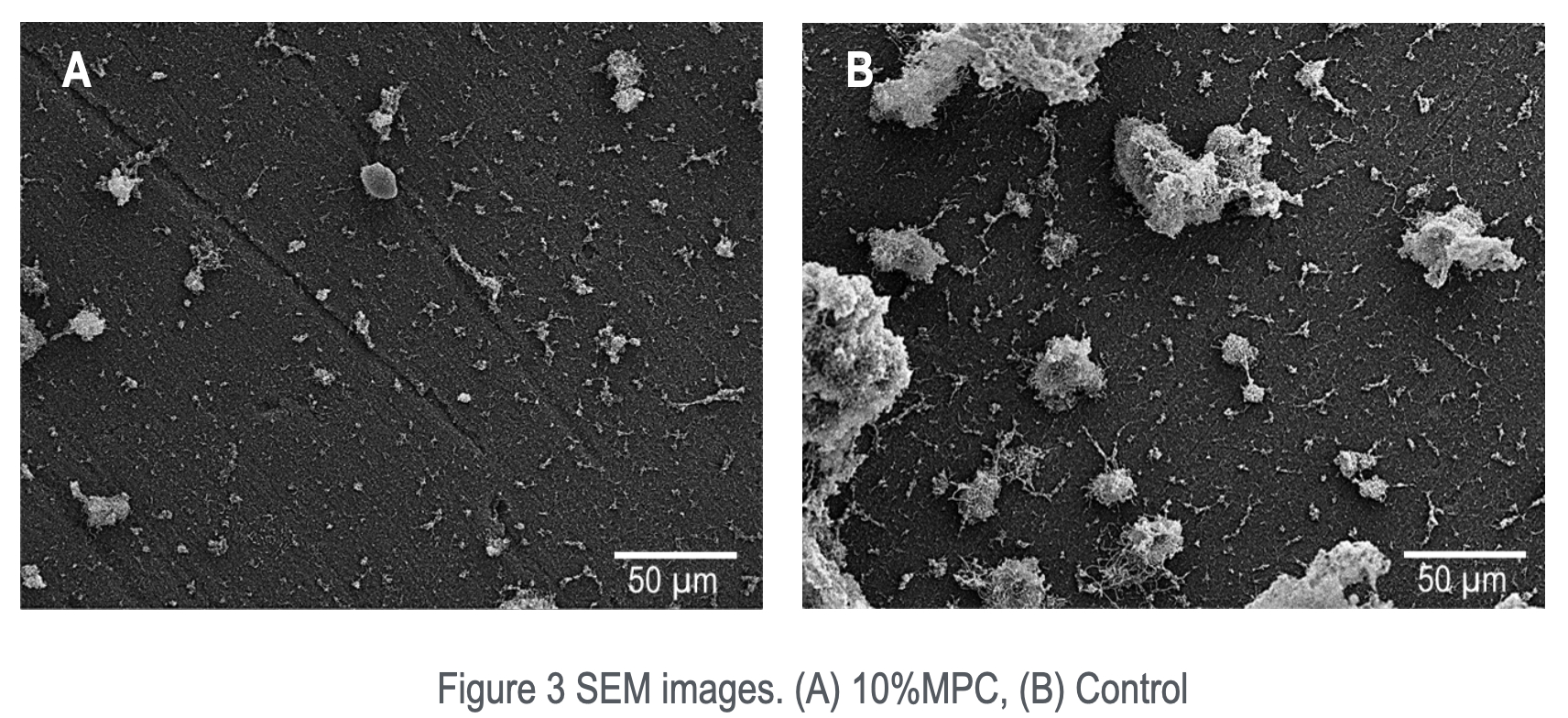
Results: Sealants containing 10% and 15% MPC significantly reduced salivary protein adsorption and biofilm formation on their surfaces (p < 0.05). However, the surface microhardness of the 15% MPC group was significantly lower than that of the other groups (p < 0.05). SEM observations revealed sparse and smaller biofilm colonies on the surface of sealants with 10% MPC compared to the control. Furthermore, the degree of conversion of this group showed no significant difference from the control group (p ≥ 0.05).
Conclusions: Incorporating 10% MPC into dental sealant effectively reduces salivary protein adsorption and S. mutans biofilm formation on the surface with minimal adverse effects of the sealant’s properties.
Methods: Sealant discs were prepared by incorporating MPC powder into the sealant at concentrations of 3%, 5%, 10%, and 15% by weight. To evaluate salivary protein adsorption, the specimens were immersed in filtered saliva for 2 hours and analyzed using a micro-BCA protein assay kit. For biofilm formation assessment, the specimens were immersed in a 1 × 10⁸ CFU/mL S. mutans suspension containing sucrose for 24 hours, and the total CFU count was determined. Surface microhardness of each specimen was also measured. Additionally, for the 10% MPC group, biofilm formation was observed using scanning electron microscopy (SEM), and the degree of conversion was tested and compared to the control.
Results: Sealants containing 10% and 15% MPC significantly reduced salivary protein adsorption and biofilm formation on their surfaces (p < 0.05). However, the surface microhardness of the 15% MPC group was significantly lower than that of the other groups (p < 0.05). SEM observations revealed sparse and smaller biofilm colonies on the surface of sealants with 10% MPC compared to the control. Furthermore, the degree of conversion of this group showed no significant difference from the control group (p ≥ 0.05).
Conclusions: Incorporating 10% MPC into dental sealant effectively reduces salivary protein adsorption and S. mutans biofilm formation on the surface with minimal adverse effects of the sealant’s properties.
IMAGES
4286710_File000010.jpg
4286710_File000007.jpg
4286710_File000009.jpg
4286710_File000010.jpg
4286710_File000007.jpg
4286710_File000009.jpg