IADR Abstract Archives
The Role of Osteomodulin in Osteoporosis by Regulating Bone Homeostasis
Objectives: Osteoporosis is a systemic skeletal disease characterized by low bone mass and microarchitectural deterioration of bone tissues. Osteomodulin (OMD) is a secreted proteoglycan expressed by osteoblasts. OMD has been reported to promote osteogenic differentiation and bone formation. This study aimed to explore the role of OMD during osteoporosis and decipher the potential regulatory mechanisms.
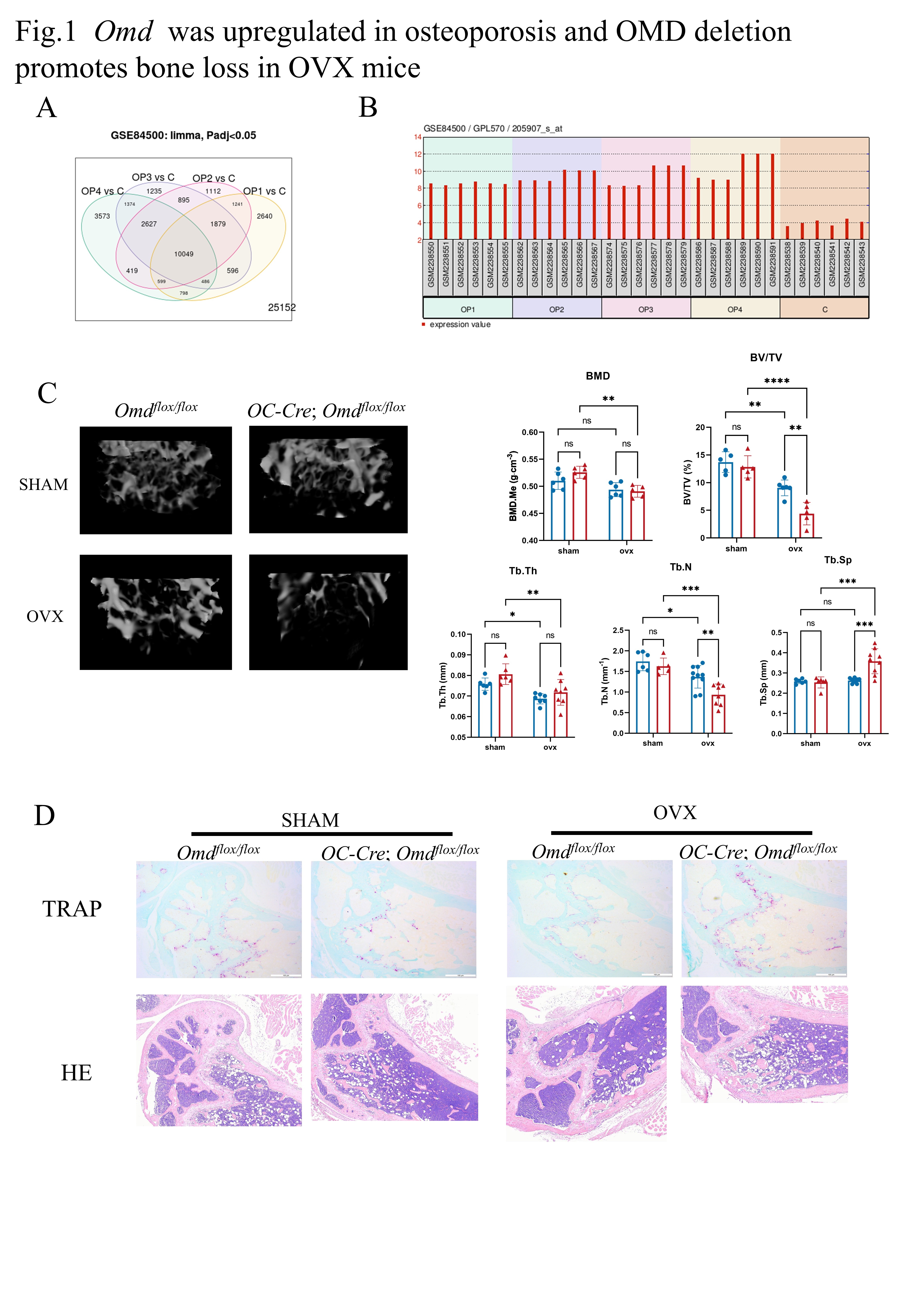
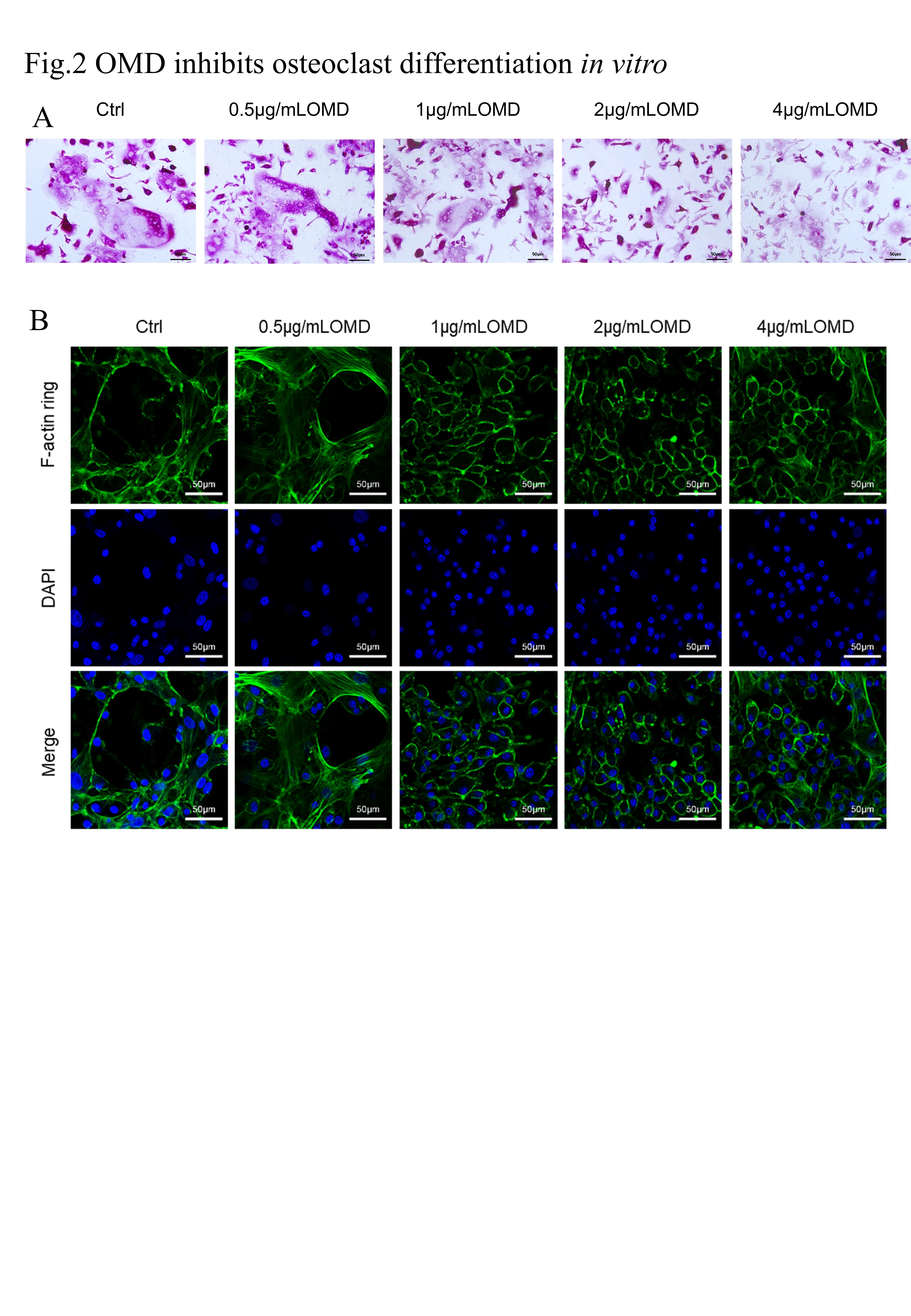
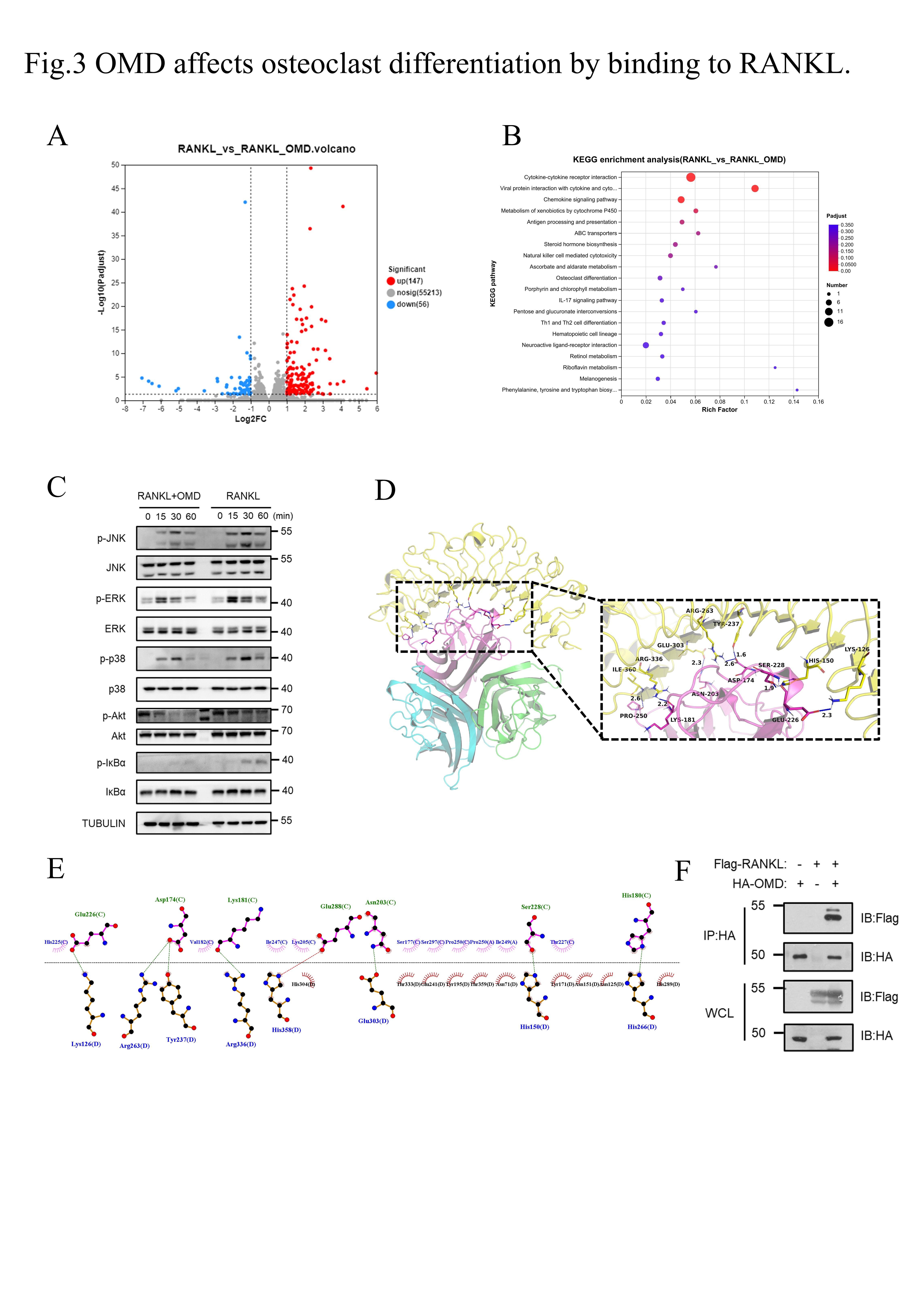
Methods: Exploring Omd expression in osteoporosis by analyzing clinical osteoporosis histology in public databases. OMD osteoblast-specific knockout mice (OC-Cre; Omdflox/flox) were generated and an ovariectomy (OVX)-induced osteoporosis model was constructed for further animal experiments. Mouse femurs were analyzed by micro-CT, while osteoclast content was analyzed by tartrate-resistant acid phosphatase (TRAP) staining. The effect of OMD on osteoclastic differentiation of bone marrow-derived macrophage (BMDM) was explored by TRAP and immunofluorescence staining in vitro. The effects of OMD on the gene expression through BMDM osteoclastic differentiation were analyzed by transcriptomics. Western blot (WB), molecular docking, and IP experiments were used to explore the specific mechanism of OMD on osteoporosis.
Results: Analysis of clinical samples revealed that OMD was increased in osteoporotic bone tissue. The micro-CT of OVX-mice indicated that the trabecular BV/TV was significantly decreased in cko mice compared to WT mice (P<0.01). More osteoclasts were detected by TRAP staining in cko mice than in WT mice under OVX-induced osteoporosis. TRAP and immunofluorescence staining indicated OMD inhibits BMDM osteoclastic differentiation in vitro. The transcriptomics showed that OMD affects the osteoclast differentiation signaling pathway. The WB showed that OMD decrease the expression of p-JNK, p-ERK, p-p38, p-Akt, and p-IκBα in BMDM. The molecular docking predicted that OMD binds to RANKL. The IP proved the combination of the two.
In summary, our findings indicate that OMD deficiency exacerbates bone loss in osteoporosis and that OMD may impede osteoclastic differentiation in BMDM by binding to RANKL.
Conclusions: In summary, our findings indicate that OMD deficiency exacerbates bone loss in osteoporosis and that OMD may impede osteoclastic differentiation in BMDM by binding to RANKL.
Methods: Exploring Omd expression in osteoporosis by analyzing clinical osteoporosis histology in public databases. OMD osteoblast-specific knockout mice (OC-Cre; Omdflox/flox) were generated and an ovariectomy (OVX)-induced osteoporosis model was constructed for further animal experiments. Mouse femurs were analyzed by micro-CT, while osteoclast content was analyzed by tartrate-resistant acid phosphatase (TRAP) staining. The effect of OMD on osteoclastic differentiation of bone marrow-derived macrophage (BMDM) was explored by TRAP and immunofluorescence staining in vitro. The effects of OMD on the gene expression through BMDM osteoclastic differentiation were analyzed by transcriptomics. Western blot (WB), molecular docking, and IP experiments were used to explore the specific mechanism of OMD on osteoporosis.
Results: Analysis of clinical samples revealed that OMD was increased in osteoporotic bone tissue. The micro-CT of OVX-mice indicated that the trabecular BV/TV was significantly decreased in cko mice compared to WT mice (P<0.01). More osteoclasts were detected by TRAP staining in cko mice than in WT mice under OVX-induced osteoporosis. TRAP and immunofluorescence staining indicated OMD inhibits BMDM osteoclastic differentiation in vitro. The transcriptomics showed that OMD affects the osteoclast differentiation signaling pathway. The WB showed that OMD decrease the expression of p-JNK, p-ERK, p-p38, p-Akt, and p-IκBα in BMDM. The molecular docking predicted that OMD binds to RANKL. The IP proved the combination of the two.
In summary, our findings indicate that OMD deficiency exacerbates bone loss in osteoporosis and that OMD may impede osteoclastic differentiation in BMDM by binding to RANKL.
Conclusions: In summary, our findings indicate that OMD deficiency exacerbates bone loss in osteoporosis and that OMD may impede osteoclastic differentiation in BMDM by binding to RANKL.
IMAGES
4286644_File000002.jpg
4286644_File000001.jpg
4286644_File000000.jpg
4286644_File000002.jpg
4286644_File000001.jpg
4286644_File000000.jpg