IADR Abstract Archives
Influence of Hydrofluoric Acid Concentration and Surface Treatments on the Interfacial Fracture Toughness of Lithium Disilicate Glass-Ceramics
Objectives: This study aimed to evaluate the interfacial fracture toughness of lithium disilicate glass-ceramic surfaces treated with varying concentrations of hydrofluoric acid, along with the application of an additional hydrophobic resin and different types of composite cement.
Methods: A total of forty-eight blocks of lithium disilicate glass ceramics were prepared and cut in half. Twelve distinct surface preparation methods were employed, which included treating the surfaces with 5% and 9.5% hydrofluoric acid (HF) for 20 seconds. The treatments were conducted with or without additional hydrophobic resin and included different types of cement: conventional composite, preheating composite, and luting composite cement. The bonded ceramic blocks were stored in artificial saliva for one week. Subsequently, the mini-interfacial toughness (mini-iFT) was measured to assess the bonding effectiveness. The data were analyzed using a two-way ANOVA with a significance level set at α=0.05.
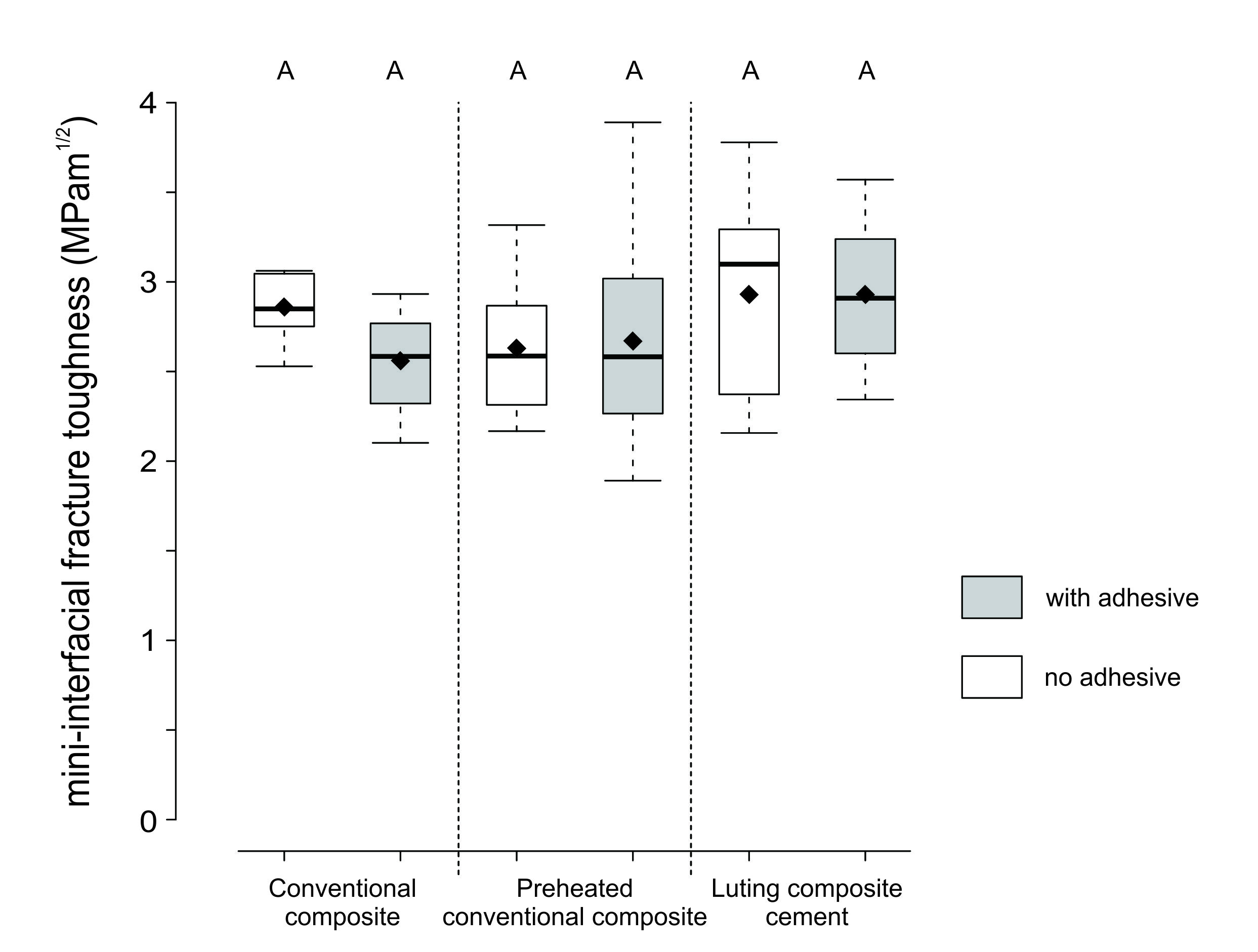
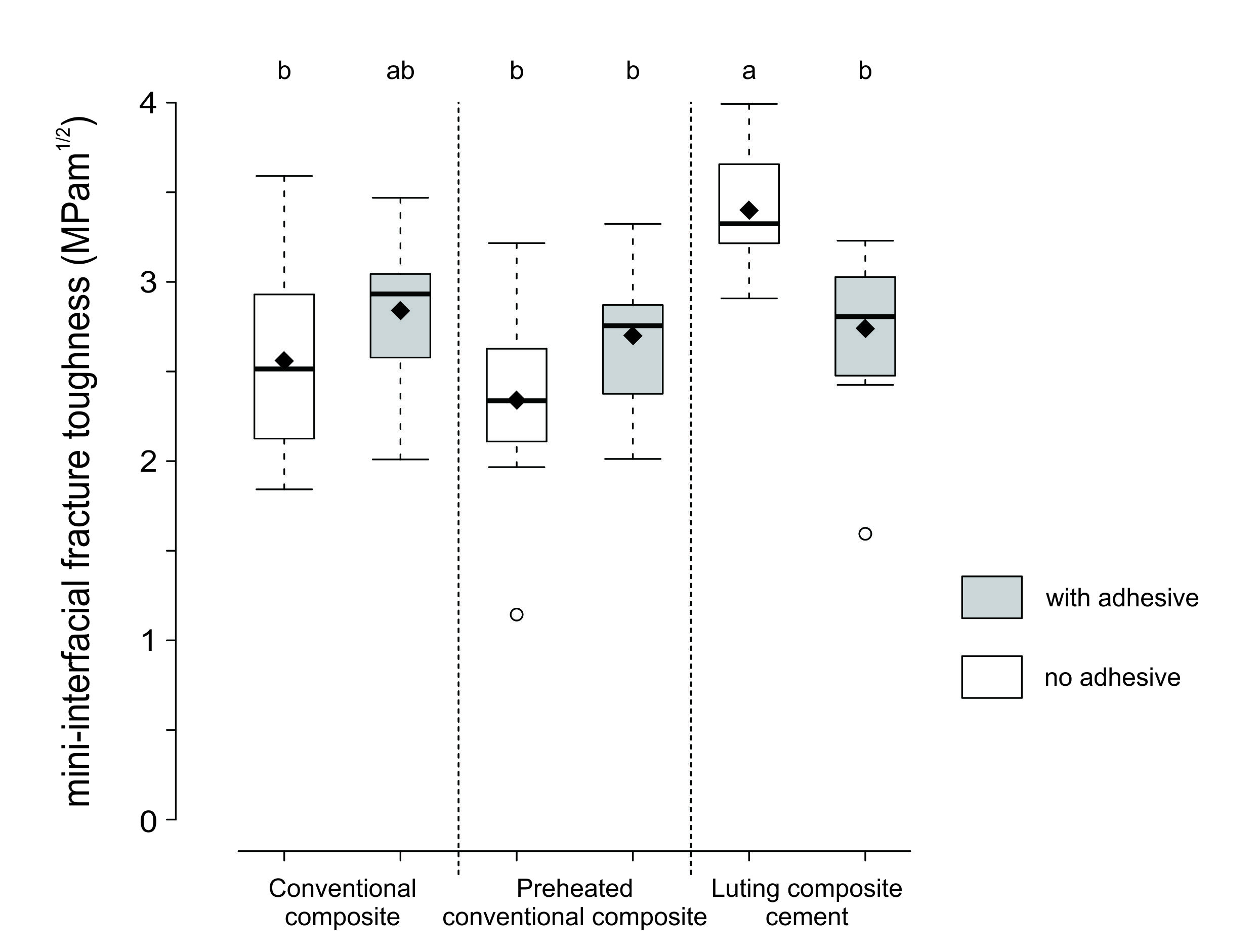
Results: The mini-iFT of ceramic surfaces treated with either 5% or 9.5% hydrofluoric acid showed no significant difference (p=0.538). For the 5% HF treatment, no significant differences were observed concerning the additional hydrophobic resin (p=0.45) or the type of cement used (p=0.08). However, with the 9.5% HF treatment, significant results were noted in relation to the type of cement used (p<0.05) and the interaction between the additional hydrophobic resin and the type of cement (p<0.05). Besides, the additional hydrophobic resin decreased the mini-iFT when the 9.5% HF was applied in conjunction with luting composite cement.
Conclusions: The use of additional hydrophobic resin did not enhance the mini-iFT in the groups treated with composite or preheated composite cement. In fact, the presence of the additional hydrophobic resin negatively impacted bonding effectiveness when using 9.5% HF with luting composite cement.
Methods: A total of forty-eight blocks of lithium disilicate glass ceramics were prepared and cut in half. Twelve distinct surface preparation methods were employed, which included treating the surfaces with 5% and 9.5% hydrofluoric acid (HF) for 20 seconds. The treatments were conducted with or without additional hydrophobic resin and included different types of cement: conventional composite, preheating composite, and luting composite cement. The bonded ceramic blocks were stored in artificial saliva for one week. Subsequently, the mini-interfacial toughness (mini-iFT) was measured to assess the bonding effectiveness. The data were analyzed using a two-way ANOVA with a significance level set at α=0.05.
Results: The mini-iFT of ceramic surfaces treated with either 5% or 9.5% hydrofluoric acid showed no significant difference (p=0.538). For the 5% HF treatment, no significant differences were observed concerning the additional hydrophobic resin (p=0.45) or the type of cement used (p=0.08). However, with the 9.5% HF treatment, significant results were noted in relation to the type of cement used (p<0.05) and the interaction between the additional hydrophobic resin and the type of cement (p<0.05). Besides, the additional hydrophobic resin decreased the mini-iFT when the 9.5% HF was applied in conjunction with luting composite cement.
Conclusions: The use of additional hydrophobic resin did not enhance the mini-iFT in the groups treated with composite or preheated composite cement. In fact, the presence of the additional hydrophobic resin negatively impacted bonding effectiveness when using 9.5% HF with luting composite cement.
IMAGES
4275246_File000000.jpg
4275246_File000001.jpg
4275246_File000000.jpg
4275246_File000001.jpg