IADR Abstract Archives
Photoinactivation of Candida Albicans Using Dual-Wavelength LEDs: Oral Mucositis Implications
Objectives: This study investigates the antimicrobial efficacy of dual-wavelength LED light therapy (460nm+845nm) against C. albicans, aiming to develop an alternative therapeutic approach for managing fungal infections in oral mucositis patients.
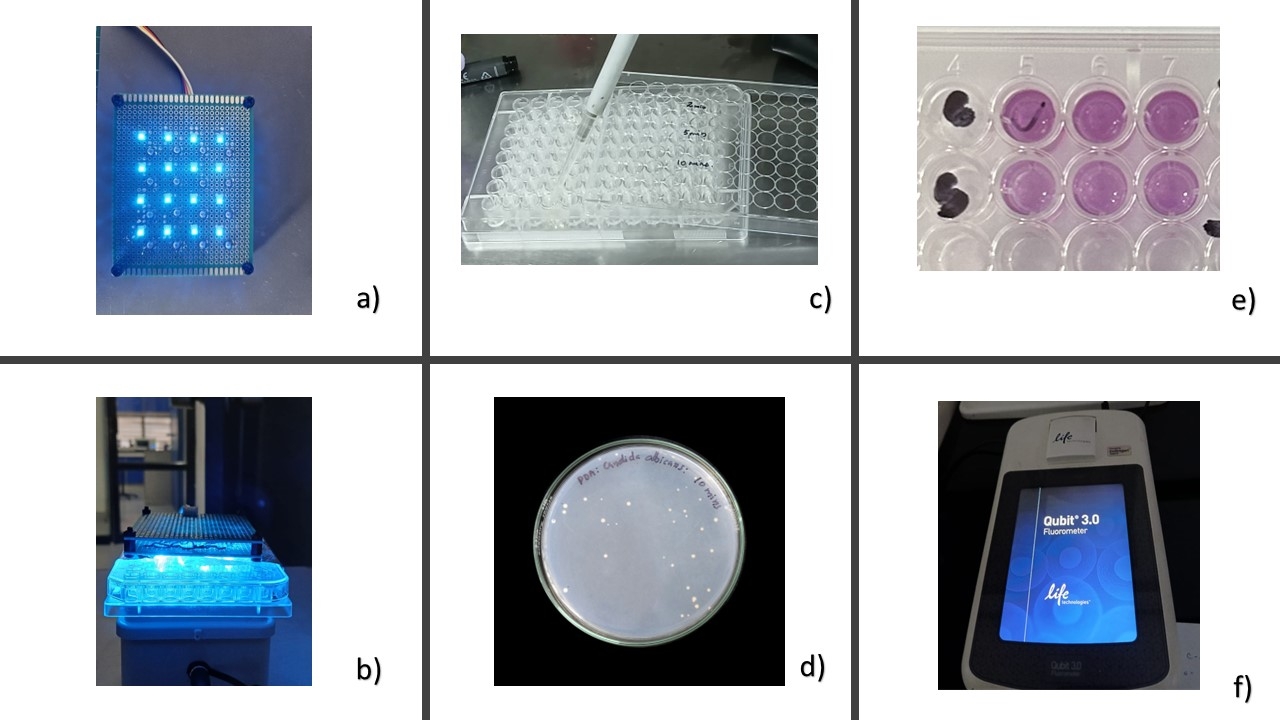
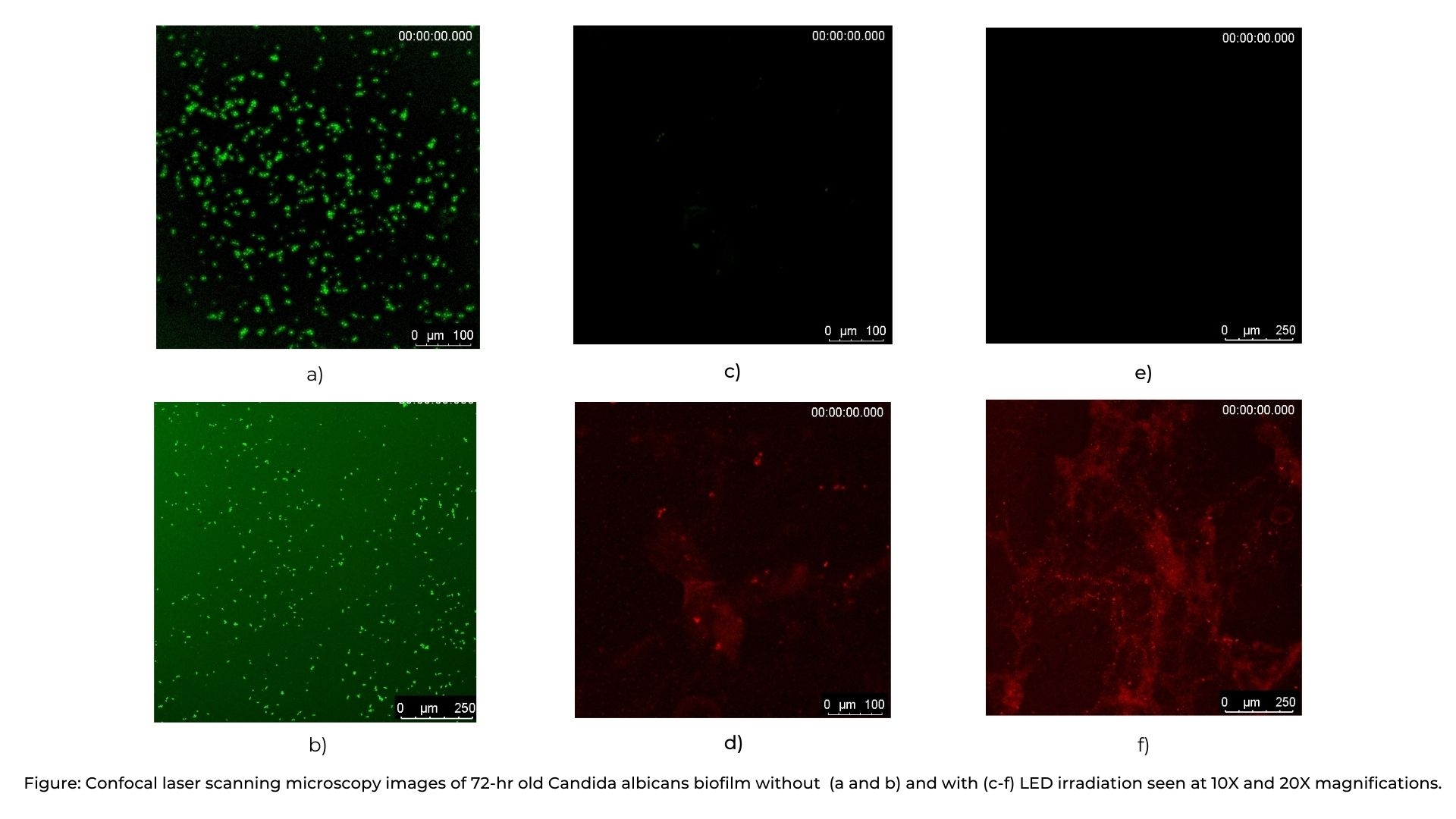
Methods: A custom-built LED device combining blue and near-infrared wavelengths (460nm+845nm) was used to treat C. albicans cultures. Samples were exposed to LED light for 2, 5, and 10 minutes, with unexposed samples as controls. The antimicrobial effects were evaluated using multiple parameters: colony-forming unit (CFU) counts, MTT metabolic assay, cell viability assessment, and intracellular reactive oxygen species (ROS) measurement. Furthermore, a 72-hr old C. albicans biofilm was stained with acridine orange and ethidium bromide and excited with appropriate laser wavelengths to assess its viability using a confocal laser scanning microscope (CLSM). Statistical comparisons between treatment groups were performed using the One-Way ANOVA non-parametric (Kruskal-Wallis) (n=15 per group).
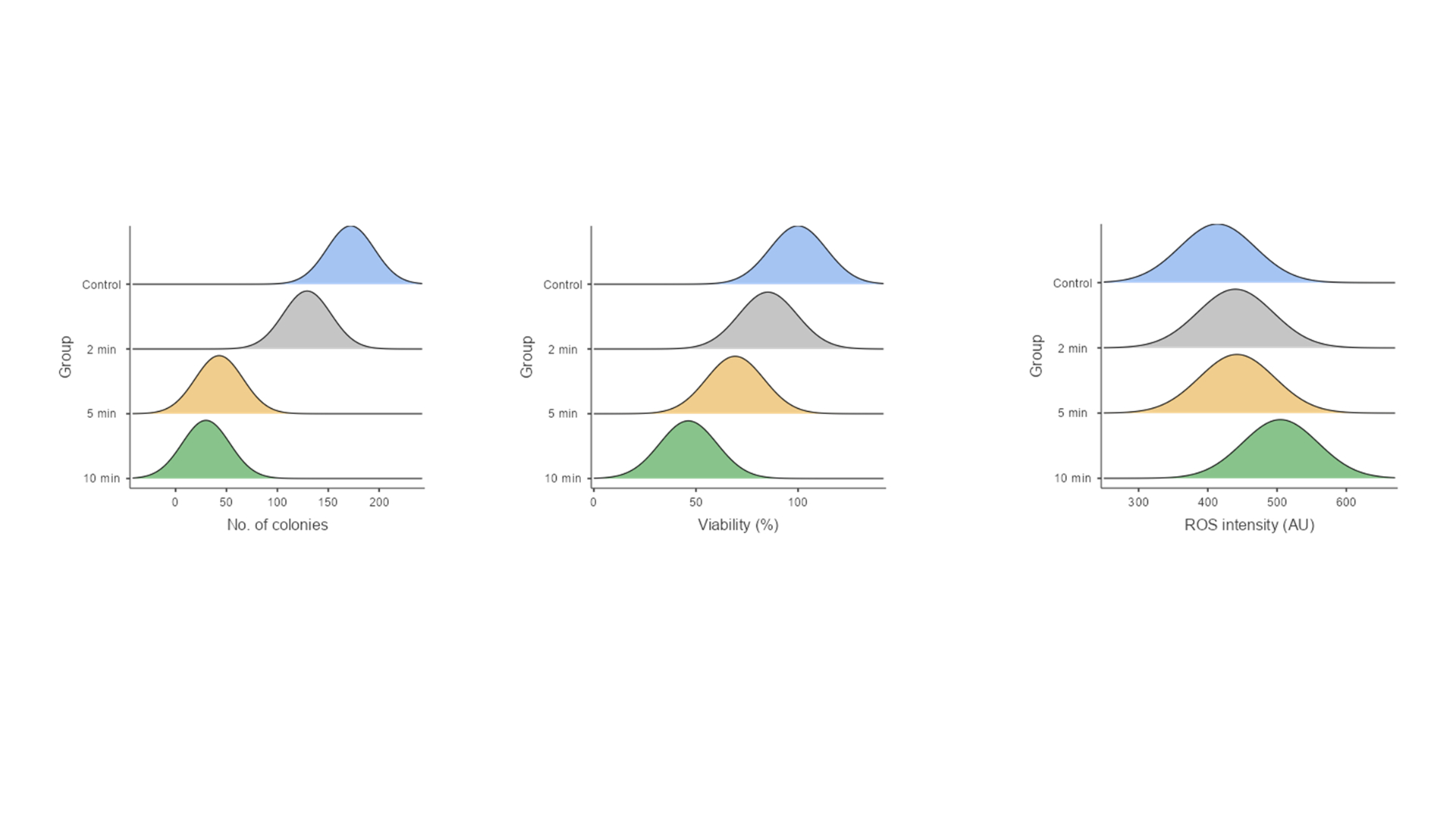
Results: Dual-wavelength LED exposure demonstrated significant dose-dependent antimicrobial effects against C. albicans. The 10-minute exposure resulted in (1) 82.55% reduction in CFU counts (172 to 30, p<<0.001**), (2) 53.80% decrease in metabolic activity via MTT assay (0.557 to 0.2887, p<0.001*), and (3) 53.80% reduction in cell viability (100 to 46.31, p<0.001**) compared to controls. Mechanistic analyses revealed a 21.93% increase in intracellular ROS levels (p<0.001*). CLSM analysis revealed significant differences in cell viability among various groups of LED-treated C. albicans biofilm, indicating cellular damage. With increasing exposure duration, progressive antimicrobial effects were observed, demonstrating a clear dose-dependent relationship.
Conclusions: Dual-wavelength LED therapy reduces C. albicans viability through enhanced oxidative stress and cellular damage mechanisms. This non-invasive approach shows promise as a potential therapeutic strategy for managing fungal infections in oral mucositis patients. Future research should focus on optimizing treatment parameters and conducting clinical trials to validate its therapeutic efficacy.
Methods: A custom-built LED device combining blue and near-infrared wavelengths (460nm+845nm) was used to treat C. albicans cultures. Samples were exposed to LED light for 2, 5, and 10 minutes, with unexposed samples as controls. The antimicrobial effects were evaluated using multiple parameters: colony-forming unit (CFU) counts, MTT metabolic assay, cell viability assessment, and intracellular reactive oxygen species (ROS) measurement. Furthermore, a 72-hr old C. albicans biofilm was stained with acridine orange and ethidium bromide and excited with appropriate laser wavelengths to assess its viability using a confocal laser scanning microscope (CLSM). Statistical comparisons between treatment groups were performed using the One-Way ANOVA non-parametric (Kruskal-Wallis) (n=15 per group).
Results: Dual-wavelength LED exposure demonstrated significant dose-dependent antimicrobial effects against C. albicans. The 10-minute exposure resulted in (1) 82.55% reduction in CFU counts (172 to 30, p<<0.001**), (2) 53.80% decrease in metabolic activity via MTT assay (0.557 to 0.2887, p<0.001*), and (3) 53.80% reduction in cell viability (100 to 46.31, p<0.001**) compared to controls. Mechanistic analyses revealed a 21.93% increase in intracellular ROS levels (p<0.001*). CLSM analysis revealed significant differences in cell viability among various groups of LED-treated C. albicans biofilm, indicating cellular damage. With increasing exposure duration, progressive antimicrobial effects were observed, demonstrating a clear dose-dependent relationship.
Conclusions: Dual-wavelength LED therapy reduces C. albicans viability through enhanced oxidative stress and cellular damage mechanisms. This non-invasive approach shows promise as a potential therapeutic strategy for managing fungal infections in oral mucositis patients. Future research should focus on optimizing treatment parameters and conducting clinical trials to validate its therapeutic efficacy.
IMAGES
4270887_File000000.jpg
4270887_File000001.jpg
4270887_File000002.jpg
4270887_File000000.jpg
4270887_File000001.jpg
4270887_File000002.jpg