IADR Abstract Archives
Analysis of Facial Code in the Experimental Facial Palsy
Objectives: The study of facial paralysis has several problems, such as the high cost of specialized equipment for its evaluation and the segmentation of the measurements to be carried out to determine the integrity of the facial nerve.
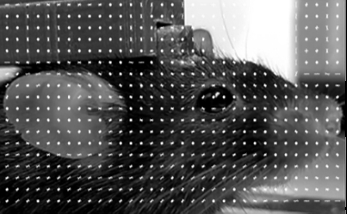
The thesis proposes new tools for the study of experimental facial paralysis in mice using video recording with white acrylic paint to record the tracking of whiskers and artificial vision for the analysis of the facial code, allowing us to know for the first time the natural history of facial paralysis in mice over time.
Methods: Nine mice from the C57BL/6 strain were evaluated and divided into three groups (transection, compression and sham surgery). Whisker movements and facial expressions were recorded while restrained in a semi-restrained fixed head system.
Results: Through the recordings, the amplitudes of the whisker's movements were obtained.
This allowed us to compare the evaluations between groups, finding significant differences at the lapse of 30 minutes in the compression group (Mdn=901.4, p<0.05) and the transection group (Mdn=730.9, p<0.05) When compared to the
sham group.
At day 9, the compression group had an amplitude similar to the sham group, while the transected group never ceased to show significant differences (Mdn=638.6, p<0.05).
The HOGS allowed us to analyze the mice's facial code thanks to the movement score. This score was evaluated over time, presenting significant differences after 30 minutes in the compression group (p<0.05) and transection group (p<0.05) When compared with its baseline. While the compression group showed recovery on day 10 (p<0.05), the transection group didn't (p<0.05).
The evaluation results from the facial expressions using the movement score behave similarly to the whisker's movements evaluation.
Conclusions: Artificial vision characterized changes in the mice's facial code by analyzing the facial paralysis's cardinal signs (ear movement, eye closure, whisker movement) over time.
The thesis proposes new tools for the study of experimental facial paralysis in mice using video recording with white acrylic paint to record the tracking of whiskers and artificial vision for the analysis of the facial code, allowing us to know for the first time the natural history of facial paralysis in mice over time.
Methods: Nine mice from the C57BL/6 strain were evaluated and divided into three groups (transection, compression and sham surgery). Whisker movements and facial expressions were recorded while restrained in a semi-restrained fixed head system.
Results: Through the recordings, the amplitudes of the whisker's movements were obtained.
This allowed us to compare the evaluations between groups, finding significant differences at the lapse of 30 minutes in the compression group (Mdn=901.4, p<0.05) and the transection group (Mdn=730.9, p<0.05) When compared to the
sham group.
At day 9, the compression group had an amplitude similar to the sham group, while the transected group never ceased to show significant differences (Mdn=638.6, p<0.05).
The HOGS allowed us to analyze the mice's facial code thanks to the movement score. This score was evaluated over time, presenting significant differences after 30 minutes in the compression group (p<0.05) and transection group (p<0.05) When compared with its baseline. While the compression group showed recovery on day 10 (p<0.05), the transection group didn't (p<0.05).
The evaluation results from the facial expressions using the movement score behave similarly to the whisker's movements evaluation.
Conclusions: Artificial vision characterized changes in the mice's facial code by analyzing the facial paralysis's cardinal signs (ear movement, eye closure, whisker movement) over time.
IMAGES
4063374_File000000.jpg
4063374_File000000.jpg