IADR Abstract Archives
Saccharibacteria Reduces Actinomyces Induced Innate Immune Response
Objectives: The main objective of this study is to identified how Actinomyces bacteria and their episymbiont Saccharibaccteria induce and modulate the innate immune response in oral epithelial cells. To achieve this, we examined the interplay between Saccharibacteria strain TM7x and the TLR2 in Actinomyces induced cell cytokine response. In parallel, we also intended to explore TM7x interaction with epithelial cells.
Methods: Host-bacteria free TM7x cells were isolated and quantified by qPCR using strain specific primers. Multiple oral epithelial cells (TIGK, NOK-SI and HGEPp) were infected with TM7x, A. odontolyticus strain XH001, and a co-culture of the two. At various time points, after infection, the cell cytokine responses were measured using ELISA and RT-qPCR. TM7x attachment and internalization by epithelial cells were characterized using flowcytometry, microscopy and qPCR. For transcriptome and pathway analysis, the iDEP bioinformatic tools were used.
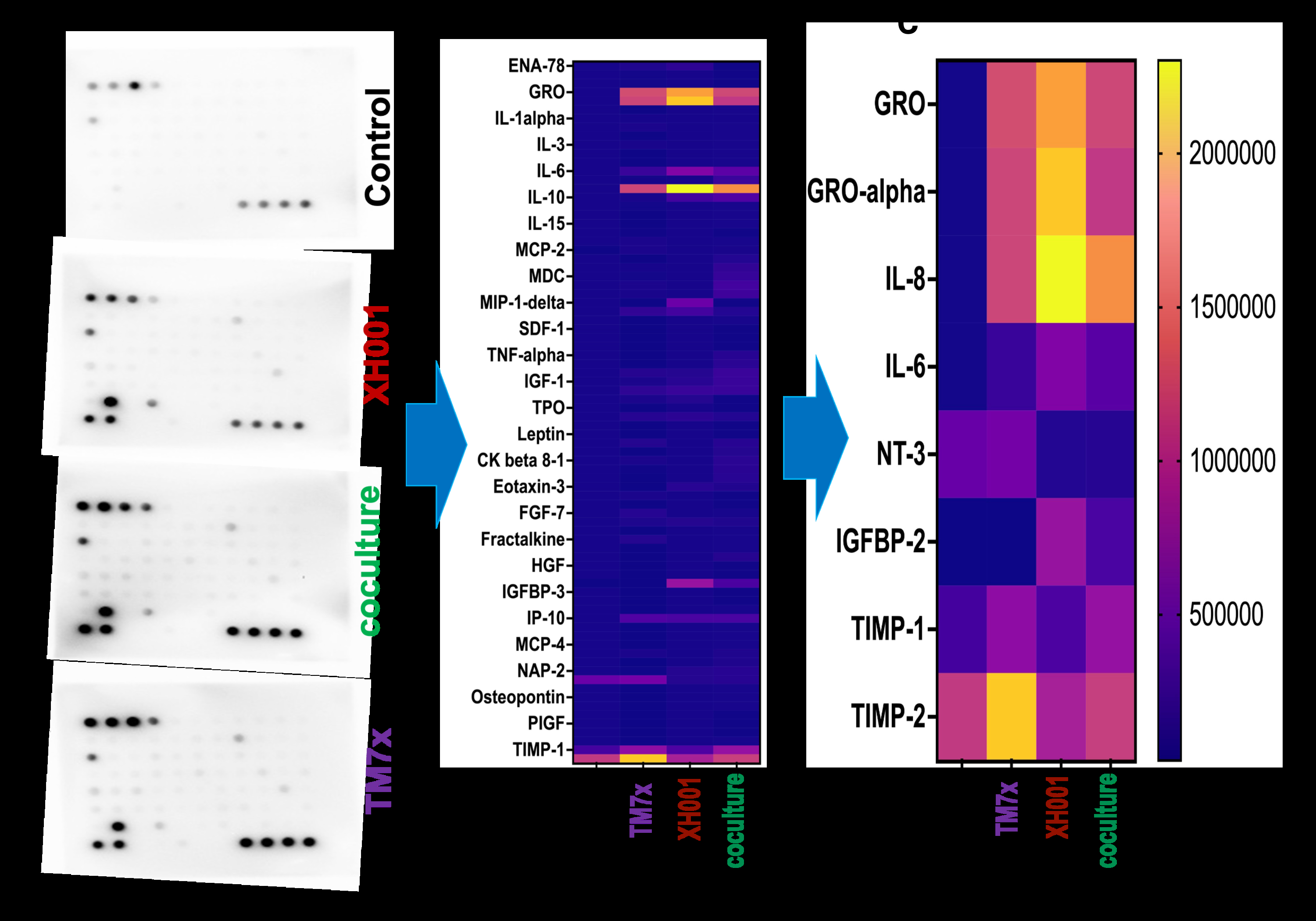
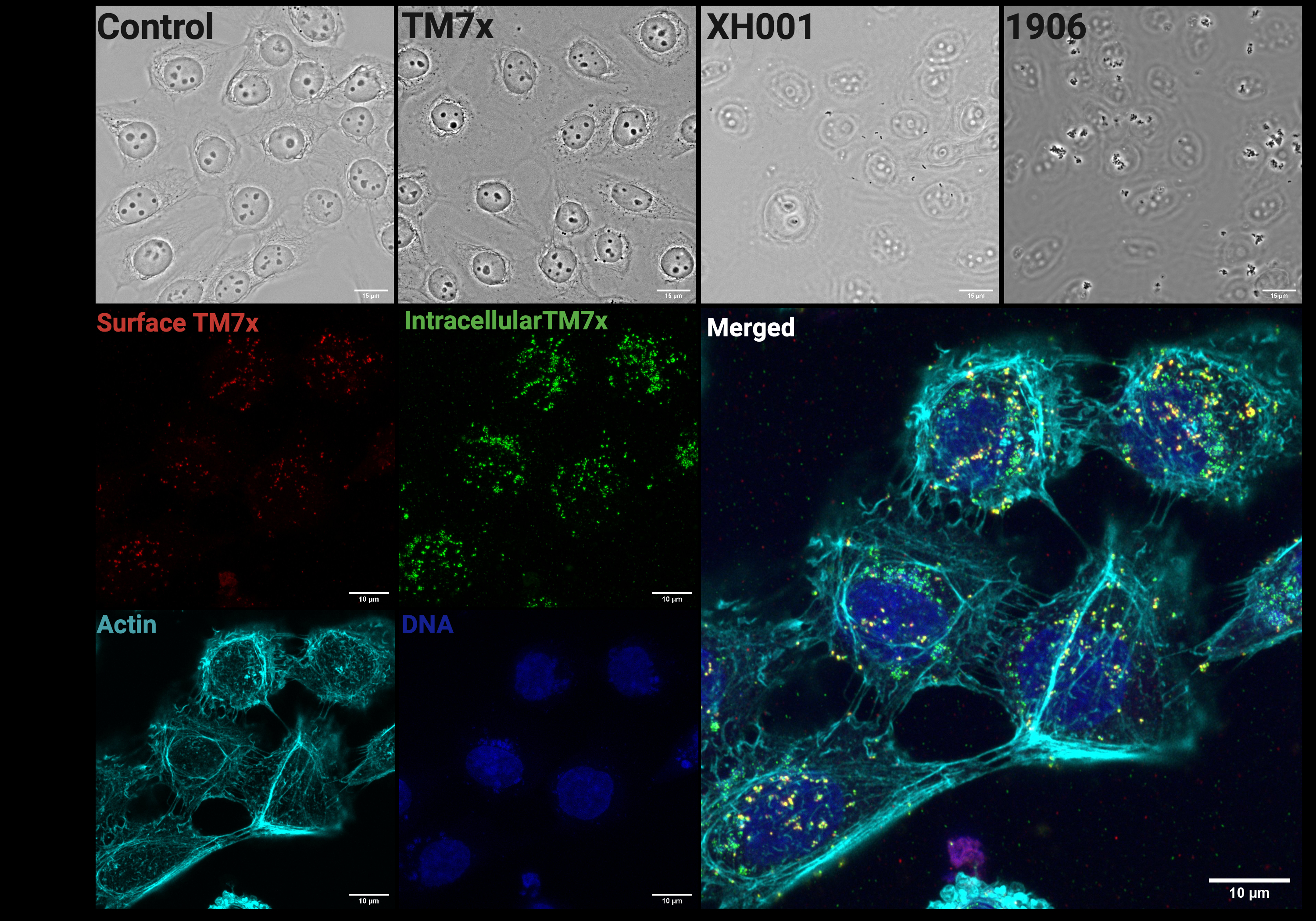
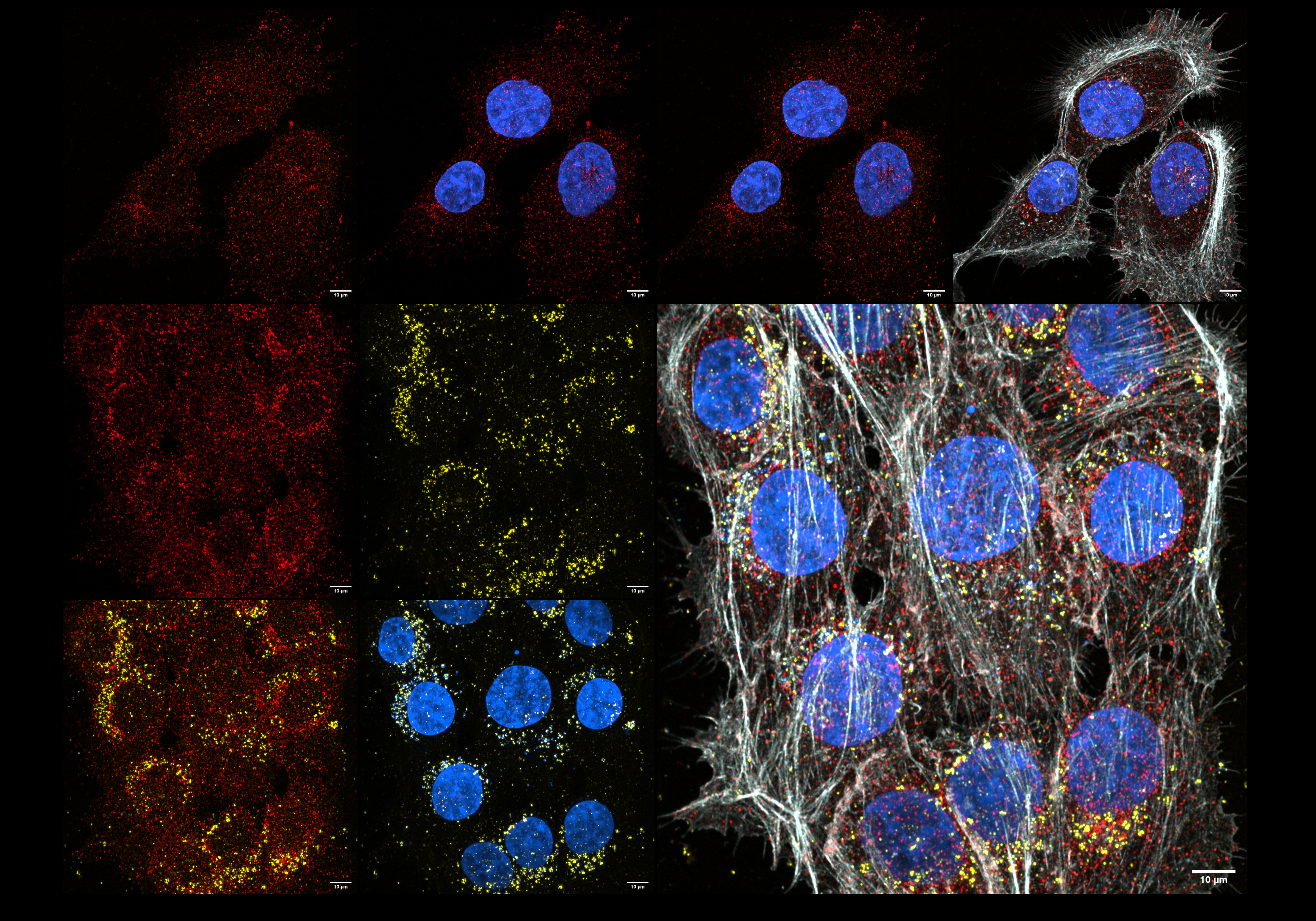
Results: Our findings show that XH001 induce strong cytokine responses (IL8 and GRO-a) in various human epithelial cells, while TM7x alone did not (immune inert). Using the HEK-293-TLR2 cell line and TLR2 neutralizing antibodies, we also determined that the XH001 stimulate cytokines in a TLR2-dependent manner. This cytokine stimulation, in turn, was inhibited by increasing concentration of TM7x. Flowcytometry and microscopy data also illustrated that TM7x strongly attaches and is internalized by gingival epithelial cells. We confirmed that TM7x internalization was mediated partially through endocytosis, as TM7x was observed in early and late endosome. Finally, we observed that TM7x was able to cluster TLR2 receptor around it, potentially blocking the binding of other bacteria and providing a mechanism for XH001 cytokine induction.
Conclusions: This study emphasizes the importance of Actinomyces species in oral inflammatory diseases and the potential of Saccharibacteria in reducing inflammation in various inflammatory diseases. This study also shed light on the role of TM7x bacteria in microbiome and mammalian host immune balance.
Methods: Host-bacteria free TM7x cells were isolated and quantified by qPCR using strain specific primers. Multiple oral epithelial cells (TIGK, NOK-SI and HGEPp) were infected with TM7x, A. odontolyticus strain XH001, and a co-culture of the two. At various time points, after infection, the cell cytokine responses were measured using ELISA and RT-qPCR. TM7x attachment and internalization by epithelial cells were characterized using flowcytometry, microscopy and qPCR. For transcriptome and pathway analysis, the iDEP bioinformatic tools were used.
Results: Our findings show that XH001 induce strong cytokine responses (IL8 and GRO-a) in various human epithelial cells, while TM7x alone did not (immune inert). Using the HEK-293-TLR2 cell line and TLR2 neutralizing antibodies, we also determined that the XH001 stimulate cytokines in a TLR2-dependent manner. This cytokine stimulation, in turn, was inhibited by increasing concentration of TM7x. Flowcytometry and microscopy data also illustrated that TM7x strongly attaches and is internalized by gingival epithelial cells. We confirmed that TM7x internalization was mediated partially through endocytosis, as TM7x was observed in early and late endosome. Finally, we observed that TM7x was able to cluster TLR2 receptor around it, potentially blocking the binding of other bacteria and providing a mechanism for XH001 cytokine induction.
Conclusions: This study emphasizes the importance of Actinomyces species in oral inflammatory diseases and the potential of Saccharibacteria in reducing inflammation in various inflammatory diseases. This study also shed light on the role of TM7x bacteria in microbiome and mammalian host immune balance.
IMAGES
4059606_File000000.jpg
4059606_File000001.jpg
4059606_File000002.jpg
4059606_File000000.jpg
4059606_File000001.jpg
4059606_File000002.jpg