IADR Abstract Archives
Role of Tooth Bud Silk Scaffolds in Dental Cell Differentation
Objectives: Approximately 160 million adults suffer from tooth loss in the United States. While root canal therapy and prostheses are common treatments, neither reproduces the biological qualities of a living tooth. It is critical to seek alternative treatments and investigate methods to regenerate dental pulp, which sustains teeth by providing nutrients, oxygen, innervation, and immune response. We sought to determine if decellularized, pig tooth bud-derived extracellular matrix (tECM) promotes the differentiation of porcine dental pulp-derived dental mesenchymal stem cells (DMSC) when incorporated into silk scaffolds. In a previous in vitro study, we had analyzed 9 types of silk scaffolds, each comprised of either 3% or 6% silk paired with tECM, collagen, salt, or a combination of those components. Based on the in vitro results, we selected only the 6% silk with tECM, and the 6% silk alone scaffolds, which demonstrated the highest DMSC differentiation, for further in vivo analysis.
Methods: Both 6% silk with tECM and 6% silk alone scaffolds were implanted subcutaneously into nude rats and analyzed after 1 and 3 months. After quantifying calcified tissue formation with MicroCT, the samples were demineralized, paraffin-embedded, and sectioned. Select sections were stained with H&E, followed by immunofluorescence and immunohistochemistry with vimentin, factor VIII, and osteocalcin antibodies.
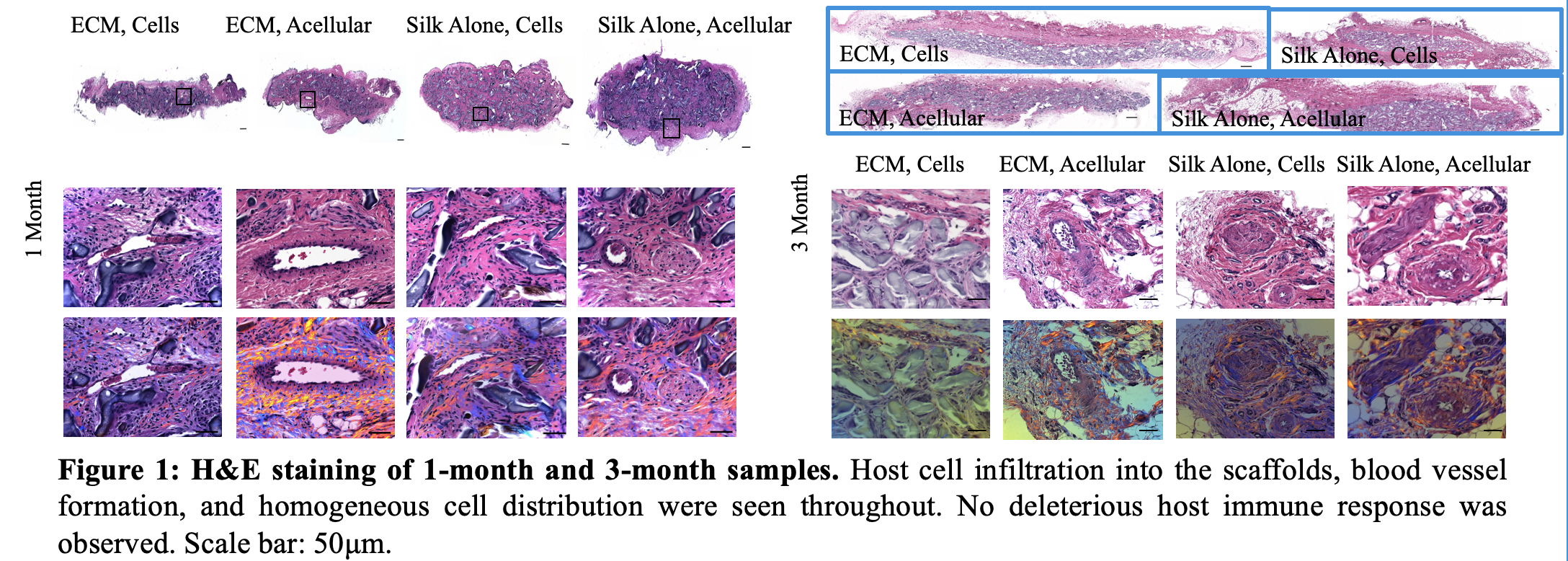
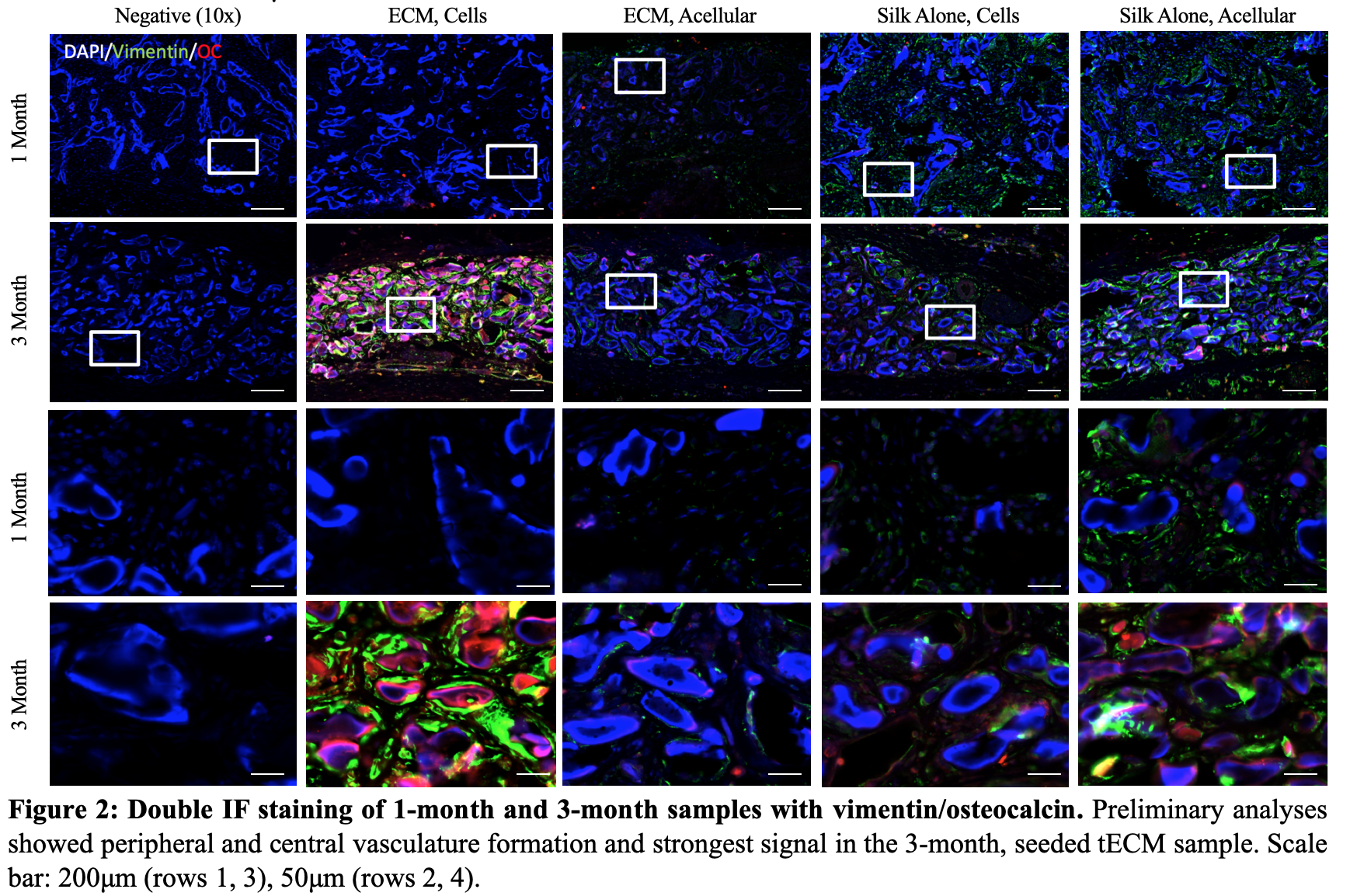
Results: MicroCT data showed that silk scaffolds with tECM promote DMSC differentiation and calcified tissue formation with or without cells. H&E staining demonstrated host cell infiltration into the scaffolds, blood vessel formation, and homogeneous cell distribution throughout. No deleterious host immune response was observed. Preliminary IF and IHC analyses showed vimentin/factor VIII positive peripheral and central vasculature formation. IF/IHC analyses are in progress for vimentin/osteocalcin expression.
Conclusions: Silk scaffolds incorporated with tECM is a promising scaffold for tooth engineering. Analyses and comparison of the 1 and 3-month samples are currently being performed and will be characterized using statistical analyses.
Methods: Both 6% silk with tECM and 6% silk alone scaffolds were implanted subcutaneously into nude rats and analyzed after 1 and 3 months. After quantifying calcified tissue formation with MicroCT, the samples were demineralized, paraffin-embedded, and sectioned. Select sections were stained with H&E, followed by immunofluorescence and immunohistochemistry with vimentin, factor VIII, and osteocalcin antibodies.
Results: MicroCT data showed that silk scaffolds with tECM promote DMSC differentiation and calcified tissue formation with or without cells. H&E staining demonstrated host cell infiltration into the scaffolds, blood vessel formation, and homogeneous cell distribution throughout. No deleterious host immune response was observed. Preliminary IF and IHC analyses showed vimentin/factor VIII positive peripheral and central vasculature formation. IF/IHC analyses are in progress for vimentin/osteocalcin expression.
Conclusions: Silk scaffolds incorporated with tECM is a promising scaffold for tooth engineering. Analyses and comparison of the 1 and 3-month samples are currently being performed and will be characterized using statistical analyses.
IMAGES
3324499_File000000.jpg
3324499_File000001.jpg
3324499_File000000.jpg
3324499_File000001.jpg