IADR Abstract Archives
Correlation Between Marginal Gap and Shrinkage Stress in Flowable Composites
Objectives: Aesthetic restorations are susceptible to gap formation, shrinkage stress and marginal microleakage that may initiate secondary caries. The objective of the present study was to evaluate the marginal gap area around the interface between dentin and resin composite restorations using different flowable composites, with and without thermomechanical aging cycling, and to correlate it to resin composite shrinkage stress.
Methods: Sixty standardized cavity preparations were prepared on bovine incisors using a device with diamond bur (3286P, KG-Sorensen, Brazil). The teeth were randomly divided into 3 groups according to flowable composite used: FB - Filtek Bulk Fill Flow (3M-ESPE), AF - Admira Fusion Flow (VOCO) and FZ - Filtek Z350 XT Flow (3M-ESPE). Half of each group (n=10) were subjected to thermomechanical aging (TA): 120,000 mechanical cycles (4 Hz, 30 N load) and 5,000 thermal cycles. Single Bond Universal (3M) was applied for all groups prior to the use of the flowable composites. Evaluation of marginal gap area (μm2) were observed by optical microscopy and shrinkage stress assessment was performed with a universal testing machine.
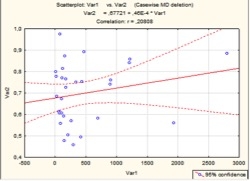
Results: Marginal gap data were analysed with two-way ANOVA (flowable composite - p=0.0005 and thermomechanical aging - p=0.0184; α=0.05) and Tukey test showed mean and standard deviation (μm2±SD) for TA factor: Aging =541.68±132.1a; No Aging =303.3±71.2b and for flowable composite factor: FZ =703.3±287.2a; FB =337.5±92.6a; AF =226.6±82.2b. Shrinkage stress data (MPa±SD) were analyzed by one-way ANOVA (p=0.0001; α=0.05) and Tukey test. AF presented lower values (0.564±0.076a) than FB (0.754±0.135b) and FZ (0.776±0.125b). Pearson correlation coefficient test showed low correlation between marginal gap formation and polymerization shrinkage stress (r=0.20).
Conclusions: Thermomechanical aging increases marginal gap area with AF and FZ composites showing better results. AF presents the best shrinkage stress results. There was minimal correlation between marginal gap formation and polymerization shrinkage stress.
Methods: Sixty standardized cavity preparations were prepared on bovine incisors using a device with diamond bur (3286P, KG-Sorensen, Brazil). The teeth were randomly divided into 3 groups according to flowable composite used: FB - Filtek Bulk Fill Flow (3M-ESPE), AF - Admira Fusion Flow (VOCO) and FZ - Filtek Z350 XT Flow (3M-ESPE). Half of each group (n=10) were subjected to thermomechanical aging (TA): 120,000 mechanical cycles (4 Hz, 30 N load) and 5,000 thermal cycles. Single Bond Universal (3M) was applied for all groups prior to the use of the flowable composites. Evaluation of marginal gap area (μm2) were observed by optical microscopy and shrinkage stress assessment was performed with a universal testing machine.
Results: Marginal gap data were analysed with two-way ANOVA (flowable composite - p=0.0005 and thermomechanical aging - p=0.0184; α=0.05) and Tukey test showed mean and standard deviation (μm2±SD) for TA factor: Aging =541.68±132.1a; No Aging =303.3±71.2b and for flowable composite factor: FZ =703.3±287.2a; FB =337.5±92.6a; AF =226.6±82.2b. Shrinkage stress data (MPa±SD) were analyzed by one-way ANOVA (p=0.0001; α=0.05) and Tukey test. AF presented lower values (0.564±0.076a) than FB (0.754±0.135b) and FZ (0.776±0.125b). Pearson correlation coefficient test showed low correlation between marginal gap formation and polymerization shrinkage stress (r=0.20).
Conclusions: Thermomechanical aging increases marginal gap area with AF and FZ composites showing better results. AF presents the best shrinkage stress results. There was minimal correlation between marginal gap formation and polymerization shrinkage stress.
IMAGES
3314093_File000000.jpg
3314093_File000000.jpg