IADR Abstract Archives
Peri-Implant Healing Around Different Machined-Collar Designs After 25 Years.
Objectives: The goal of this research was to study the long-term effects of different implant machined collar designs on peri-implant healing.
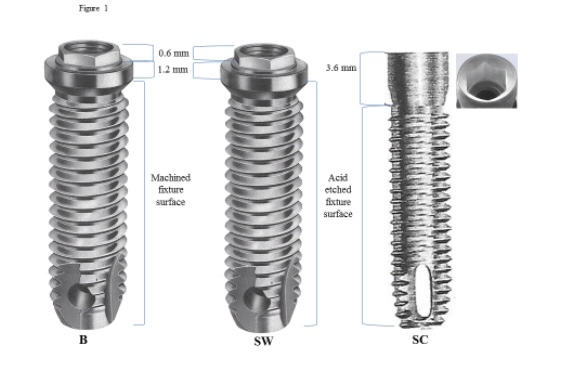
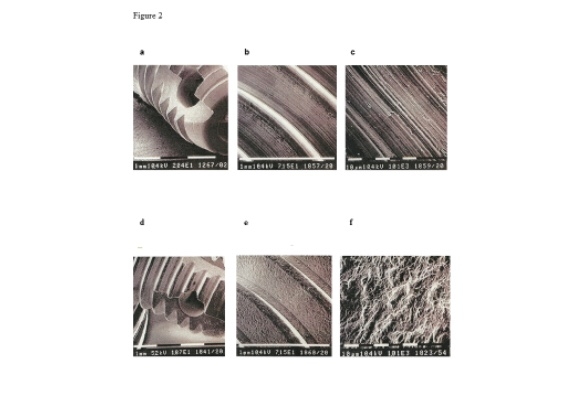
Methods: Twenty-two subjects (mean age 69.8±0.79 years, 11 women) who received five mandibular implants to support fixed or removable mandibular prostheses were enrolled in this prospective study (NCT03862482). Acid-etched internal-hex Screw-Vent® implants with a 3.6mm-long machined collar were compared to external-hex machined Brånemark® and acid-etched Swede-Vent® implants with an identical 1.2mm machined collar. Each subject received one of the three implants alternately at five sites between mental foramen, allowing within-subject comparison. With implant platforms placed at the crest, and following calibration, mesial and distal peri-implant crestal bone levels were measured at baseline and after 23-to-26-years of function with standardized peri-apical radiographs. Keratinized gingiva height (mm); probing depth (mm); and presence or absence of plaque, bleeding and purulent exudate after probing were also evaluated after calibration. Descriptive and mixed models for repeated measures analyses were used, with level of significance set at P<.05 and Bonferroni correction for pairwise comparisons.
Results: Screw-Vent® implants had a significantly greater mean bone loss (-1.70±0.21mm) compared with Brånemark® (-0.59±0.21mm; P<0.001) and Swede-Vent® (-0.95±0.21mm; P≤0.003) implants. Brånemark® implants exhibited less mean bone loss than Swede-Vent® microtextured implants, but this difference was not statistically significant (P=0.368). Significant differences between groups were found for keratinized gingiva height (P=0.013), but not for plaque (P=0.780), probing depth (P=0.419), bleeding (P=0.067) and exudate (P=0.999). Implant survival rate was 100%.
Conclusions: Within the confines of this study, all implant types exhibited minimal peri-implant bone loss (<2mm) after a mean of 24.5 years of function. The internal-connection implant design with the longer, narrower machined collar had significantly more bone loss compared to both external-connection implants with the 1.2mm-long machined collar. Further long-term controlled studies are warranted to confirm these findings.
Methods: Twenty-two subjects (mean age 69.8±0.79 years, 11 women) who received five mandibular implants to support fixed or removable mandibular prostheses were enrolled in this prospective study (NCT03862482). Acid-etched internal-hex Screw-Vent® implants with a 3.6mm-long machined collar were compared to external-hex machined Brånemark® and acid-etched Swede-Vent® implants with an identical 1.2mm machined collar. Each subject received one of the three implants alternately at five sites between mental foramen, allowing within-subject comparison. With implant platforms placed at the crest, and following calibration, mesial and distal peri-implant crestal bone levels were measured at baseline and after 23-to-26-years of function with standardized peri-apical radiographs. Keratinized gingiva height (mm); probing depth (mm); and presence or absence of plaque, bleeding and purulent exudate after probing were also evaluated after calibration. Descriptive and mixed models for repeated measures analyses were used, with level of significance set at P<.05 and Bonferroni correction for pairwise comparisons.
Results: Screw-Vent® implants had a significantly greater mean bone loss (-1.70±0.21mm) compared with Brånemark® (-0.59±0.21mm; P<0.001) and Swede-Vent® (-0.95±0.21mm; P≤0.003) implants. Brånemark® implants exhibited less mean bone loss than Swede-Vent® microtextured implants, but this difference was not statistically significant (P=0.368). Significant differences between groups were found for keratinized gingiva height (P=0.013), but not for plaque (P=0.780), probing depth (P=0.419), bleeding (P=0.067) and exudate (P=0.999). Implant survival rate was 100%.
Conclusions: Within the confines of this study, all implant types exhibited minimal peri-implant bone loss (<2mm) after a mean of 24.5 years of function. The internal-connection implant design with the longer, narrower machined collar had significantly more bone loss compared to both external-connection implants with the 1.2mm-long machined collar. Further long-term controlled studies are warranted to confirm these findings.
IMAGES
3281636_File000000.jpg
3281636_File000001.jpg
3281636_File000000.jpg
3281636_File000001.jpg