IADR Abstract Archives
Effectiveness of Propolis nanoformulations against Enterococcus faecalis Biofilms in the Root Canal
Objectives: To compare the effectiveness of propolis nano-formulations (PN) against E. faecalis biofilm in root canal dentinal tubules at depths of 200 and 400 micrometer with sodium hypochlorite and chlorhexidine (CHX).
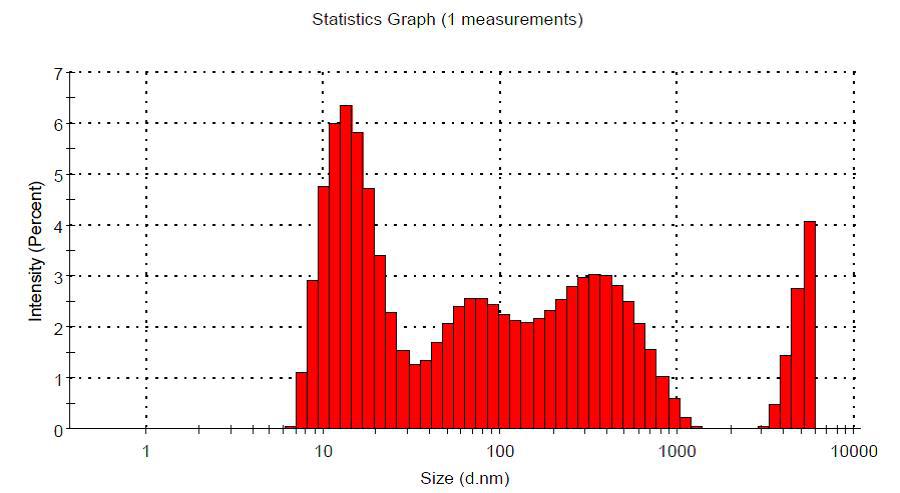
Methods: PNs were prepared by ultrasonication and the particle size distribution and polydispersity index were determined by dynamic light scattering using Zetasizer Nano S90 (Malvern, Worcestershire, UK) at fixed angle of 90°. The formulation was suitably diluted with distilled water and measured at 25°C. Data were collected after 2 mins equilibration time and averaged over three measurements.
210 extracted human teeth were sectioned below the cemento-enamel junction and the apical part of the root to obtain 6 mm of the middle third of the root. The root canal was enlarged to an internal diameter of 0.9 mm using Pesso Reamer size No. 2, irrigated and autoclaved. The specimens were infected for 21 days with E. faecalis to create a biofilm, and divided into seven groups of 10 specimens treated with PN1, PN2, 3% sodium hypochlorite, 2% CHX, sterile saline, propolis1 and propolis2 as controls. At the end of 1minute, 5 and 10 minutes, dentine shavings were collected at 200 and 400 μm, Total numbers of colony forming units (CFUs) were calculated for assessing the remaining vital viable microbial population. Mean reduction of CFUs between all intracanal irrigants was assessed.SEM images were also analysed.
Results: The particle size of nanaopropolis was observed in the range of 117.6 ± 5.6 nm with Poly Dispersity index (PDI) of 0.277 ± 0.011. Preliminary analysis indicated reduction in CFUs in all groups were more than to the saline group after 1 minute, 5 and 10 minutes. However, there was no difference observed in between PN1, PN2, sodium hypochlorite and CHX, after 5 minutes of intracanal irrigation both at 200 and 400 μm depths. All groups except saline showed no difference in reducing E. faecalis colonies after10 minutes.
Conclusions: The E. faecalis growth inhibition effect of PN1 and PN2 was similar to sodium hypochlorite and chlorhexidine after 1 minute, 5 and 10 minutes at both 200 and 400 μm. Propolis nanoformulations can be considered as an alternative intracanal irrigant.
Methods: PNs were prepared by ultrasonication and the particle size distribution and polydispersity index were determined by dynamic light scattering using Zetasizer Nano S90 (Malvern, Worcestershire, UK) at fixed angle of 90°. The formulation was suitably diluted with distilled water and measured at 25°C. Data were collected after 2 mins equilibration time and averaged over three measurements.
210 extracted human teeth were sectioned below the cemento-enamel junction and the apical part of the root to obtain 6 mm of the middle third of the root. The root canal was enlarged to an internal diameter of 0.9 mm using Pesso Reamer size No. 2, irrigated and autoclaved. The specimens were infected for 21 days with E. faecalis to create a biofilm, and divided into seven groups of 10 specimens treated with PN1, PN2, 3% sodium hypochlorite, 2% CHX, sterile saline, propolis1 and propolis2 as controls. At the end of 1minute, 5 and 10 minutes, dentine shavings were collected at 200 and 400 μm, Total numbers of colony forming units (CFUs) were calculated for assessing the remaining vital viable microbial population. Mean reduction of CFUs between all intracanal irrigants was assessed.SEM images were also analysed.
Results: The particle size of nanaopropolis was observed in the range of 117.6 ± 5.6 nm with Poly Dispersity index (PDI) of 0.277 ± 0.011. Preliminary analysis indicated reduction in CFUs in all groups were more than to the saline group after 1 minute, 5 and 10 minutes. However, there was no difference observed in between PN1, PN2, sodium hypochlorite and CHX, after 5 minutes of intracanal irrigation both at 200 and 400 μm depths. All groups except saline showed no difference in reducing E. faecalis colonies after10 minutes.
Conclusions: The E. faecalis growth inhibition effect of PN1 and PN2 was similar to sodium hypochlorite and chlorhexidine after 1 minute, 5 and 10 minutes at both 200 and 400 μm. Propolis nanoformulations can be considered as an alternative intracanal irrigant.
IMAGES
2959174_File000000.jpg
2959174_File000000.jpg