IADR Abstract Archives
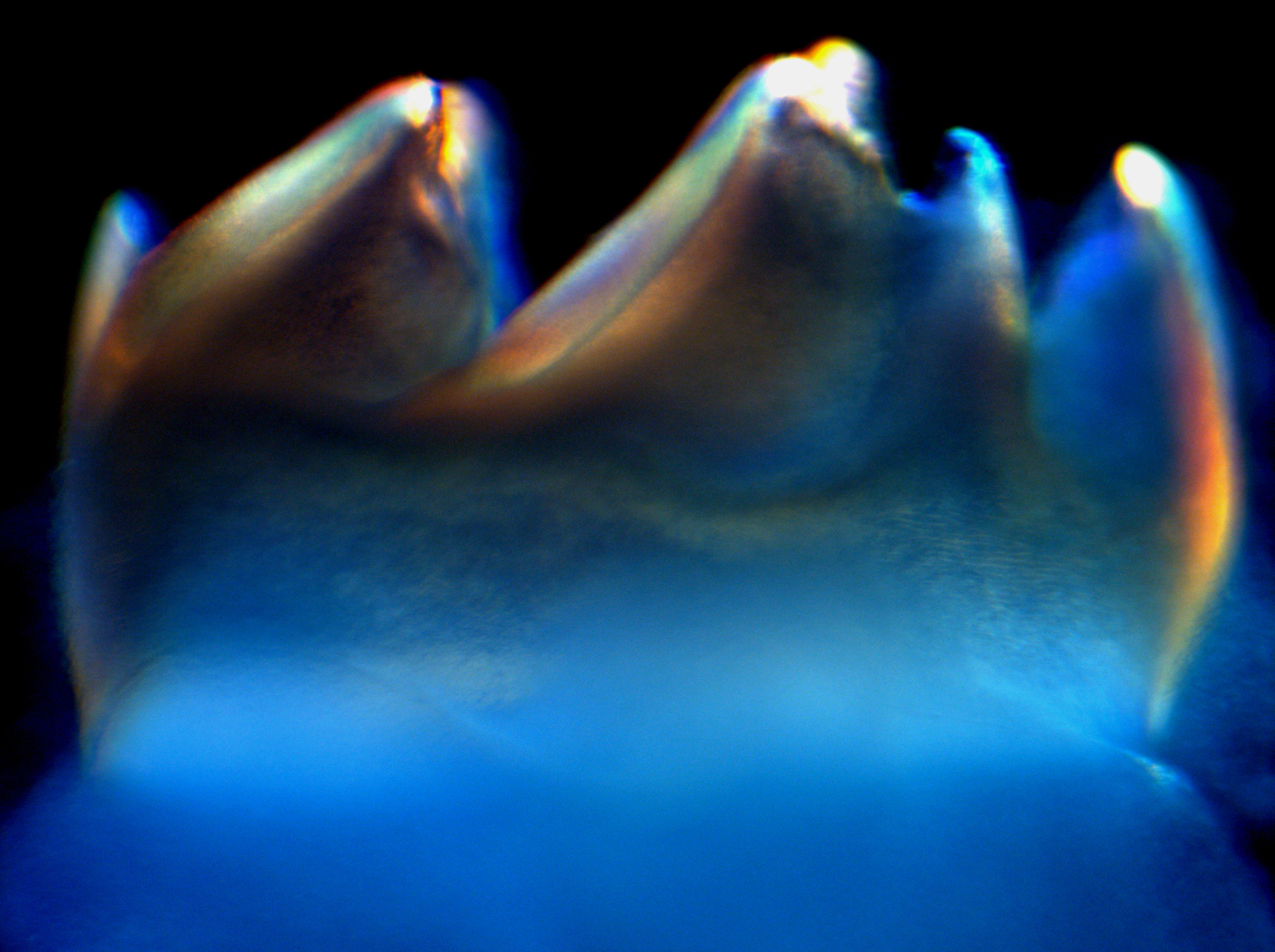
Mineral Phase and Protein Changes During Mouse Molar Enamel Maturation
Objectives: To determine and correlate the changes in tooth enamel mineral phase and protein composition during mouse molar enamel maturation.
Methods: First mandibular mouse molar enamel matrix from 1 to 8 days mice was harvested to conduct a step-wise cross-sectional analysis of the changes in the mineral and protein phase. Mineral phase diffraction pattern analysis (SCPD) was conducted using a single-crystal, powder sample Bruker X-ray diffractometer. Attenuated total reflectance spectra (ATR) of mouse molar enamel matrix were obtained using a reflection diamond ATR accessory placed in a Bruker Vertex 80 FTIR. Trypsin digested peptides from the enamel matrix of each postnatal day were separated by Nano-scale liquid chromatography using a Dionex Ultimate 3000 and analyzed using an Orbitrap mass spectrometer. Mass-spectroscopy data and proteomics data based on separately collected biological quadruplicates were evaluated using the Mann-Whitney U test.
Results: SCPD analysis indicated a conversion of calcium phosphate precursors to partially fluoride substituted hydroxyapatite from postnatal day 4 onwards. ATR data revealed a substantial elevation in phosphate and carbonate incorporation as well as structural reconfiguration between postnatal days 6 and 8. Nanoscale liquid chromatography coupled with tandem mass spectrometry (nanoLC-MS/MS) demonstrated highest protein counts for ECM/cell surface proteins, stress/heat shock proteins, and alkaline phosphatase on postnatal day 2, high counts for ameloblast cytoskeletal proteins such as tubulin β5, tropomyosin, and β-actin on postnatal day 4, and elevated levels of cofilin-1, calmodulin, and peptidyl-prolyl cis-trans isomerase on day 6.
Conclusions: Postnatal enamel maturation is characterized by a number of radical changes in mineral phase and protein composition, including (i) high levels of matrix protein expression during the early secretory stage, (ii) conversion of calcium phosphates to apatite, peak protein folding and stress protein counts during the late secretory stage, as well as (iii) secondary structure changes and peak phosphate/carbonate incorporation during the maturation stage.
Methods: First mandibular mouse molar enamel matrix from 1 to 8 days mice was harvested to conduct a step-wise cross-sectional analysis of the changes in the mineral and protein phase. Mineral phase diffraction pattern analysis (SCPD) was conducted using a single-crystal, powder sample Bruker X-ray diffractometer. Attenuated total reflectance spectra (ATR) of mouse molar enamel matrix were obtained using a reflection diamond ATR accessory placed in a Bruker Vertex 80 FTIR. Trypsin digested peptides from the enamel matrix of each postnatal day were separated by Nano-scale liquid chromatography using a Dionex Ultimate 3000 and analyzed using an Orbitrap mass spectrometer. Mass-spectroscopy data and proteomics data based on separately collected biological quadruplicates were evaluated using the Mann-Whitney U test.
Results: SCPD analysis indicated a conversion of calcium phosphate precursors to partially fluoride substituted hydroxyapatite from postnatal day 4 onwards. ATR data revealed a substantial elevation in phosphate and carbonate incorporation as well as structural reconfiguration between postnatal days 6 and 8. Nanoscale liquid chromatography coupled with tandem mass spectrometry (nanoLC-MS/MS) demonstrated highest protein counts for ECM/cell surface proteins, stress/heat shock proteins, and alkaline phosphatase on postnatal day 2, high counts for ameloblast cytoskeletal proteins such as tubulin β5, tropomyosin, and β-actin on postnatal day 4, and elevated levels of cofilin-1, calmodulin, and peptidyl-prolyl cis-trans isomerase on day 6.
Conclusions: Postnatal enamel maturation is characterized by a number of radical changes in mineral phase and protein composition, including (i) high levels of matrix protein expression during the early secretory stage, (ii) conversion of calcium phosphates to apatite, peak protein folding and stress protein counts during the late secretory stage, as well as (iii) secondary structure changes and peak phosphate/carbonate incorporation during the maturation stage.
IMAGES
2956713_File000000.jpg
2956713_File000000.jpg