IADR Abstract Archives
Salivary Mg Promotes the Progression of Head and Neck Cancer Via TRPM7
Objectives: Magnesium (Mg) has been known to play a vital role in regulating the growth and almost all the metabolic processes in human cells. In the recent years, the association between Mg and tumorigenesis have drawn more and more attention. However, the effects of Mg on the progression of head and neck carcinoma (HNC), as well as the mechanism behind it remain unclear.
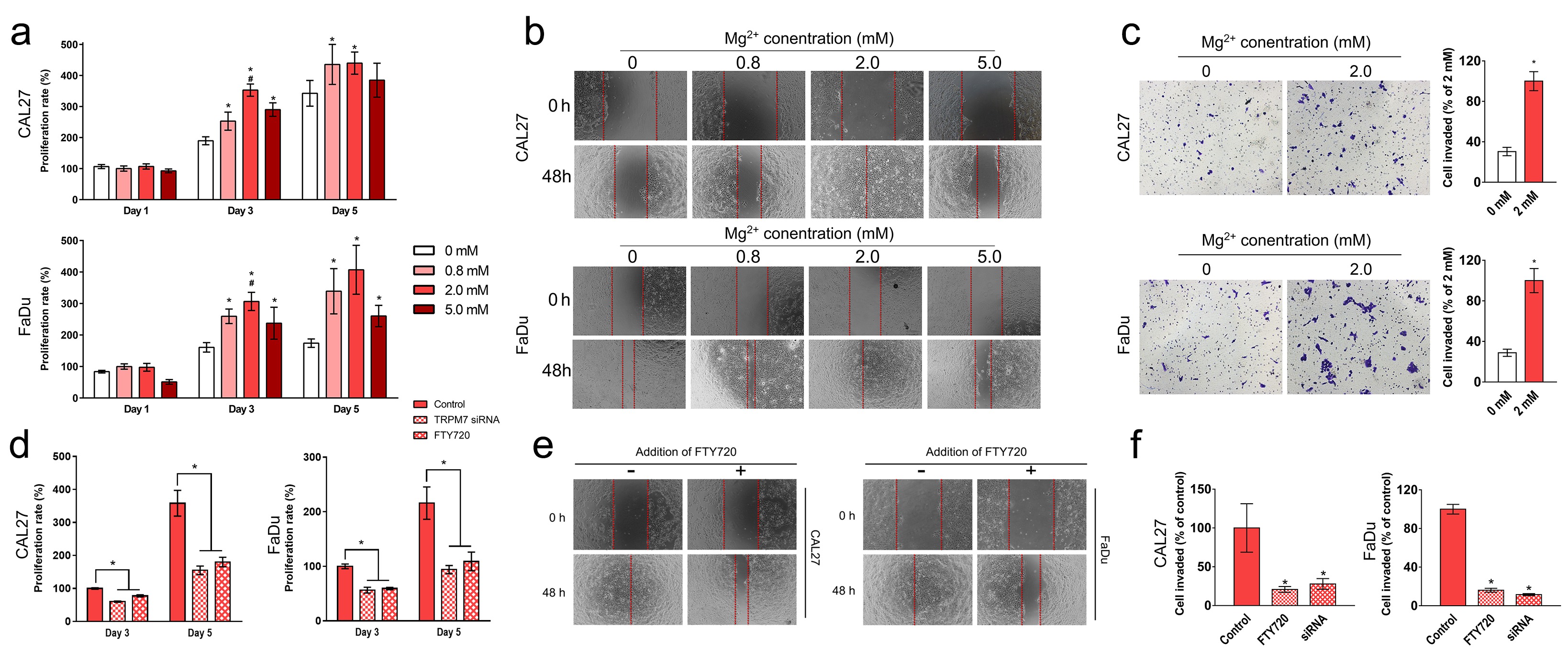
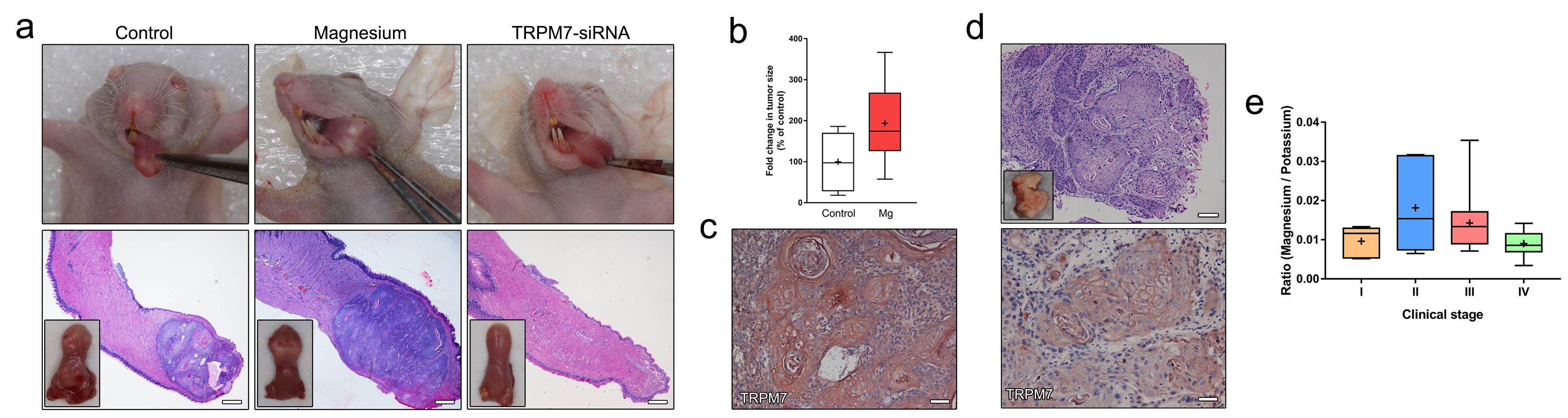
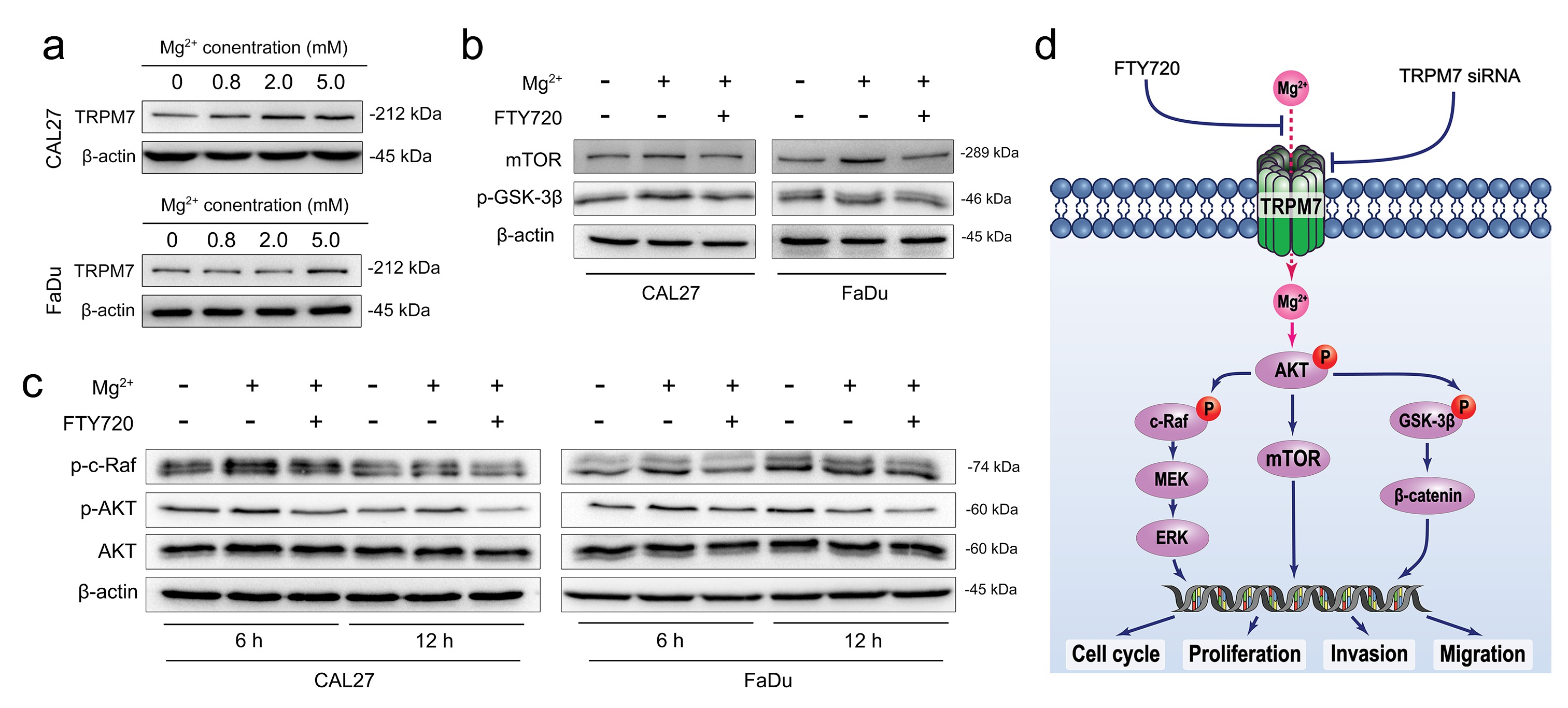
Methods: In this study, the roles of Mg in tumorigenic activities of two well-established HNC cell lines, CAL27 and FaDu, were tested in vitro and in vivo. The activation of AKT-mTOR signaling upon the stimulation of Mg was studied by western blots. Moreover, to study the involvement of TRPM7 in Mg mediated tumorigenic activities, the magnesium channel was either silenced by siRNA or blocked by FTY720. As a preliminary clinical study, the stimulated saliva from a total of 60 nasopharynx carcinoma (NPC) patients were collected for the measurement of ion concentrations, and the expression of TRPM7 was determined in surgical specimens from four HNC patients.
Results: We demonstrated that moderate increase in extracellular Mg contributes to the proliferation, migration and invasion of CAL27 and FaDu cells, which was further found to be associated with the activation of AKT-mTOR signaling. In addition, TRPM7 is shown essential for the tumorigenic activities of HNC and the Mg induced promotive effects on HNC cells, because both down-regulation and blockage of this channel resulted in compromised proliferation, migration and invasion in two cell lines, which failed to be rescued by addition of magnesium. Finally, our clinical data revealed that the salivary Mg level in NPC subjects at stage II and III was significantly higher than those at other stages, while the expression of TRPM7 was significantly increased in HNC tissues.
Conclusions: Within the limitations of this study, it can be concluded that Mg exposure in the oral cavity, within a certain range, could act as a risk factor for the progression of HNC, which involves the regulation of AKT-mTOR signaling pathways through TRPM7 channel. The intervention of Mg level and the regulation of TRPM7 may be proposed for the treatment of HNC.
Methods: In this study, the roles of Mg in tumorigenic activities of two well-established HNC cell lines, CAL27 and FaDu, were tested in vitro and in vivo. The activation of AKT-mTOR signaling upon the stimulation of Mg was studied by western blots. Moreover, to study the involvement of TRPM7 in Mg mediated tumorigenic activities, the magnesium channel was either silenced by siRNA or blocked by FTY720. As a preliminary clinical study, the stimulated saliva from a total of 60 nasopharynx carcinoma (NPC) patients were collected for the measurement of ion concentrations, and the expression of TRPM7 was determined in surgical specimens from four HNC patients.
Results: We demonstrated that moderate increase in extracellular Mg contributes to the proliferation, migration and invasion of CAL27 and FaDu cells, which was further found to be associated with the activation of AKT-mTOR signaling. In addition, TRPM7 is shown essential for the tumorigenic activities of HNC and the Mg induced promotive effects on HNC cells, because both down-regulation and blockage of this channel resulted in compromised proliferation, migration and invasion in two cell lines, which failed to be rescued by addition of magnesium. Finally, our clinical data revealed that the salivary Mg level in NPC subjects at stage II and III was significantly higher than those at other stages, while the expression of TRPM7 was significantly increased in HNC tissues.
Conclusions: Within the limitations of this study, it can be concluded that Mg exposure in the oral cavity, within a certain range, could act as a risk factor for the progression of HNC, which involves the regulation of AKT-mTOR signaling pathways through TRPM7 channel. The intervention of Mg level and the regulation of TRPM7 may be proposed for the treatment of HNC.
IMAGES
2953541_File000007.jpg
2953541_File000005.jpg
2953541_File000006.jpg
2953541_File000007.jpg
2953541_File000005.jpg
2953541_File000006.jpg