IADR Abstract Archives
A Novel Zirconia Surface With Meso- and Nano-scale Features
Objectives: Zirconia (Zr) implants have been presented as an alternative to titanium implants due to the esthetic, biocompatible, and cost values. However the osseointegration rate of Zr implants has been reported to be lower than titanium implants because of difficulty in surface roughening of Zr materials. The aim of this study was to determine the osseointegration rate of newly developed Zr with meso- and nano-scale hybrid roughness.
Methods: Yttria-stabilized tetragonal zirconia polycrystalline (Y-TZP) was used to prepare rough and machine-smooth Zr samples. Laser architecting was used to produce rough Zr surface. Zr roughness profile was evaluated by SEM and 3-D profiling. Bone marrow cells isolated from femur of Sprague-Dawly rats was used to culture osteoblasts. The initial attachment of cells on rough and machined Zr was evaluated by WST-1 in 6 and 24hours time-points. Differentiation of osteoblasts was evaluated by real-time PCR. The osseointegration capability was measured by implant biomechanical push-in test in rat femurs. SEM bone morphology and EDX elemental analyses were performed afterwards.
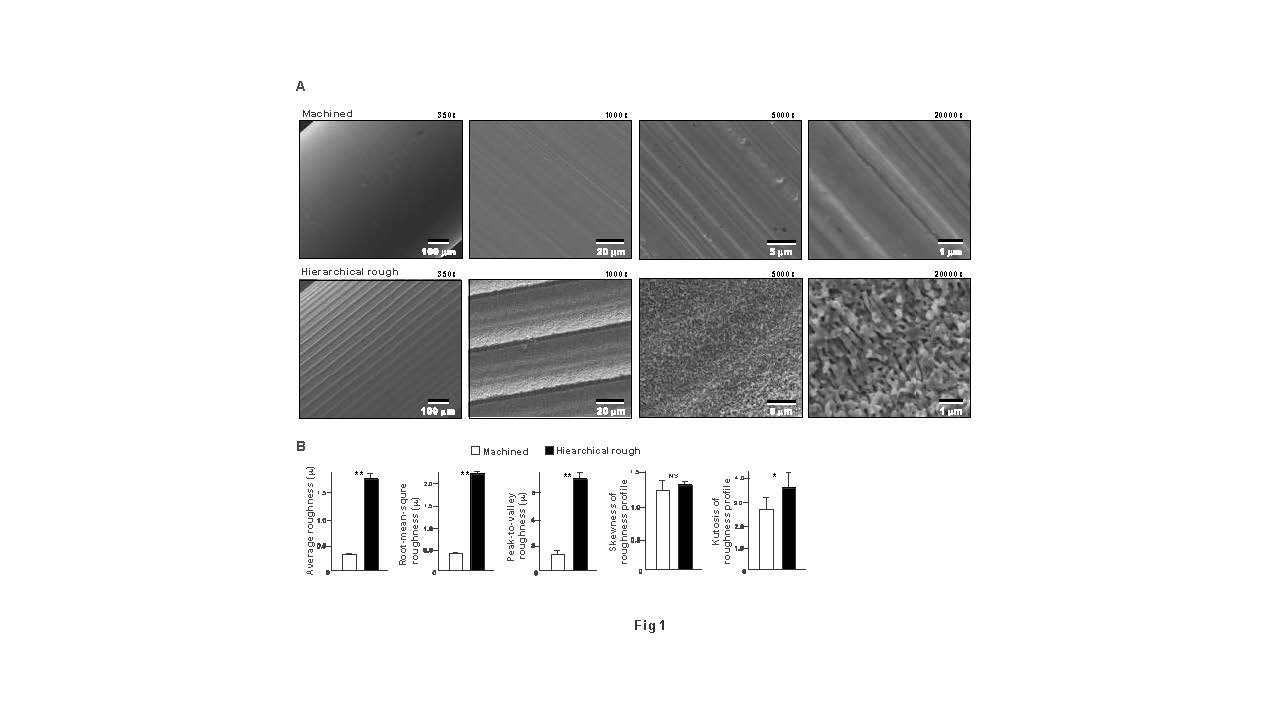
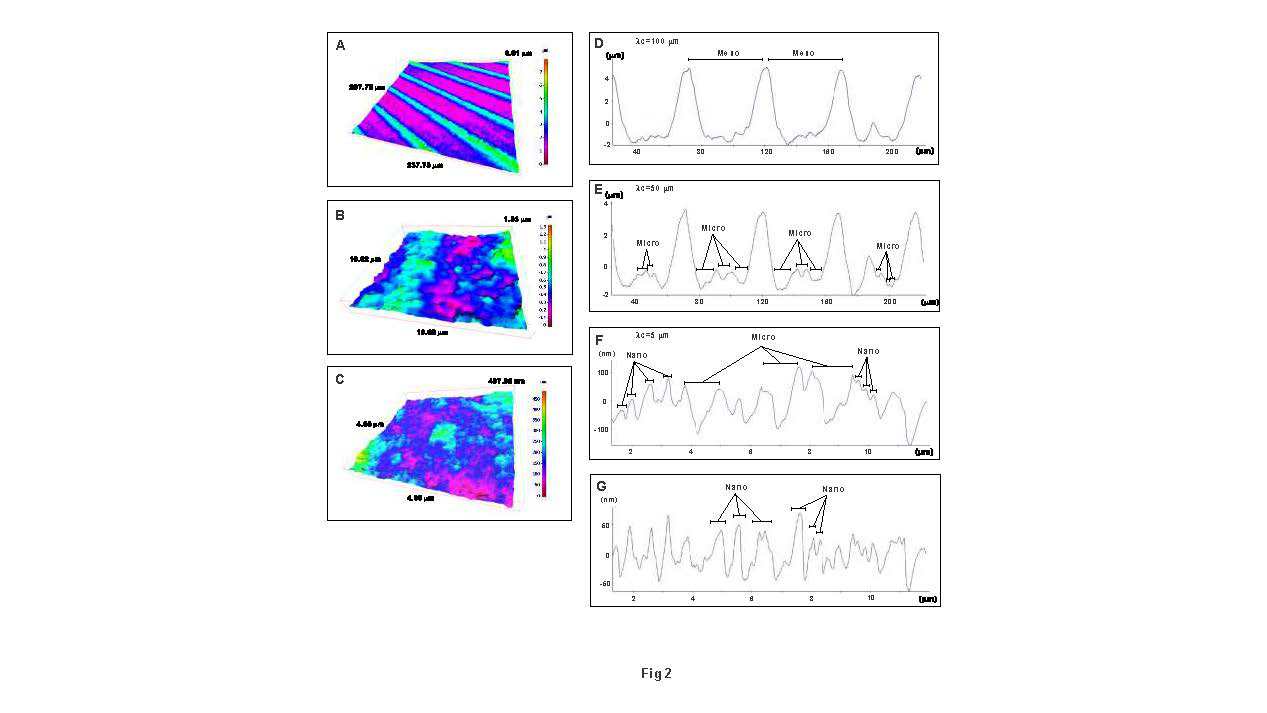
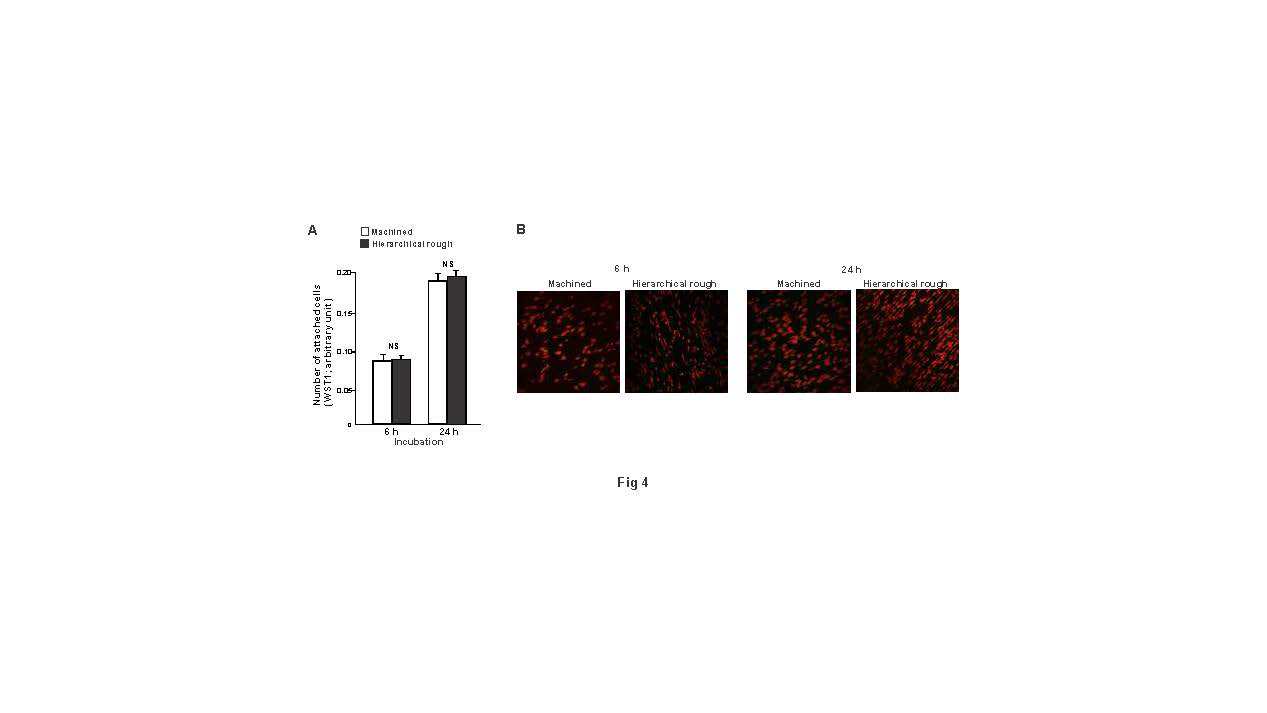
Results: The rough Zr surface showed a hybrid roughness feature of meso- and nano-scale. The meso scale includes 50µm grooves, while the nano-scale includes 50-500nm nodular structures. Machined and rough Zr had similar cell attachment values. Gene expression of bone-associated genes like osteocalcin, alkalin phosphatase, osteopontin, BMP-2 and collagen I was 5 to 10 times higher in rough Zr at day 7. The hybrid-rough Zr implants showed significantly higher strength of osseointegration than machined surface both at weeks 2 and 4 of healing. EDX analyses showed higher peaks of Calcium around the rough surface than machined surface.
Conclusions: The novel Zr rough surface with meso-nano-hybrid feature has shown an increase in osseointegration capability compared to machine-smooth Zr. This was related to unique surface-roughness which effectively enhanced osteoblastic differentiation.
Methods: Yttria-stabilized tetragonal zirconia polycrystalline (Y-TZP) was used to prepare rough and machine-smooth Zr samples. Laser architecting was used to produce rough Zr surface. Zr roughness profile was evaluated by SEM and 3-D profiling. Bone marrow cells isolated from femur of Sprague-Dawly rats was used to culture osteoblasts. The initial attachment of cells on rough and machined Zr was evaluated by WST-1 in 6 and 24hours time-points. Differentiation of osteoblasts was evaluated by real-time PCR. The osseointegration capability was measured by implant biomechanical push-in test in rat femurs. SEM bone morphology and EDX elemental analyses were performed afterwards.
Results: The rough Zr surface showed a hybrid roughness feature of meso- and nano-scale. The meso scale includes 50µm grooves, while the nano-scale includes 50-500nm nodular structures. Machined and rough Zr had similar cell attachment values. Gene expression of bone-associated genes like osteocalcin, alkalin phosphatase, osteopontin, BMP-2 and collagen I was 5 to 10 times higher in rough Zr at day 7. The hybrid-rough Zr implants showed significantly higher strength of osseointegration than machined surface both at weeks 2 and 4 of healing. EDX analyses showed higher peaks of Calcium around the rough surface than machined surface.
Conclusions: The novel Zr rough surface with meso-nano-hybrid feature has shown an increase in osseointegration capability compared to machine-smooth Zr. This was related to unique surface-roughness which effectively enhanced osteoblastic differentiation.
IMAGES
2639396_File000000.jpg
2639396_File000001.jpg
2639396_File000002.jpg
2639396_File000000.jpg
2639396_File000001.jpg
2639396_File000002.jpg