IADR Abstract Archives
Effect of Different Desensitizing Agents on Bleached and Unbleached Enamel
Objectives: Evaluated the effect of different desensitizing agents application on bleached and unbleached enamel using surface (KHN) and subsurface microhardness (subKHN), roughness (Ra) and color variation (Cie Lab).
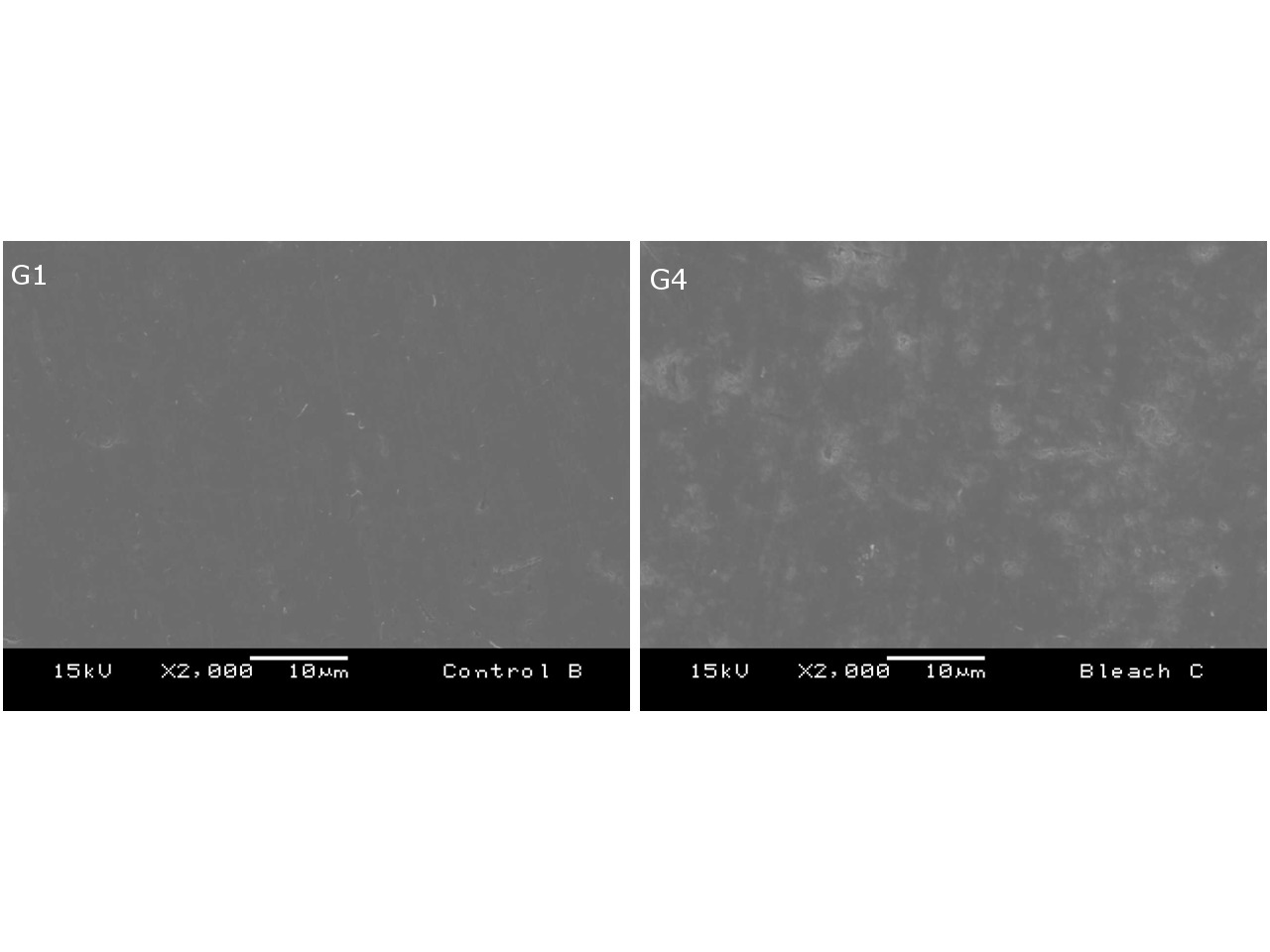
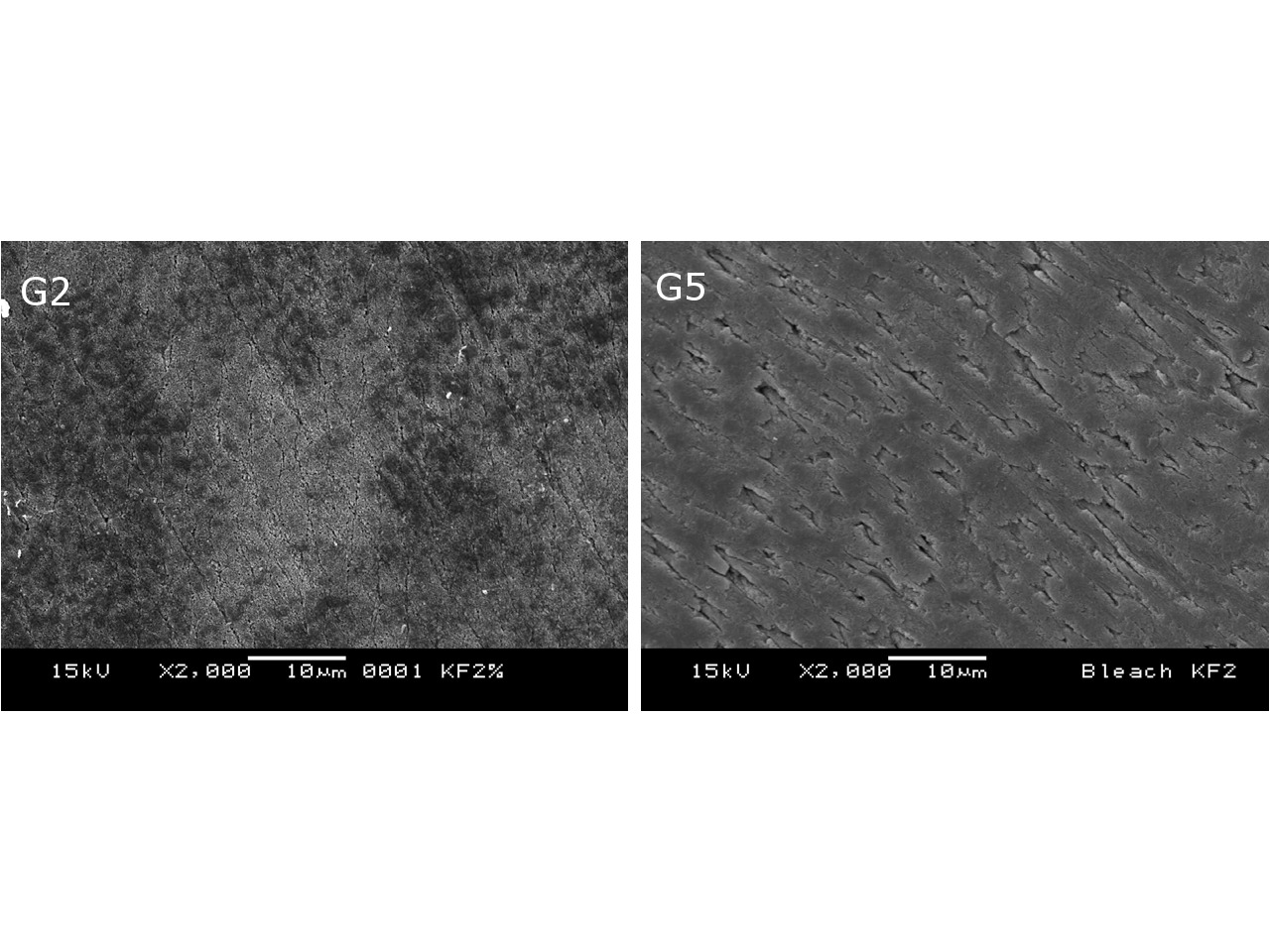
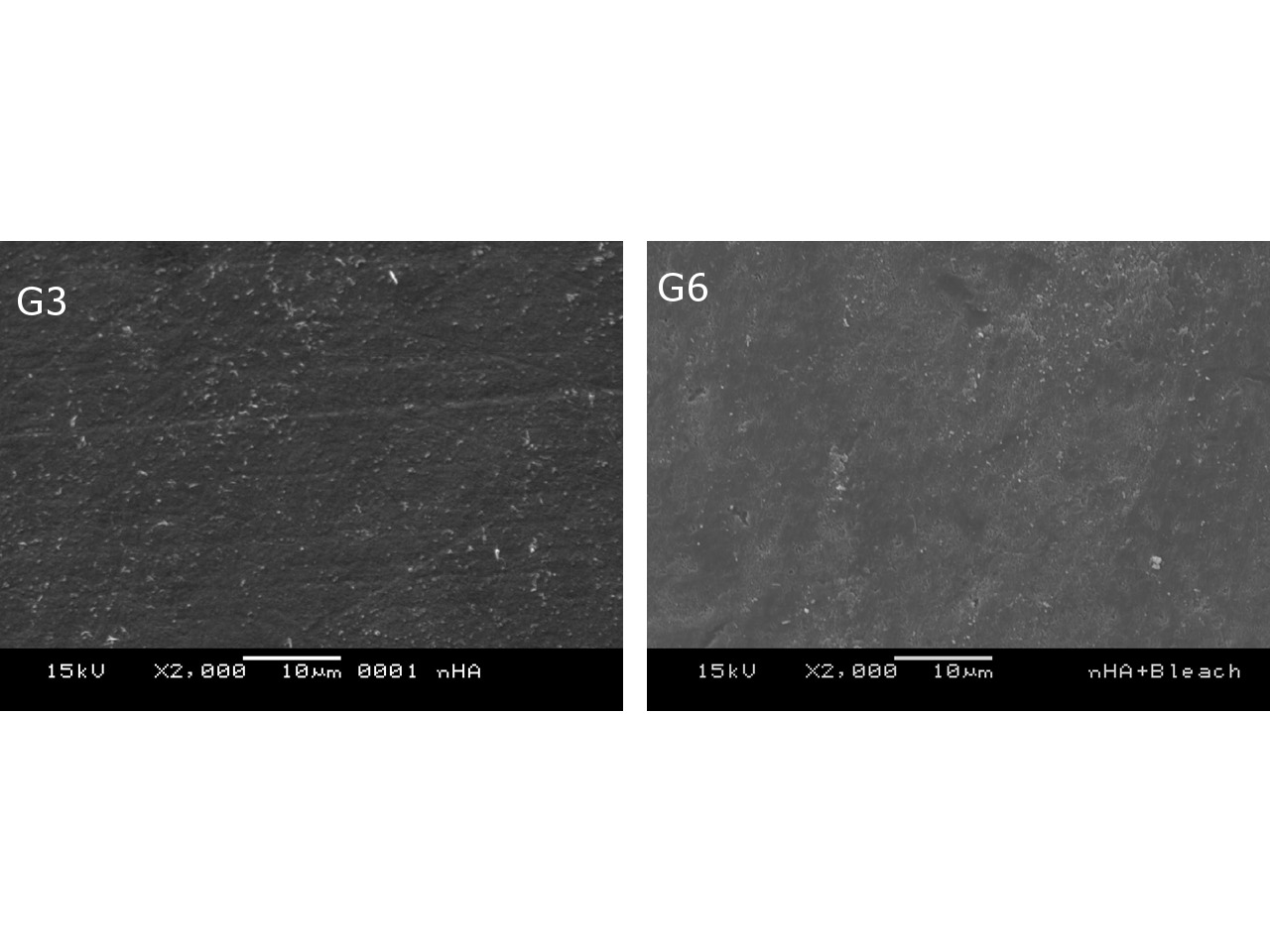
Methods: One hundred and sixty tooth blocks were divided into six groups (n=10), according to bleaching treatment (BT) and application of desensitizing agent (DA). G1: without BT and DA; G2: application of DA of potassium nitrate (PN); G3: application of DA of nano-hydroxyapatite (nHA); G4: only BT; G5: application of PN prior BT; G6: application of nHA prior BT. As for BT, three whitening sessions were conducted using 35% hydrogen peroxide. Color, KHN, Ra measurements were taken before (t0) and after (t1) treatment protocols. SubKHN specimens were evaluated to a depth of 125μm, with an interval of 25μm. Two extra samples from each group were analyzed using a scanning electron microscope. KHN and Ra results were analyzed by PROC-MIXED and Tukey–Kramer test. Color changes ΔL, ΔE were evaluated using one-way ANOVA followed by Tukey tests, whereas Δa, Δb used the Kruskal–Wallis test and Dunn’s test. SubKHN was analyzed by ANOVA multi-factor split-plot method and Tukey test (α=0.05).
Results: In ΔE color analysis, the bleached groups did not present difference among them. There was statistical difference between t0-t1 in KHN reduction in G2 and G5. All groups, except for G1, showed an increase in Ra in t1. In subKHN, G2 showed lower microhardness in 25μm depth compared to G1 and G3. G6 showed higher microhardness in all depths differing from G4.
Conclusions: Desensitizing agents application did not influence bleaching efficacy. Potassium nitrate application in bleached and unbleached enamel reduced KHN, however it did not reduce subKHN in the bleached group. Nano-hydroxyapatite did not affect KHN and prevented subKHN reduction after bleaching. DA increased unbleached enamel roughness and did not increase bleached enamel roughness.
Methods: One hundred and sixty tooth blocks were divided into six groups (n=10), according to bleaching treatment (BT) and application of desensitizing agent (DA). G1: without BT and DA; G2: application of DA of potassium nitrate (PN); G3: application of DA of nano-hydroxyapatite (nHA); G4: only BT; G5: application of PN prior BT; G6: application of nHA prior BT. As for BT, three whitening sessions were conducted using 35% hydrogen peroxide. Color, KHN, Ra measurements were taken before (t0) and after (t1) treatment protocols. SubKHN specimens were evaluated to a depth of 125μm, with an interval of 25μm. Two extra samples from each group were analyzed using a scanning electron microscope. KHN and Ra results were analyzed by PROC-MIXED and Tukey–Kramer test. Color changes ΔL, ΔE were evaluated using one-way ANOVA followed by Tukey tests, whereas Δa, Δb used the Kruskal–Wallis test and Dunn’s test. SubKHN was analyzed by ANOVA multi-factor split-plot method and Tukey test (α=0.05).
Results: In ΔE color analysis, the bleached groups did not present difference among them. There was statistical difference between t0-t1 in KHN reduction in G2 and G5. All groups, except for G1, showed an increase in Ra in t1. In subKHN, G2 showed lower microhardness in 25μm depth compared to G1 and G3. G6 showed higher microhardness in all depths differing from G4.
Conclusions: Desensitizing agents application did not influence bleaching efficacy. Potassium nitrate application in bleached and unbleached enamel reduced KHN, however it did not reduce subKHN in the bleached group. Nano-hydroxyapatite did not affect KHN and prevented subKHN reduction after bleaching. DA increased unbleached enamel roughness and did not increase bleached enamel roughness.
IMAGES
2635493_File000000.jpg
2635493_File000001.jpg
2635493_File000002.jpg
2635493_File000000.jpg
2635493_File000001.jpg
2635493_File000002.jpg