IADR Abstract Archives
Flexure Strength of Self-Adhesive Flowable Composites Following PBS Storage
Objectives: To evaluate the flexure strength of self-adhesive flowable composites stored in phosphate buffered solution (PBS)
Methods: 5 self-adhesive flowable composites, 1 giomer and 1 flowable composite were selected for evaluation. Bar specimens were created for each material using a standard 2mm x 2mm x 15mm mold in combination with a high powered LED curing light step cured along the legth of sepcimen. 48 bar specimens were made of each material and randomly divided into 4 storage time groups (n=12); 24 hours, 1 week, 1 month and 3 month storage times. The specimens were placed into PBS solution immediately following fabrication and stored at physiological conditions (37C/98% RH) until the prescribed testing time. 3-point bending was accomplished on each specimen using a universal testing machine (MTS; 0.5mm/min) and a standard 3-point bending apparatus. Fracture load (N) was converted to peak stress (MPa). Data analyzed using Kruskal-Wallis with Dunn’s post hoc test (p=0.05).
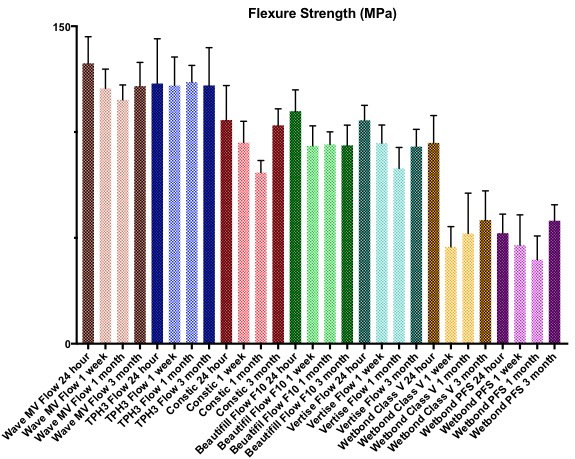
Results: (illustrated in graph)
Conclusions: Discussion: As with other self-adhesives and all in one products, there are concerns regarding inherit increased hydrophilicity and the effects this might have upon material properties in long term service in an aqueous environment. The results of this study illustrates significant differences in flexure strength among the self-adhesive flowable composites selected in this study; before and after PBS storage. Other available studies on self-adhesive flowables, suggest concerns for inferior physical properties and bonding of self-adhesive flowables in comparison to traditional adhesively bonded flowables.
Conclusions: There are significant differences among the self-adhesive flowables evaluated in this study. Based on these findings and other literature available on this subject, clinicians should be cautious in their selection and implementation of these materials. Additional studies would aid clinicians in determining if particular self-adhesive flowables have a place in their dental practice.
Methods: 5 self-adhesive flowable composites, 1 giomer and 1 flowable composite were selected for evaluation. Bar specimens were created for each material using a standard 2mm x 2mm x 15mm mold in combination with a high powered LED curing light step cured along the legth of sepcimen. 48 bar specimens were made of each material and randomly divided into 4 storage time groups (n=12); 24 hours, 1 week, 1 month and 3 month storage times. The specimens were placed into PBS solution immediately following fabrication and stored at physiological conditions (37C/98% RH) until the prescribed testing time. 3-point bending was accomplished on each specimen using a universal testing machine (MTS; 0.5mm/min) and a standard 3-point bending apparatus. Fracture load (N) was converted to peak stress (MPa). Data analyzed using Kruskal-Wallis with Dunn’s post hoc test (p=0.05).
Results: (illustrated in graph)
Conclusions: Discussion: As with other self-adhesives and all in one products, there are concerns regarding inherit increased hydrophilicity and the effects this might have upon material properties in long term service in an aqueous environment. The results of this study illustrates significant differences in flexure strength among the self-adhesive flowable composites selected in this study; before and after PBS storage. Other available studies on self-adhesive flowables, suggest concerns for inferior physical properties and bonding of self-adhesive flowables in comparison to traditional adhesively bonded flowables.
Conclusions: There are significant differences among the self-adhesive flowables evaluated in this study. Based on these findings and other literature available on this subject, clinicians should be cautious in their selection and implementation of these materials. Additional studies would aid clinicians in determining if particular self-adhesive flowables have a place in their dental practice.
IMAGES
2633808_File000000.jpg
2633808_File000000.jpg