IADR Abstract Archives
GreenBone - Plant-derived Nanocoating Modulate Inflammatory Response
Objectives: Pectins from a variety of plants have been presented as anti-inflammatory and immunologically active polysaccharides. Neutrophils and macrophages play a critical role in mediating the host response to titanium implant surface after surgery.
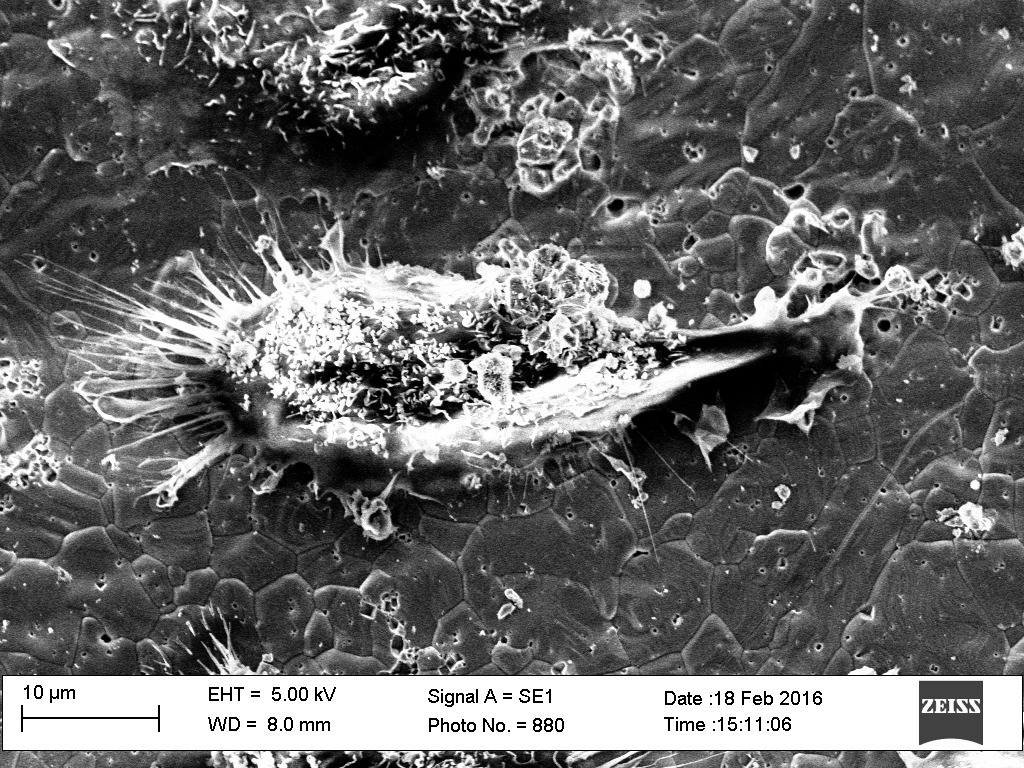
The aim of the study was to evaluate in vitro anti-inflammatory properties of plant-derived molecules, pectin (Rhamnogalacturonan-Is) nanocoating in primary neutrophils and macrophages from human blood with lipopolysaccharide (LPS)-activated and P. gingivalis-infected cells cultured on titanium surface.
Methods: The effect of the nanocoating with pectin Rhamnogalacturonan-Is (RG-Is) was evaluated with Real-Time PCR Tumor Necrosis Factor alpha (TNF-alpha), Interleukin 1(Il-1), Interleukin 8 (Il-8), Interleukin 10 (Il-10) and reactive oxygen species (ROS) production in lipopolysaccharide (LPS)-activated and with P. gingivalis infected cells cultured on titanium surface. The tissue culture polystyrene surface (TCPS) was used as control. The in vitro assays were performed using primary neutrophils and macrophages cells isolated from human blood. The nanocoating surfaces with RG-Is were test group and the surfaces without RG-Is were control group.
Results: Nanocoating with pectin RG-Is changed the environment for cellular response in response to LPS-activation and P. gingivalis infection. The gene expressions of pro-inflammatory cytokines (Il-1, Il-6, TNF-alpha, Il-10) were down-regulated on titanium and TCPS surfaces coated with pectin RG-Is in cell culture of neutrophils and macrophages after P. gingivalis and LPS compare to control surface without the nanocoating. ROS production was deceased on surface coated with RG-I compare to surface control surface titanium and TCPS without nanocoating.
Conclusions: The present study examined for the first time the capacity of RG-Is to influence the expression of inflammatory mediators genes. Pectin RG-Is nanocoating is promising candidate for stimulation of bone healing after titanium implant placement and prevention of inflammation caused by bacterial infection (peri-implantitis). Pectins might play an important role as anti-inflammatory agent in case of immunocompromised patients with higher risk for inflammation i.e. diabetes, osteoporosis, rheumatoid arthritis.
The aim of the study was to evaluate in vitro anti-inflammatory properties of plant-derived molecules, pectin (Rhamnogalacturonan-Is) nanocoating in primary neutrophils and macrophages from human blood with lipopolysaccharide (LPS)-activated and P. gingivalis-infected cells cultured on titanium surface.
Methods: The effect of the nanocoating with pectin Rhamnogalacturonan-Is (RG-Is) was evaluated with Real-Time PCR Tumor Necrosis Factor alpha (TNF-alpha), Interleukin 1(Il-1), Interleukin 8 (Il-8), Interleukin 10 (Il-10) and reactive oxygen species (ROS) production in lipopolysaccharide (LPS)-activated and with P. gingivalis infected cells cultured on titanium surface. The tissue culture polystyrene surface (TCPS) was used as control. The in vitro assays were performed using primary neutrophils and macrophages cells isolated from human blood. The nanocoating surfaces with RG-Is were test group and the surfaces without RG-Is were control group.
Results: Nanocoating with pectin RG-Is changed the environment for cellular response in response to LPS-activation and P. gingivalis infection. The gene expressions of pro-inflammatory cytokines (Il-1, Il-6, TNF-alpha, Il-10) were down-regulated on titanium and TCPS surfaces coated with pectin RG-Is in cell culture of neutrophils and macrophages after P. gingivalis and LPS compare to control surface without the nanocoating. ROS production was deceased on surface coated with RG-I compare to surface control surface titanium and TCPS without nanocoating.
Conclusions: The present study examined for the first time the capacity of RG-Is to influence the expression of inflammatory mediators genes. Pectin RG-Is nanocoating is promising candidate for stimulation of bone healing after titanium implant placement and prevention of inflammation caused by bacterial infection (peri-implantitis). Pectins might play an important role as anti-inflammatory agent in case of immunocompromised patients with higher risk for inflammation i.e. diabetes, osteoporosis, rheumatoid arthritis.
IMAGES
2628637_File000000.jpg
2628637_File000000.jpg