
IADR Abstract Archives
Comparing Accuracy of Full-arch Digital Impression (Intraoral vs. Extraoral) Using Standardized Metal Bar: Pilot study
Objectives: To compare the accuracy between "intraoral digital impression" and "extraoral 3D scan via conventional impresion technique".
To study effect of varying arch width on accuracy of both impression techniques.
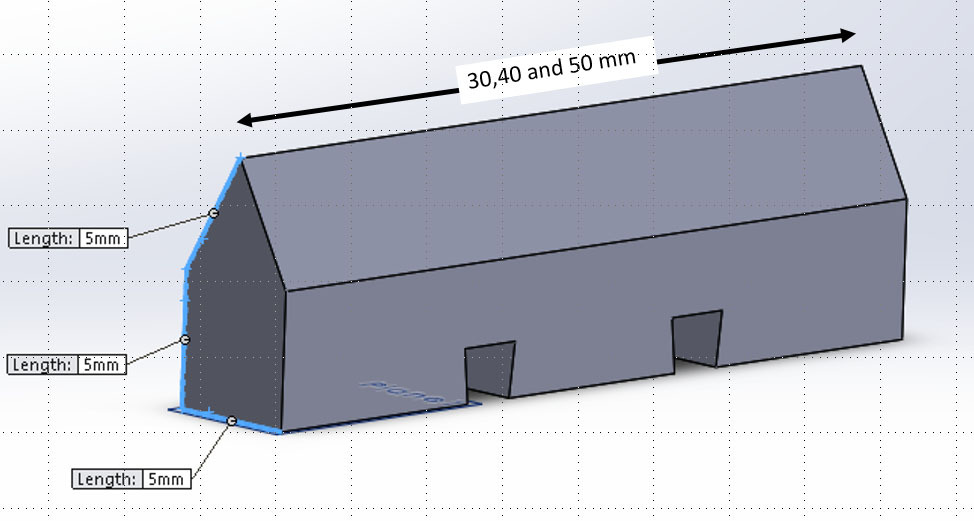
Methods: Three Titanium bars designed and machined with high accuracy.Each of the bar were made in length of 30,40 and 50mm. They were sent for dimensional measurement with coordinate measuring machine (CMM) for reference value. Then, each of the bar was placed and secured in gypsum maxillary dental cast with vary in width of the dental arch. the first test group were using intraoral digital impression technique (TRIOS,3shape) making the digital dental model in STL file,IO group. And the second test group were made an impression with polyether and poured with type IV gypsum stone into conventional dental cast then placed them into 3D digital dental scanner(D700,3shape) to recieve the STL file,CON group.
The datas from two test groups were compared with previously referenced value. The comparisons were used the inspection softwere to determine the deviation of the bar length, The linear shift (in X, Y and Z axis) and the angle deviation caused by each method of impression. The pilot data were calculated in X,Y,Z coordination using specific fomulas.
Results: Regarding to the various bar length, the discrepancy on CON were larger than IO gr in 30mm bar group. In the other groups,40 and 50mm bar, the discrepancy on CON were smaller. For the result of linear shift, CON showed tendency of higher deviation on Z-axis when the bar gets longer. On the contrary, In IO showed tendency of higher deviation on X-axis when the bar gets longer. Regarding to all angle measurement, the deviation of the angle deviations were very small the all groups.
Conclusions: Within the limitation of this study, The intra oral digital impression has tendency to get higher accuracy than extraoral digital scaned via conventional impression technique in "smaller arch width". Nevertheless, when the arch width has increased, the intra oral impression tends to lose accuracy more in X-axis while the extraoral digital with conventional impression tend to lose accuracy in Z-axis.
To study effect of varying arch width on accuracy of both impression techniques.
Methods: Three Titanium bars designed and machined with high accuracy.Each of the bar were made in length of 30,40 and 50mm. They were sent for dimensional measurement with coordinate measuring machine (CMM) for reference value. Then, each of the bar was placed and secured in gypsum maxillary dental cast with vary in width of the dental arch. the first test group were using intraoral digital impression technique (TRIOS,3shape) making the digital dental model in STL file,IO group. And the second test group were made an impression with polyether and poured with type IV gypsum stone into conventional dental cast then placed them into 3D digital dental scanner(D700,3shape) to recieve the STL file,CON group.
The datas from two test groups were compared with previously referenced value. The comparisons were used the inspection softwere to determine the deviation of the bar length, The linear shift (in X, Y and Z axis) and the angle deviation caused by each method of impression. The pilot data were calculated in X,Y,Z coordination using specific fomulas.
Results: Regarding to the various bar length, the discrepancy on CON were larger than IO gr in 30mm bar group. In the other groups,40 and 50mm bar, the discrepancy on CON were smaller. For the result of linear shift, CON showed tendency of higher deviation on Z-axis when the bar gets longer. On the contrary, In IO showed tendency of higher deviation on X-axis when the bar gets longer. Regarding to all angle measurement, the deviation of the angle deviations were very small the all groups.
Conclusions: Within the limitation of this study, The intra oral digital impression has tendency to get higher accuracy than extraoral digital scaned via conventional impression technique in "smaller arch width". Nevertheless, when the arch width has increased, the intra oral impression tends to lose accuracy more in X-axis while the extraoral digital with conventional impression tend to lose accuracy in Z-axis.
2465726_File000014.jpg