IADR Abstract Archives
Detection of Amalgam Restoration Mercury in Human Body by Using Nuclear Techniques
Objectives: Investigate the levels of mercury in blood and hair samples, of different groups of population belong to the same geographical areas, by using neutron activation technique.
Methods: Blood samples were collected from 140 people and divided equally on seven groups, as follow:
· The first group included 20 dentists practicing dentistry for more than 4 years and they also have amalgam restorations.
· The second group included 20 visitors to the University Dental Clinic who have amalgam restorations but they never practiced any work related to mercury.
· The third group included 20 visitors to the University Dental Clinic who neither have amalgam restorations, nor work in any filled related to mercury.
· The fourth group included 20 pregnant women’s who have amalgam restorations, but they never practiced any work related to mercury.
· The fifth group included 20 newborn babies belonging to the women’s in the fourth group.
· The sixth group included 20 pregnant women’s neither have any amalgam restorations, nor work in any filled related to mercury.
· The seventh included 20 newborn babies belonging to the women’s in the sixth group.
Also, hair samples were analyzed for the first three groups.
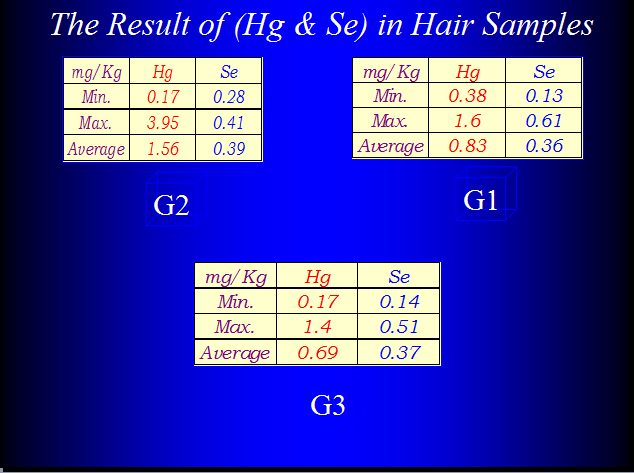
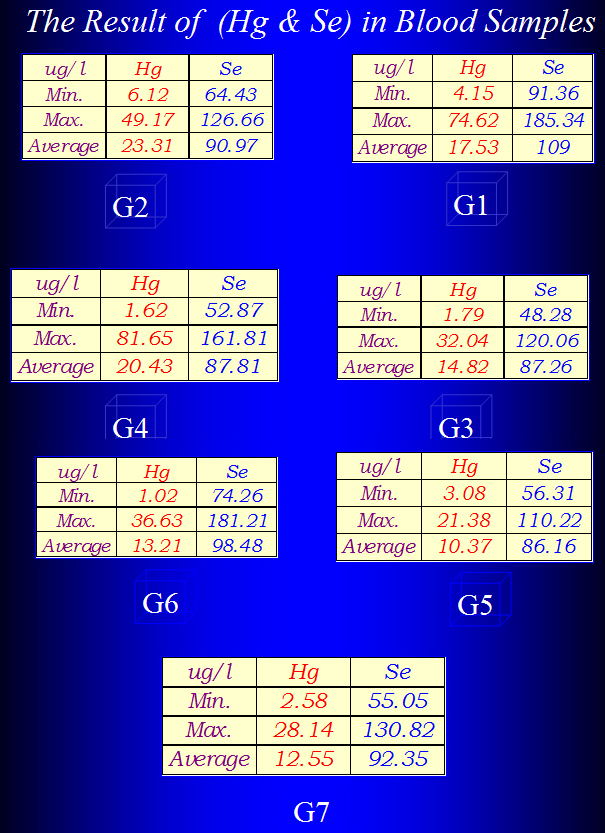
Results: The level of mercury in the blood samples ranged between (1.021 – 81.64 mg / l ), while that in the hair samples ranged between ( 0.17 – 3.95 mg / kg).
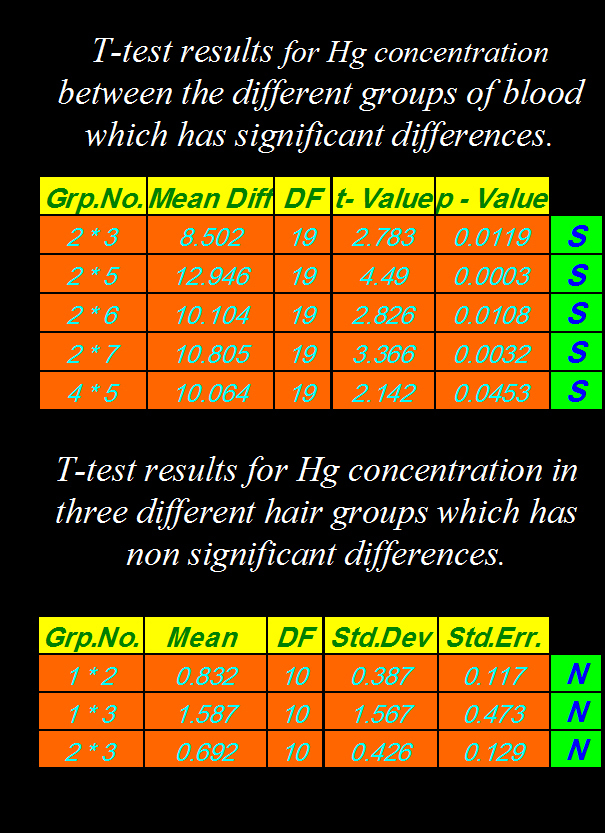
T- test analysis showed higher levels of Hg in blood and hair of group having amalgam restorations comparing to others group.
This study also showed high correlation between the concentration of mercury in the blood of treated and untreated mothers and their newborn babies, where the correlation factors were (0.66 and 0.49) respectively. Correlation between the levels of Hg and Se in the blood was week
Conclusions: It can undoubtedly be concluded that amalgam restorations will contribute in increasing the level of mercury in blood , but although these levels exceed the maximum permissible limit in some samples, there were no any clinical side effects noticed. These levels also remained below the poisoning level.
Methods: Blood samples were collected from 140 people and divided equally on seven groups, as follow:
· The first group included 20 dentists practicing dentistry for more than 4 years and they also have amalgam restorations.
· The second group included 20 visitors to the University Dental Clinic who have amalgam restorations but they never practiced any work related to mercury.
· The third group included 20 visitors to the University Dental Clinic who neither have amalgam restorations, nor work in any filled related to mercury.
· The fourth group included 20 pregnant women’s who have amalgam restorations, but they never practiced any work related to mercury.
· The fifth group included 20 newborn babies belonging to the women’s in the fourth group.
· The sixth group included 20 pregnant women’s neither have any amalgam restorations, nor work in any filled related to mercury.
· The seventh included 20 newborn babies belonging to the women’s in the sixth group.
Also, hair samples were analyzed for the first three groups.
Results: The level of mercury in the blood samples ranged between (1.021 – 81.64 mg / l ), while that in the hair samples ranged between ( 0.17 – 3.95 mg / kg).
T- test analysis showed higher levels of Hg in blood and hair of group having amalgam restorations comparing to others group.
This study also showed high correlation between the concentration of mercury in the blood of treated and untreated mothers and their newborn babies, where the correlation factors were (0.66 and 0.49) respectively. Correlation between the levels of Hg and Se in the blood was week
Conclusions: It can undoubtedly be concluded that amalgam restorations will contribute in increasing the level of mercury in blood , but although these levels exceed the maximum permissible limit in some samples, there were no any clinical side effects noticed. These levels also remained below the poisoning level.
IMAGES
2105304_File000002.jpg
2105304_File000000.jpg
2105304_File000001.jpg
2105304_File000002.jpg
2105304_File000000.jpg
2105304_File000001.jpg