
IADR Abstract Archives
Immunohistochemical Analysis of Beta-2 Adrenergic Receptor on Odontoblasts and Its Association With Tertiary Dentin Formation
Objectives: Beta-2 adrenergic receptor on osteoblasts is well known for its contribution to meditating bone remodeling. There have been few studies reporting the activity of this receptor on odontoblasts in the dental pulp, even though the osteoblasts and odontoblasts have many characteristics in common. We attempted to verify the presence of this receptor on odontoblasts in both rat and human dental pulp, and, if present, to investigate its possible association with tertiary dentin formation in rats.
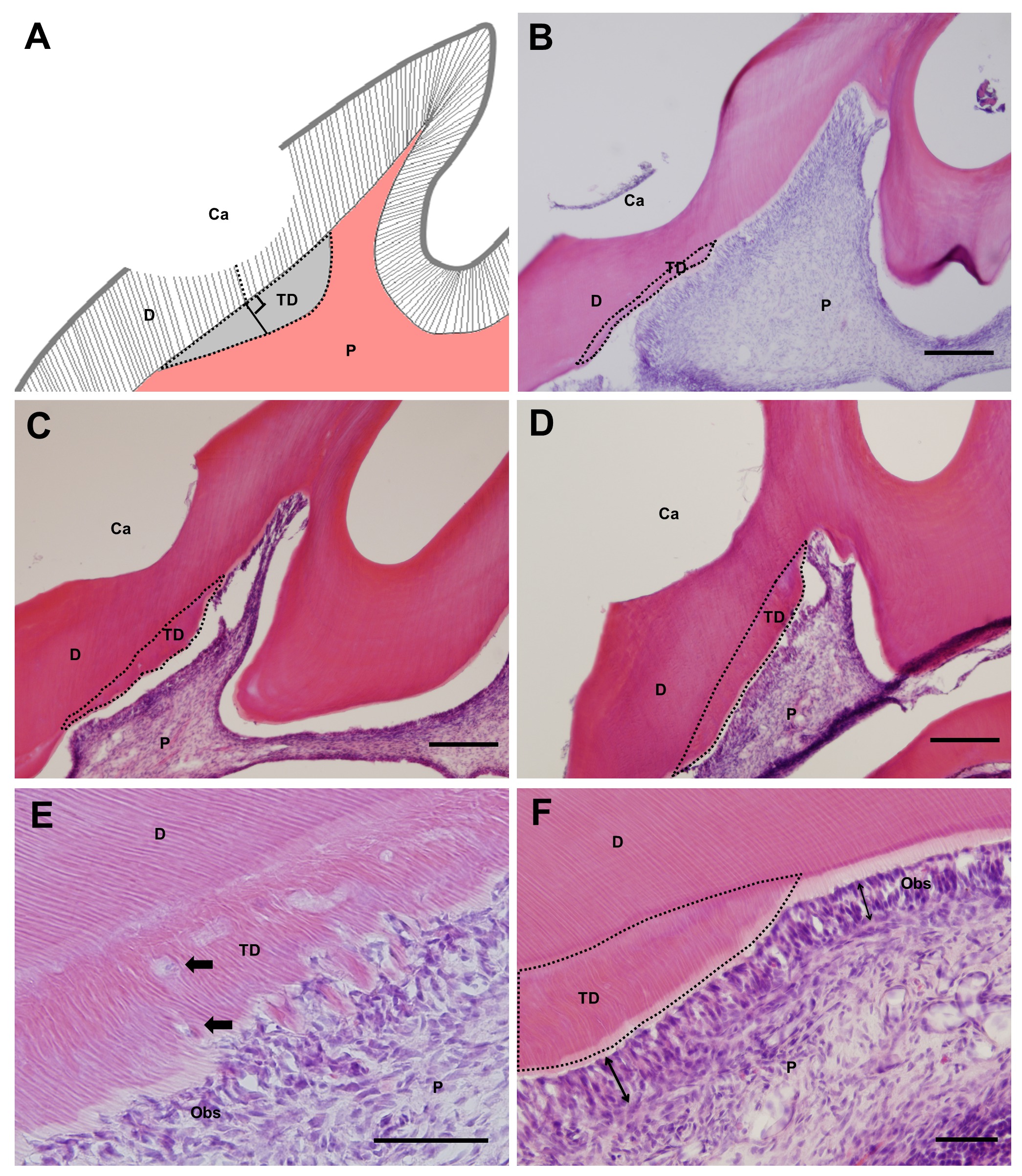
Methods: Three intact human premolars extracted for orthodontic purposes were made into frozen sections. We performed immunohistochemical staining to label the beta-2 adrenergic receptor in the dental pulp. Twenty male Sprague Dawley rats (9 weeks old) were randomly assigned to four groups: CP0.8 group: cavity preparation + propranolol treatment (0.8mg/day, n=5); CP4 group: cavity preparation + propranolol treatment (4.0mg/day, n=7); CON group: cavity preparation + saline treatment (0.2ml/day, n=5); and NT group: no treatment (n=3). Cavity preparation was performed on the mesial aspect of the maxillary first molars bilaterally. We examined the tertiary dentinogenesis (CP0.8, CP4 and CON) by hematoxylin-eosin staining and the localization of beta-2 adrenergic receptor (NT) by immunohistochemistry.
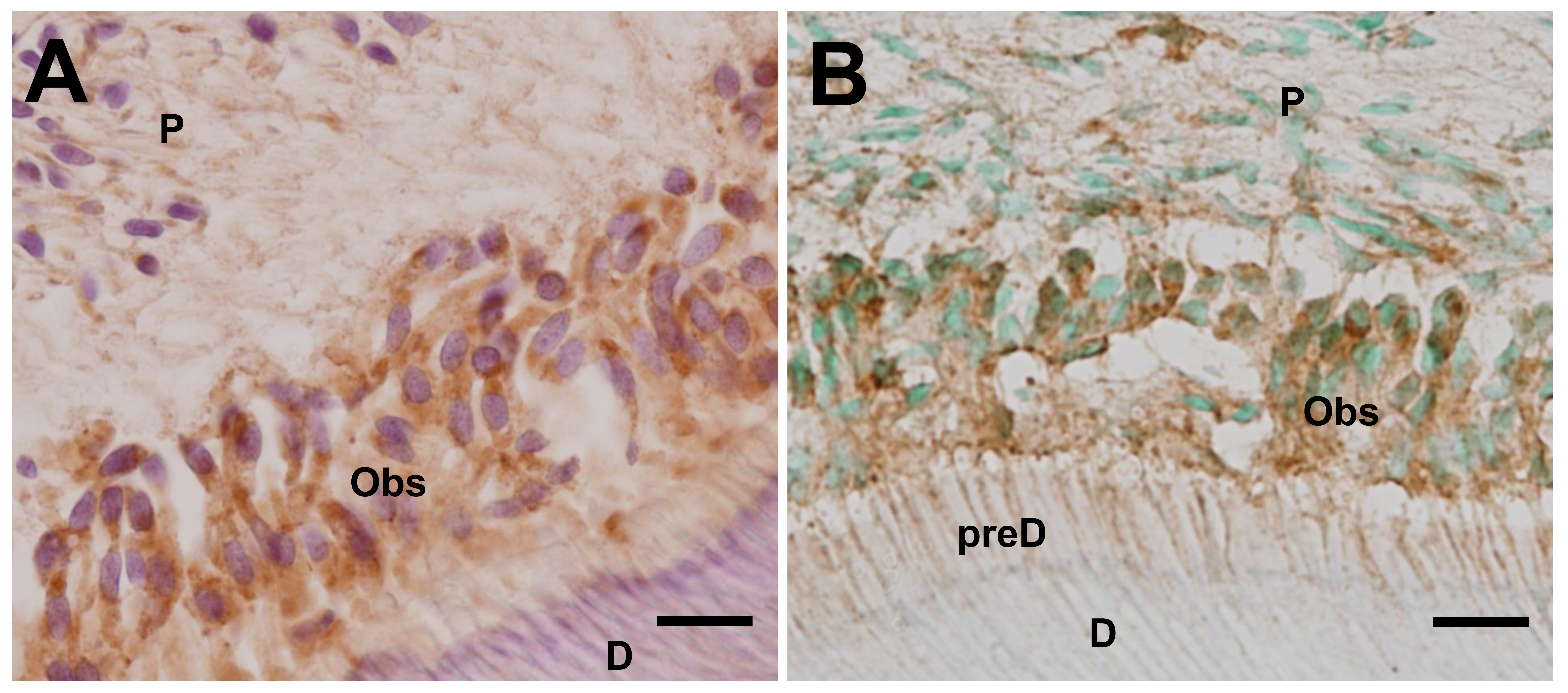
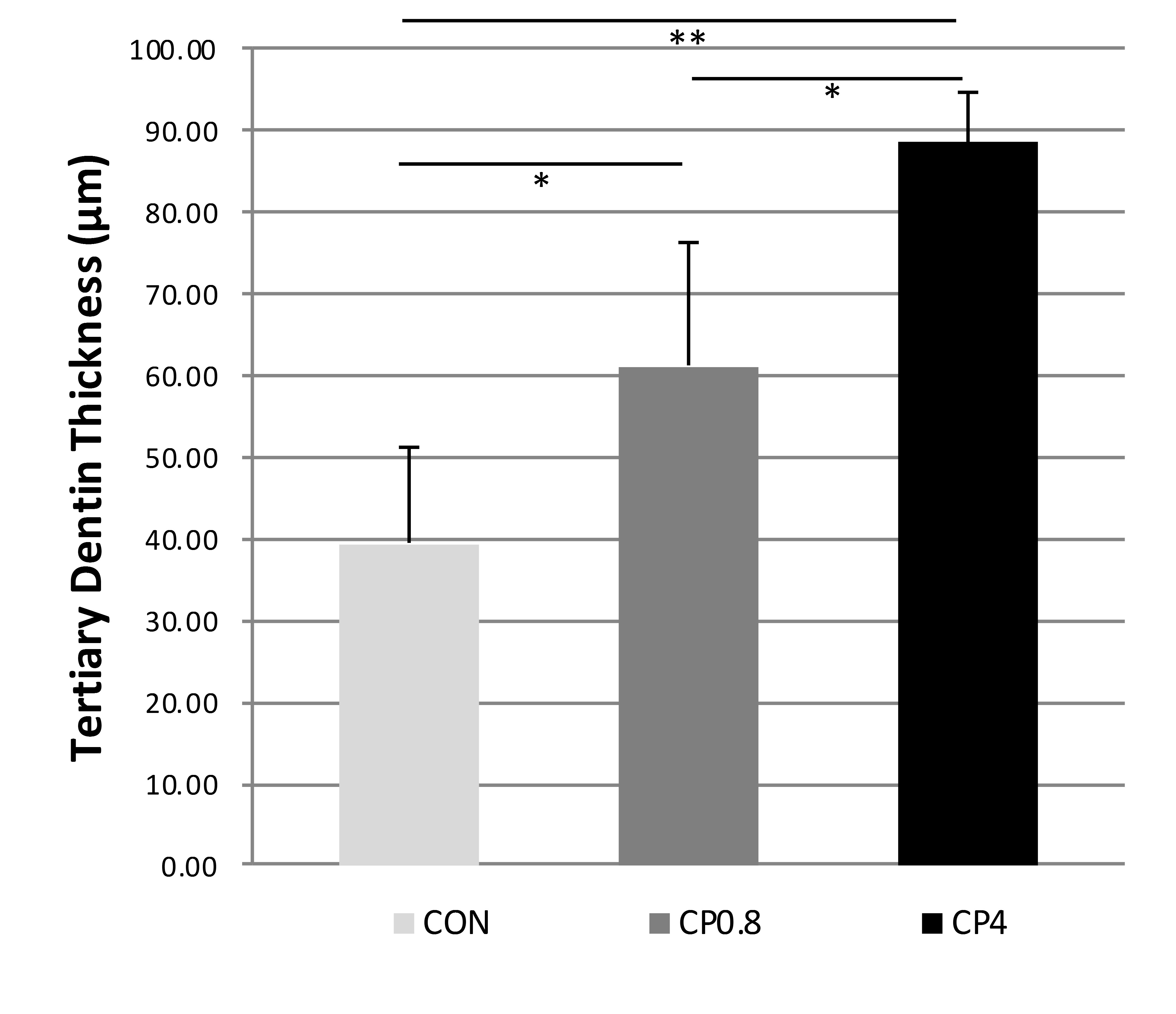
Results: In both normal human and rat dental pulp, the positive immunoreactivity of beta-2 adrenergic receptor was observed in the odontoblastic layer and the processes in the predentin area. The rats receiving two-week systemic administration of propranolol obtained significantly more tertiary dentin formation beneath the prepared cavity than those without the propranolol treatment. The higher-dose treatment of propranolol (P<.001) presented more effective up-regulation of tertiary dentinogenesis than the lower-does treatment (P<.01).
Conclusions: Beta-2 adrenergic receptor was present on odontoblasts in both human and rat dental pulp. Sympathetic nervous system may have inhibitory effect on tertiary dentin formation via beta-2 adrenergic receptors located on rat odontoblasts.
Methods: Three intact human premolars extracted for orthodontic purposes were made into frozen sections. We performed immunohistochemical staining to label the beta-2 adrenergic receptor in the dental pulp. Twenty male Sprague Dawley rats (9 weeks old) were randomly assigned to four groups: CP0.8 group: cavity preparation + propranolol treatment (0.8mg/day, n=5); CP4 group: cavity preparation + propranolol treatment (4.0mg/day, n=7); CON group: cavity preparation + saline treatment (0.2ml/day, n=5); and NT group: no treatment (n=3). Cavity preparation was performed on the mesial aspect of the maxillary first molars bilaterally. We examined the tertiary dentinogenesis (CP0.8, CP4 and CON) by hematoxylin-eosin staining and the localization of beta-2 adrenergic receptor (NT) by immunohistochemistry.
Results: In both normal human and rat dental pulp, the positive immunoreactivity of beta-2 adrenergic receptor was observed in the odontoblastic layer and the processes in the predentin area. The rats receiving two-week systemic administration of propranolol obtained significantly more tertiary dentin formation beneath the prepared cavity than those without the propranolol treatment. The higher-dose treatment of propranolol (P<.001) presented more effective up-regulation of tertiary dentinogenesis than the lower-does treatment (P<.01).
Conclusions: Beta-2 adrenergic receptor was present on odontoblasts in both human and rat dental pulp. Sympathetic nervous system may have inhibitory effect on tertiary dentin formation via beta-2 adrenergic receptors located on rat odontoblasts.
2094803_File000000.jpg
2094803_File000007.jpg
2094803_File000002.jpg