IADR Abstract Archives
Impaired Function of Epithelial Plakophilin-2 is Associated With Periodontal Disease
Objectives: Plakophilin-2(PKP2) is a structural protein of desmosomes that maintains the integrity of the epithelium barrier. A previous genomic wide association study in our lab has discovered a statistically significant association between SNP variants of PKP2 and periodontal disease. For this reason, we initiated studies to elucidate the role of PKP2 and other desmosome molecules in periodontal disease.
Methods: Gingival biopsies were harvested from 11 healthy, 10 experimental gingivitis and 10 chronic periodontitis subjects. We examined PKP2 mRNA and DNA methylation levels. Primary human gingival epithelial cells (HGEP) were stimulated with Porphyromonas gingivalis (P.g) or Campylobacter rectus (C.r). We utilized western blot and immunofluorescence staining to examine protein expression. We then knocked down PKP2 using lentivirus shRNA in HGEP.
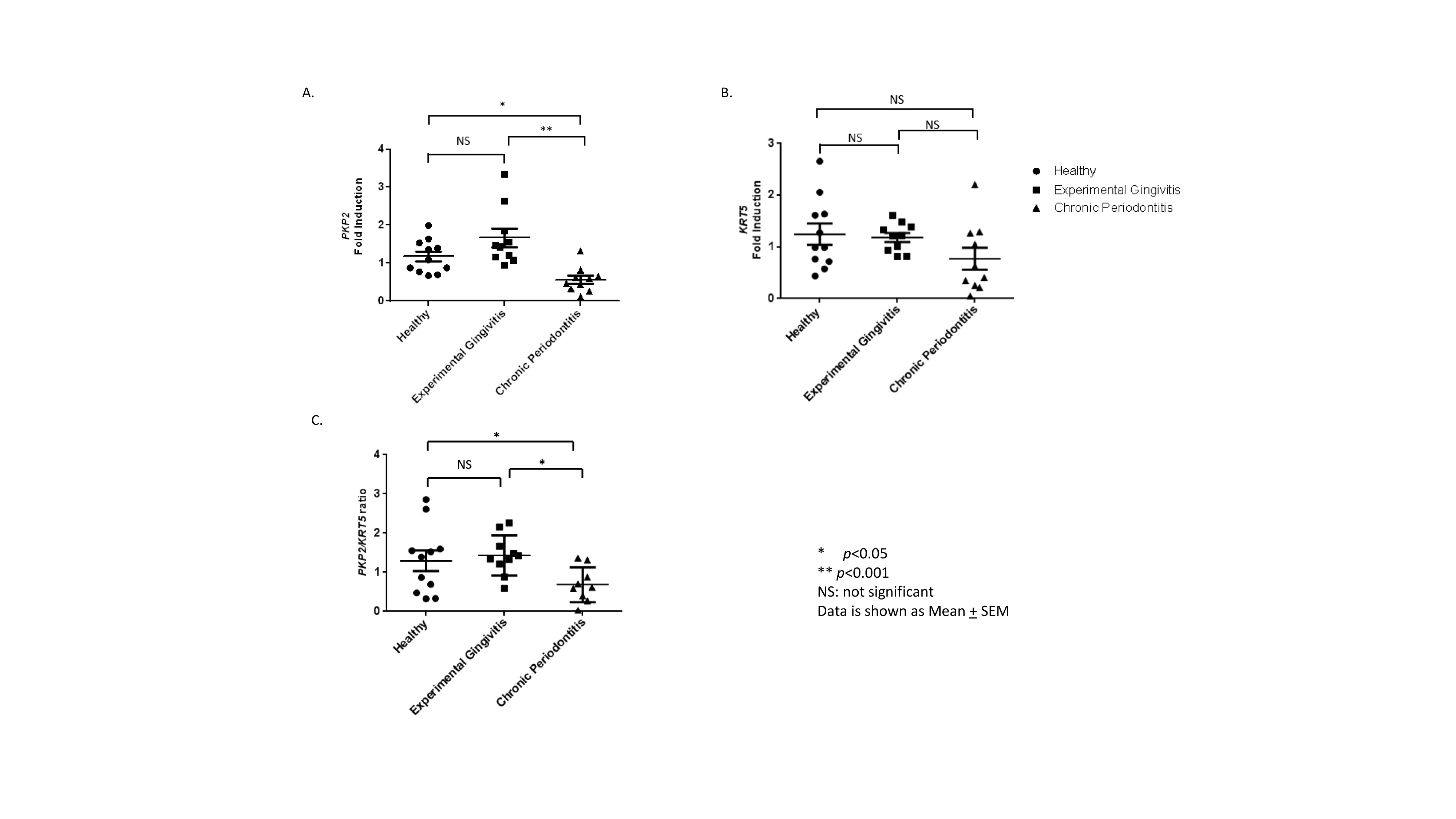
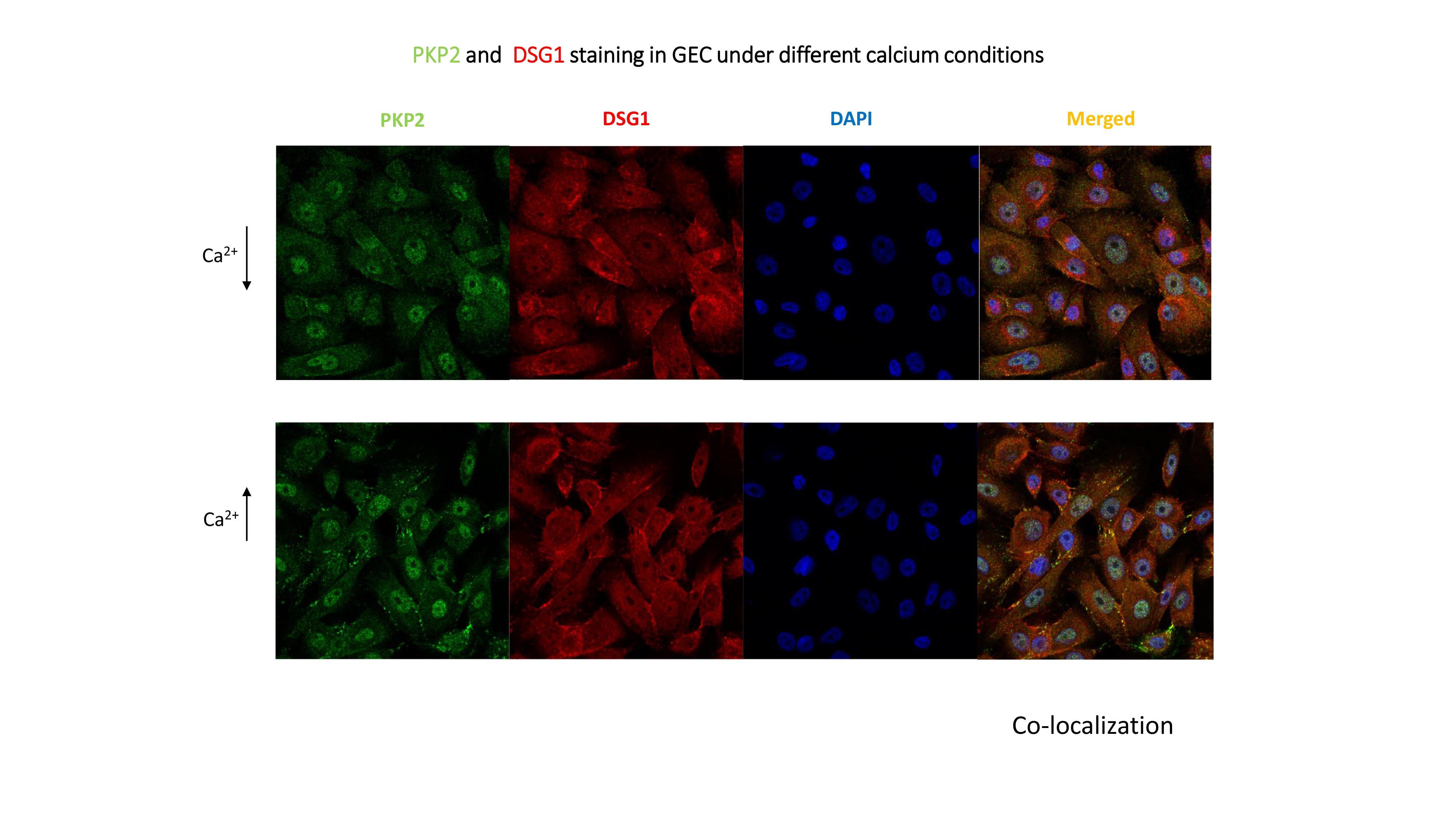
Results: PKP2 mRNA was significantly decreased in gingival biopsies from chronic periodontitis comparing to healthy subjects (p<0.05). Using the same biological samples, we found an increase of DNA methylation in the promoter region of PKP2 that might be associated with PKP2 down-regulation. Epithelial PKP2 and DSG1 mRNA was enhanced by P.g stimulation, but protein expression differed. Both proteins were inhibited by viable P.g but not by C.r, heat killed organisms or LPS, suggesting selective degradation by P.g. The addition of the proteasome inhibitor MG132 and lysosome inhibitor NH4Cl did not prevent degradation, but cysteine proteases inhibitors greatly attenuated PKP2 degradation by viable P.g. In vitro epithelial stimulation of P.g and C.r both increase the overall PKP2 DNA methylation level. In vitro cell adhesion data indicate that decreased levels of PKP2 leads to impaired adhesion and migration in gingival epithelial cells.
Conclusions: PKP2 protein expression is suppressed in gingival epithelial cells associated with periodontal disease. P.g cysteine proteases selectively degrade PKP2 in cell culture systems. These data suggest that PKP2 may play an important role in maintaining epithelial integrity and may play an important protective role in the etiopathogenesis of periodontal disease.
Methods: Gingival biopsies were harvested from 11 healthy, 10 experimental gingivitis and 10 chronic periodontitis subjects. We examined PKP2 mRNA and DNA methylation levels. Primary human gingival epithelial cells (HGEP) were stimulated with Porphyromonas gingivalis (P.g) or Campylobacter rectus (C.r). We utilized western blot and immunofluorescence staining to examine protein expression. We then knocked down PKP2 using lentivirus shRNA in HGEP.
Results: PKP2 mRNA was significantly decreased in gingival biopsies from chronic periodontitis comparing to healthy subjects (p<0.05). Using the same biological samples, we found an increase of DNA methylation in the promoter region of PKP2 that might be associated with PKP2 down-regulation. Epithelial PKP2 and DSG1 mRNA was enhanced by P.g stimulation, but protein expression differed. Both proteins were inhibited by viable P.g but not by C.r, heat killed organisms or LPS, suggesting selective degradation by P.g. The addition of the proteasome inhibitor MG132 and lysosome inhibitor NH4Cl did not prevent degradation, but cysteine proteases inhibitors greatly attenuated PKP2 degradation by viable P.g. In vitro epithelial stimulation of P.g and C.r both increase the overall PKP2 DNA methylation level. In vitro cell adhesion data indicate that decreased levels of PKP2 leads to impaired adhesion and migration in gingival epithelial cells.
Conclusions: PKP2 protein expression is suppressed in gingival epithelial cells associated with periodontal disease. P.g cysteine proteases selectively degrade PKP2 in cell culture systems. These data suggest that PKP2 may play an important role in maintaining epithelial integrity and may play an important protective role in the etiopathogenesis of periodontal disease.
IMAGES
2087653_File000002.jpg
2087653_File000003.jpg
2087653_File000002.jpg
2087653_File000003.jpg