IADR Abstract Archives
Self-organization Into Three-dimensional Salivary Acinar-like Structures in Adipose-derived Stem Cells
Objectives: Though radiation therapy in head-and-neck area can lead to extensive atrophy of serous acini, stem cell therapy is proved effective to prevent radiation-induced xerostomia. Therapeutic effects were found after the systemic transfusion or local injection of Mesenchymal Stem Cells (MSCs) in animal studies, and the transdifferentiation into amylase-secreting acinar-like cells was noted in MSCs after co-cultured with Salivary Acinar (SA) cells in vitro. Adipose-Derived Stem Cells (ADSCs) are known for their high proliferation rate and the abundance in adipose tissue. Therefore, we focused on the SA-like transdifferentiation potential of ADSCs in this study.
Methods: ADSCs were obtained from mammary fat pads of mice after collagenase digestion, and the explant-outgrowth technique was adopted to obtain SA cells from mice. ADSCs were then indirectly co-cultured with SA cells with 0.4μm pore size Transwell culture inserts (Corning), preventing any direct cell-to-cell contact or cell migration across the insert. After co-cultured with SA cells for 2 weeks, morphology of ADSCs was observed and recorded under Axiovert 200M microscope, and the immunocytochemical analysis for α-amylase was performed to further investigate the SA-like transdifferentiation potential of ADSCs. Besides, α-amylase secretion was verified by indirect enzyme-linked immunosorbent assay (indirect-ELISA).
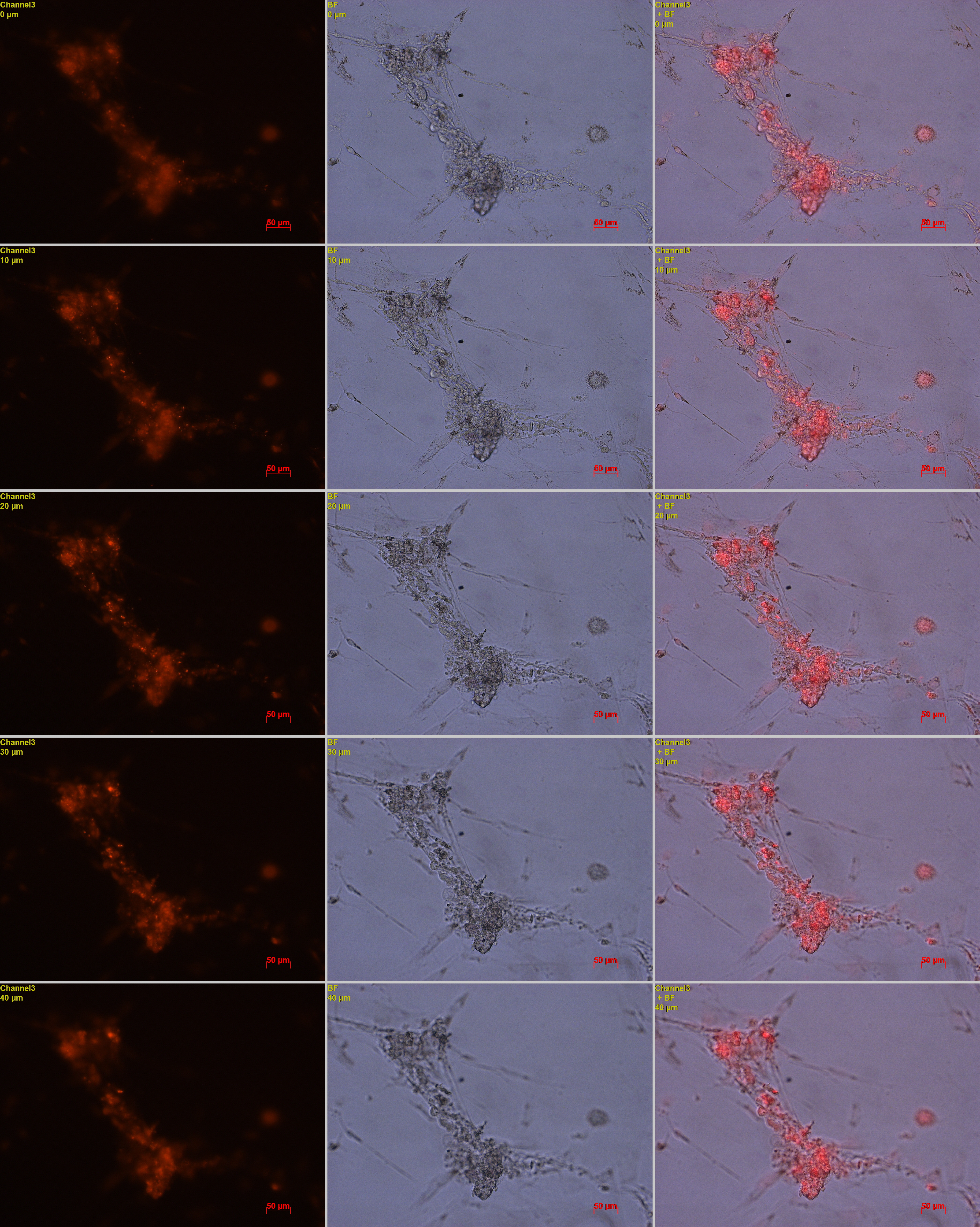
Results: α-amylase was detected in cytoplasm of ADSCs by immunocytochemical analysis, and three-dimensional SA-like structures with α-amylase expression were observed after co-cultured with SA cells. Moreover, the results of indirect-ELISA for α-amylase confirmed that ADSCs can secret significant amounts of α-amylase after indirectly co-cultured (p<0.05, compared with negative controls).
Conclusions: In this study, three-dimensional self-organization into SA-like structures was found in 2D culture of MSCs for the first time. The results suggest that ADSCs are suitable candidates for further salivary gland tissue engineering in the future.
Methods: ADSCs were obtained from mammary fat pads of mice after collagenase digestion, and the explant-outgrowth technique was adopted to obtain SA cells from mice. ADSCs were then indirectly co-cultured with SA cells with 0.4μm pore size Transwell culture inserts (Corning), preventing any direct cell-to-cell contact or cell migration across the insert. After co-cultured with SA cells for 2 weeks, morphology of ADSCs was observed and recorded under Axiovert 200M microscope, and the immunocytochemical analysis for α-amylase was performed to further investigate the SA-like transdifferentiation potential of ADSCs. Besides, α-amylase secretion was verified by indirect enzyme-linked immunosorbent assay (indirect-ELISA).
Results: α-amylase was detected in cytoplasm of ADSCs by immunocytochemical analysis, and three-dimensional SA-like structures with α-amylase expression were observed after co-cultured with SA cells. Moreover, the results of indirect-ELISA for α-amylase confirmed that ADSCs can secret significant amounts of α-amylase after indirectly co-cultured (p<0.05, compared with negative controls).
Conclusions: In this study, three-dimensional self-organization into SA-like structures was found in 2D culture of MSCs for the first time. The results suggest that ADSCs are suitable candidates for further salivary gland tissue engineering in the future.
IMAGES
2077957_File000000.jpg
2077957_File000000.jpg