IADR Abstract Archives
Comparison of endodontic sealers in terms of their sealing ability.
Objectives: To measure potential leakage at dentin/sealant interface.
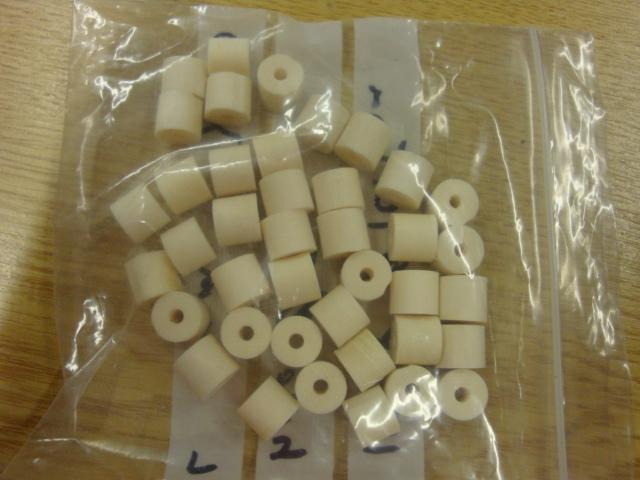
Methods: Total 16 elephant tusk dentine samples were cut in such a direction that the dentinal tubules were running in a horizontal direction. Samples were 10 mm long and 10 mm in diameter with canal of 3 mm in depth. Canals were prepared by barbed broaches under normal saline irrigation and then dried with paper points. Dentine samples were then divided into two groups with eight samples each.
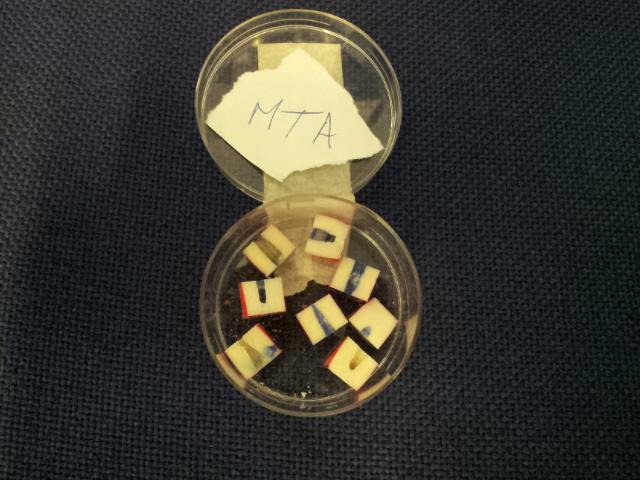
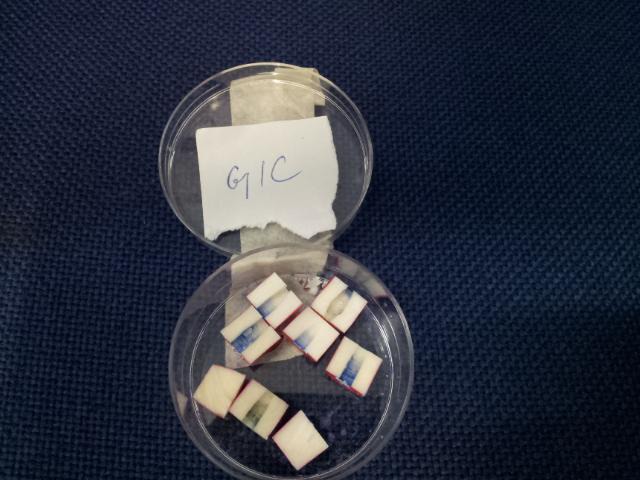
Mineral trioxide was mixed and dentine samples of group 1 were filled. Glass ionomer cement was then mixed and dentine samples of group 2 were filled. All the samples of group 1 and group 2 were left in the storage container for 24 hours to allow for effective setting of material. After 24 hours sample surfaces were coated with a double layer of nail varnish. Then prepared samples were suspended with the aid of dental floss in methylene blue dye 1% solution for 72 hours, at a constant temperature of 37 ̊C. Samples were suspended to allow easy penetration of dye solution through diffusion. Samples were not immersed fully into methylene blue dye solution because in this way a dye cannot penetrate properly. The coats of nail varnish were then removed by scraping it off with a scalpel blade. Then 8 dentine samples filled with mineral trioxide aggregate and 8 dentin samples filled with glass ionomer were embedded in impression compound and were cut longitudinally with a lathe cut machine and endodontic sealer was removed from canal. Each sample was examined under stereomicroscope to examine dye penetration. Dye penetration was than measured in millimeter (mm). Maximum point up to which dye penetrated on the sample was marked and measured remaining part of the sample in which dye did not penetrated.Paired ‘T’ test was used for statistical analysis to calculate the mean, standard deviation and p values.
Results: Results of both groups showed that mineral trioxide aggregate showed more microleakage (more dye penetrated) than glass ionomer cement.
Conclusions: Within the limitation of this study it has been concluded that both materials showed microleakage but glass ionomer cement showed less microleakage and good sealing ability as compare to mineral trioxide aggregate.
Methods: Total 16 elephant tusk dentine samples were cut in such a direction that the dentinal tubules were running in a horizontal direction. Samples were 10 mm long and 10 mm in diameter with canal of 3 mm in depth. Canals were prepared by barbed broaches under normal saline irrigation and then dried with paper points. Dentine samples were then divided into two groups with eight samples each.
Mineral trioxide was mixed and dentine samples of group 1 were filled. Glass ionomer cement was then mixed and dentine samples of group 2 were filled. All the samples of group 1 and group 2 were left in the storage container for 24 hours to allow for effective setting of material. After 24 hours sample surfaces were coated with a double layer of nail varnish. Then prepared samples were suspended with the aid of dental floss in methylene blue dye 1% solution for 72 hours, at a constant temperature of 37 ̊C. Samples were suspended to allow easy penetration of dye solution through diffusion. Samples were not immersed fully into methylene blue dye solution because in this way a dye cannot penetrate properly. The coats of nail varnish were then removed by scraping it off with a scalpel blade. Then 8 dentine samples filled with mineral trioxide aggregate and 8 dentin samples filled with glass ionomer were embedded in impression compound and were cut longitudinally with a lathe cut machine and endodontic sealer was removed from canal. Each sample was examined under stereomicroscope to examine dye penetration. Dye penetration was than measured in millimeter (mm). Maximum point up to which dye penetrated on the sample was marked and measured remaining part of the sample in which dye did not penetrated.Paired ‘T’ test was used for statistical analysis to calculate the mean, standard deviation and p values.
Results: Results of both groups showed that mineral trioxide aggregate showed more microleakage (more dye penetrated) than glass ionomer cement.
Conclusions: Within the limitation of this study it has been concluded that both materials showed microleakage but glass ionomer cement showed less microleakage and good sealing ability as compare to mineral trioxide aggregate.
IMAGES
2090971_File000000.jpg
2090971_File000001.jpg
2090971_File000002.jpg
2090971_File000000.jpg
2090971_File000001.jpg
2090971_File000002.jpg